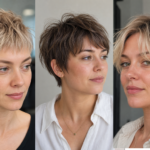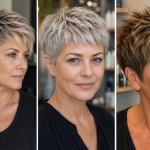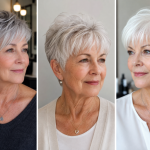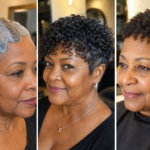
Pixie Haircuts for Thick Hair: 20 Cuts That Remove Bulk Without Losing Shape
Pixie haircuts for thick hair can be seriously flattering, but the shape matters more than the length. When you already have plenty of density, the goal usually isn’t to create more volume. It’s figuring out where you want that fullness to sit, then removing enough weight through the sides, nape, or interior so the cut doesn’t turn into one solid block.
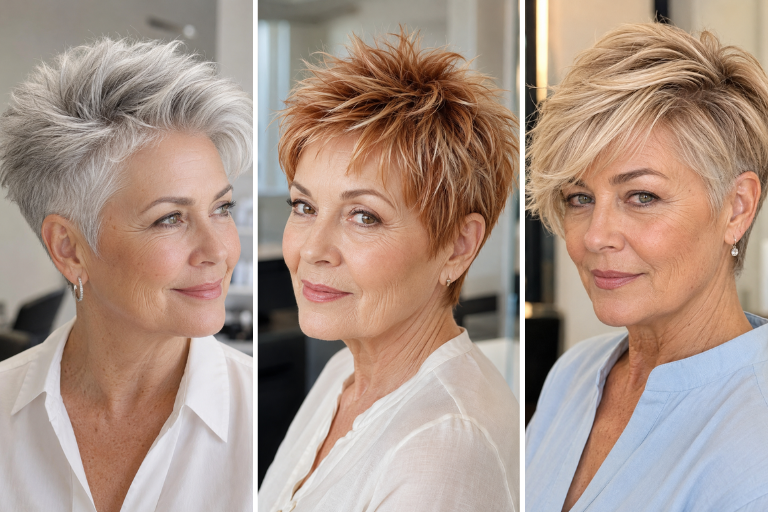
That’s why you’ll see such a mix of silhouettes here. Some of these pixies are cropped closely around the ears, while others leave a heavier fringe, a longer crown, or enough length to show off waves. I also included softer grown-out shapes because thick hair can look gorgeous with a little movement around the face instead of being cut super short everywhere.
If your hair is straight and dense, pay attention to the cuts with piecey layers, tapered sides, and internal weight removal. If you have natural wave, I’d lean toward a slightly longer top so your texture has room to bend instead of puffing outward. Fringe is another big decision. A short broken fringe feels light and modern, while a longer side-swept section lets you keep some softness around your face.
As you look through these, notice the crown and nape as much as the front. Those two areas make a huge difference on thick hair. Save the photos that match both the shape you want and the amount of styling and trimming you’re realistically willing to do.
20 Pixie Haircuts for Thick Hair to Take to the Salon
1. Asymmetrical Pixie with a Long Front Panel
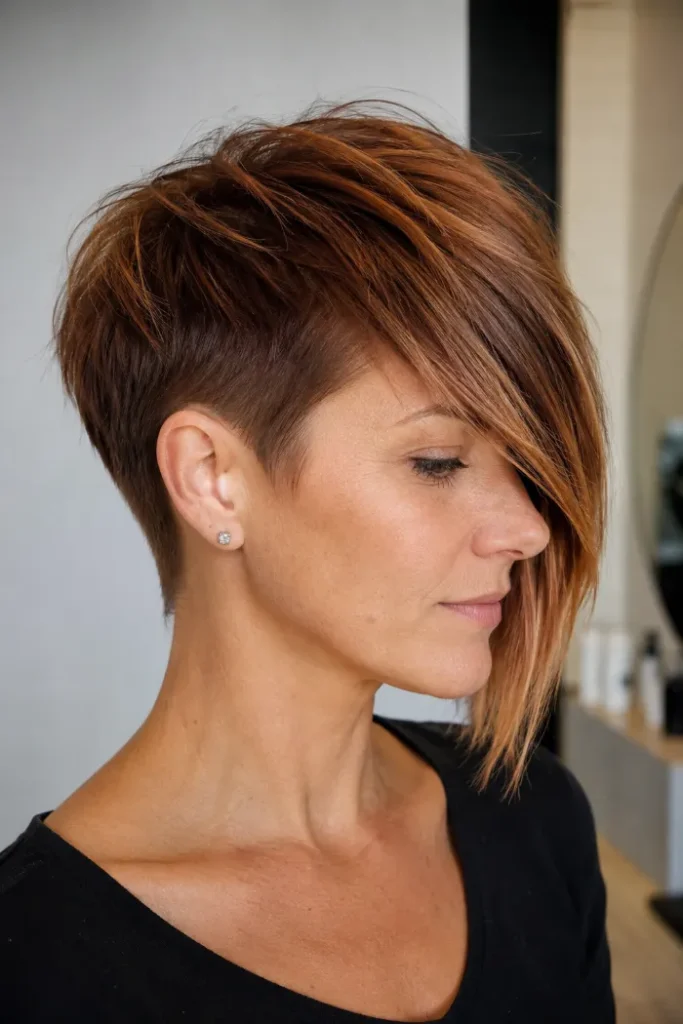
This asymmetrical pixie keeps the side and back very snug while letting one dramatic front section fall all the way toward the jaw. The coppery top has enough length for separation and lift, so the silhouette still feels full without looking bulky. That sharp contrast between the cropped side and sweeping fringe is what gives this one its attitude.
Ask your stylist to keep real weight in that long front panel while removing bulk underneath and through the shorter side. You don’t want aggressive thinning through the fringe or it can lose its clean sweep. A lightweight smoothing cream through the long section and a small amount of texture paste at the crown should be plenty.
2. Choppy French Pixie with a Micro Fringe
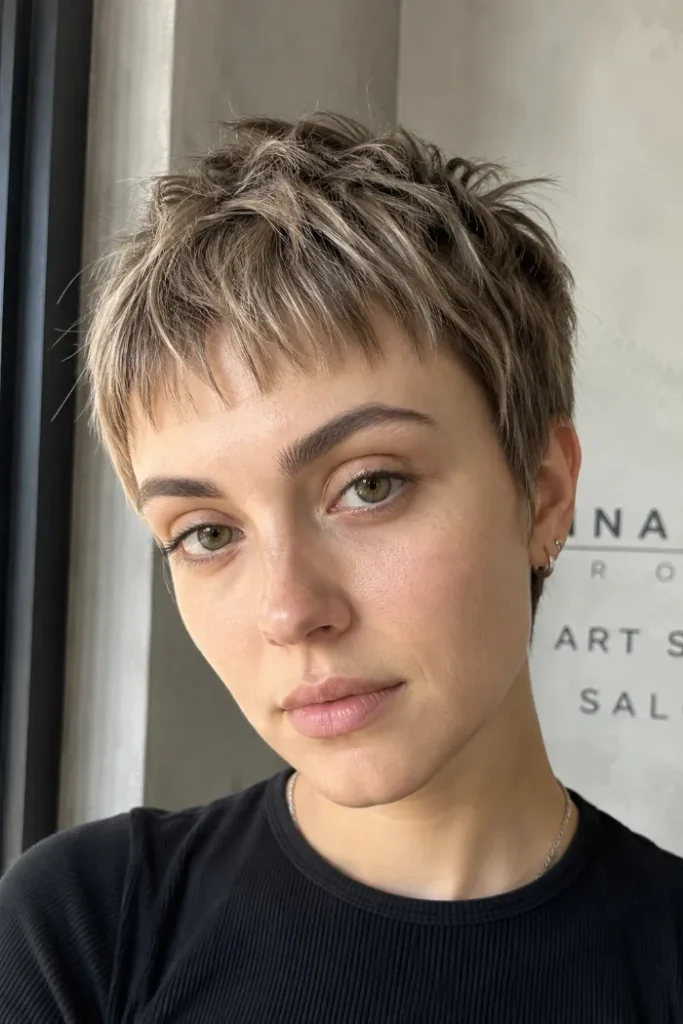
This short French-inspired crop uses lots of broken texture to stop dense hair from sitting too heavily against the head. The tiny fringe is uneven and piecey rather than perfectly blunt, and the top has short, tousled sections that can be pushed in different directions. Soft ash-blonde ribbons make all of that texture easier to see.
Ask your stylist for close, blended sides with point-cut layers through the top and a deliberately broken micro fringe. On very thick hair, have the bulk removed through the interior instead of simply thinning every end. At home, work a pea-size amount of matte paste between your fingers and pinch just a few sections into place.
3. Cropped Pixie with Baby Curtain Fringe
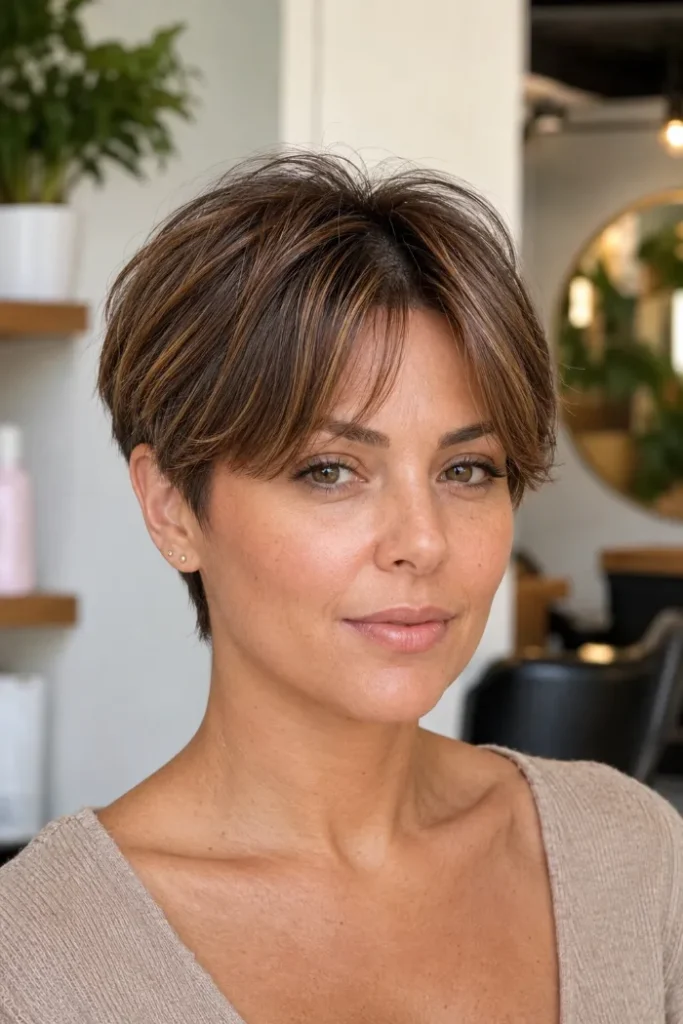
If you want a pixie that still has a little softness around the face, this is such a pretty direction. The sides and back are cropped neatly, but the top stays longer and flows into a short curtain-style fringe that parts around the forehead. Subtle caramel pieces through the brunette base add dimension without distracting from the smooth shape.
Ask your stylist to preserve enough length across the front for the fringe to split naturally rather than spring straight forward. Keep the perimeter tidy around the ears and nape, then use controlled internal layering through the top to manage thickness. Blow-dry the fringe away from the center with a small round brush for that soft opening.
4. Curved-Nape Pixie with Airy Crown Layers
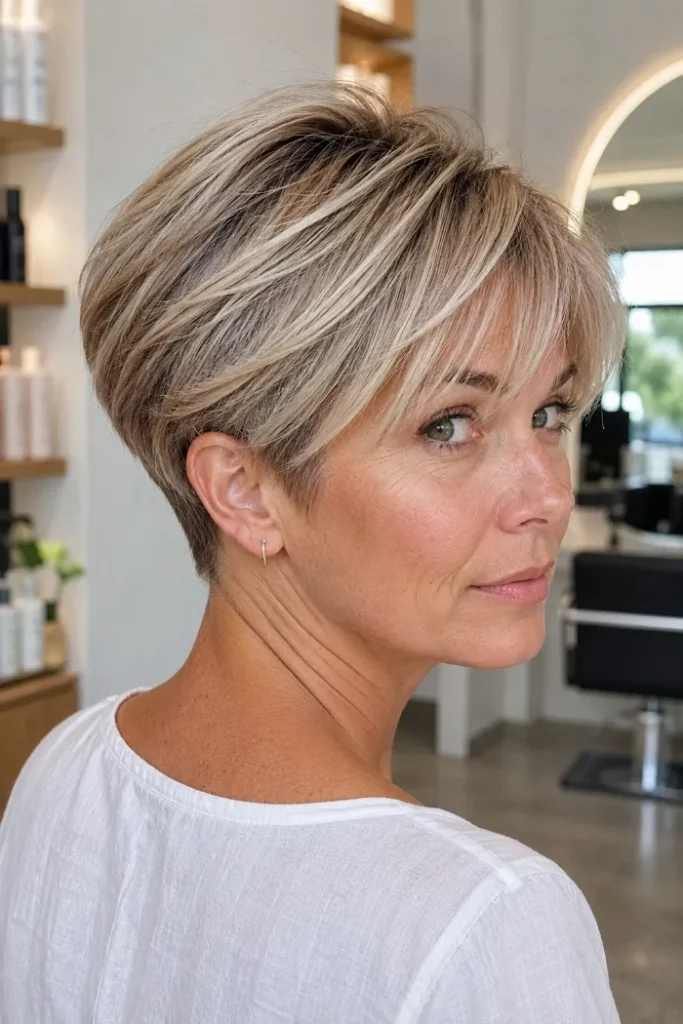
The back view is what makes this pixie worth saving. The nape follows a neat, curved taper while the shape becomes progressively fuller toward the crown. Longer blonde layers sweep over the surface, giving thick hair movement instead of letting all that density collect at the back. The wispy front pieces keep the overall finish soft rather than severe.
Ask your stylist for gentle graduation from the nape into a longer, layered crown, with the shortest area staying close to the head. If your hair gets bulky behind the ears, mention that specifically so weight can be removed there without hollowing out the top. A root-lifting spray and quick round-brush blow-dry will emphasize the crown shape.
5. Ear-Length Textured Pixie with Piecey Fringe
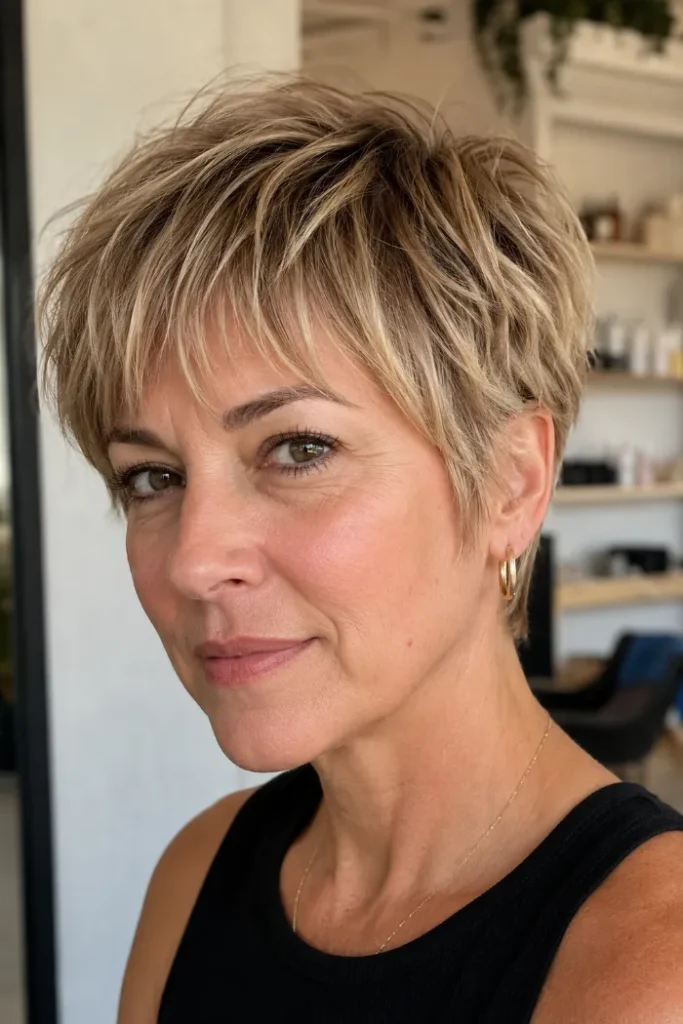
This one sits in that sweet spot between polished and tousled. The ears are exposed, the neckline stays short, and the crown is broken into soft, feathered pieces rather than one rounded mass. A light fringe skims the forehead in separated sections. Blonde highlights against the deeper base make every little layer and change in direction stand out.
Ask your stylist for short, movable crown layers with a softly tapered perimeter and fringe that can separate instead of forming a heavy curtain. With dense hair, I’d keep some strength at the ends and remove excess weight selectively underneath. Style by directing the crown forward and sideways, then separate the tips with a light texture cream.
6. Feathered Taper Pixie with Soft Side Fringe
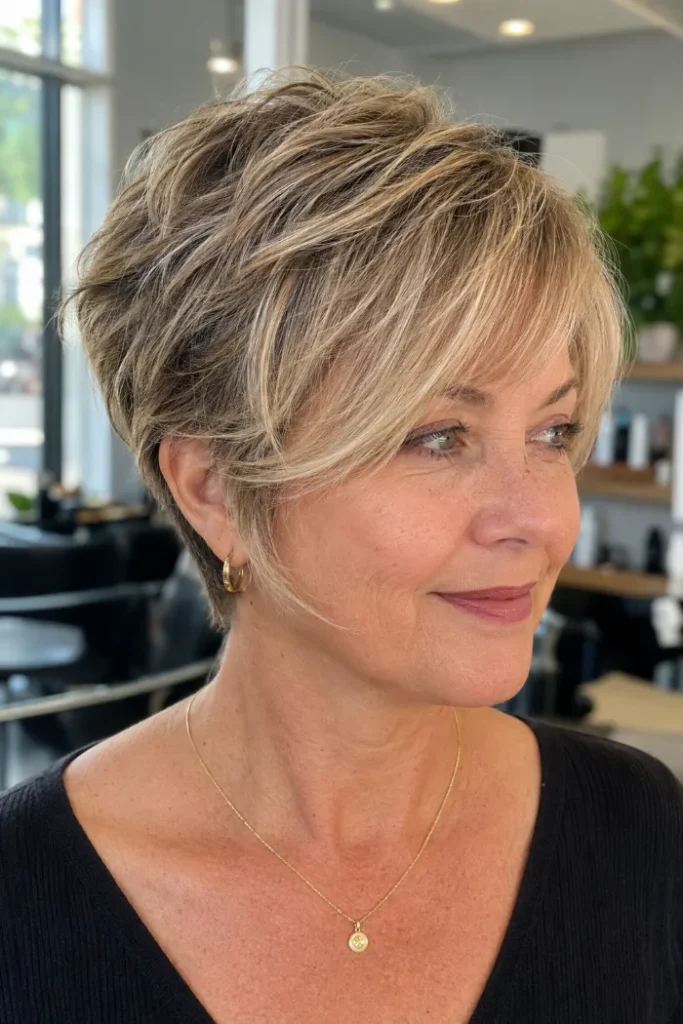
This feathered pixie leaves noticeably more length through the crown and front, which is a nice option if you don’t want thick hair cropped too close. The layers sweep diagonally across the head and into a soft side fringe, while the lower back and area around the ears stay cleaner. Dimensional blonde highlights exaggerate the airy, feathered movement.
Ask your stylist for a tapered lower perimeter with longer layers beginning higher through the crown, plus face-framing pieces that can sweep toward the cheek. The important part is taking weight out beneath the surface without making the ends look wispy. A round brush or large vent brush will help those longer pieces curve away from the face.
7. Grown-Out Pixie with Flipped Back Ends
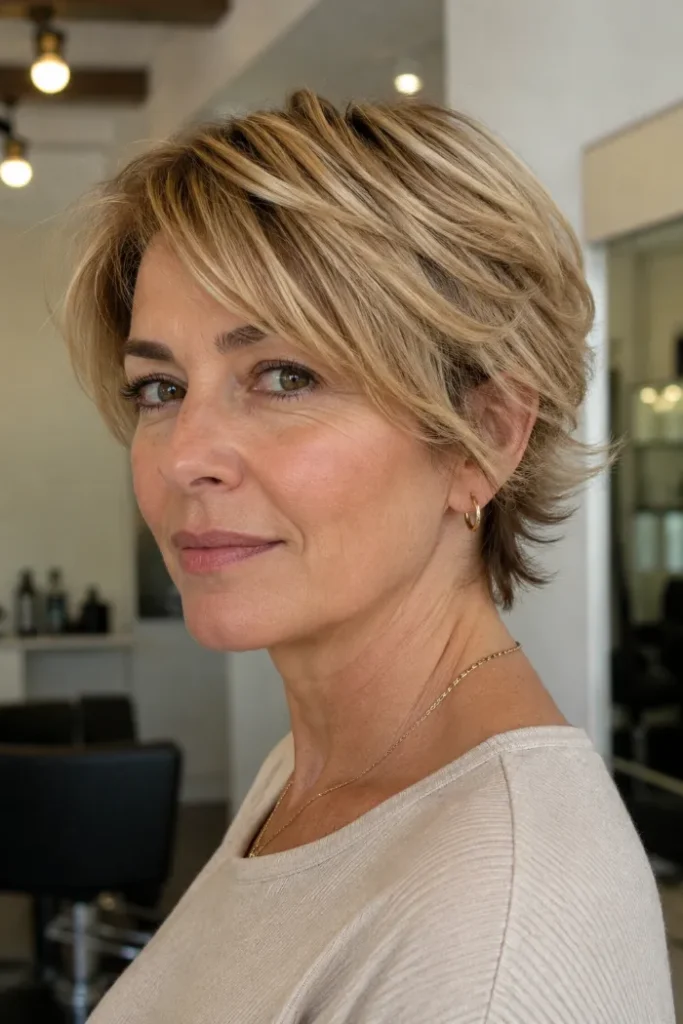
This longer pixie has that relaxed, slightly grown-out look without feeling shapeless. The front sweeps softly across the forehead, the crown stays smooth and layered, and the longer pieces behind the ears flick outward at the ends. It’s especially useful if you like short hair but still want enough length to tuck, bend, and restyle.
Ask your stylist to leave extra length at the nape and behind the ears instead of tapering everything tightly. Have the crown blended into those longer sections so thick hair doesn’t create a shelf through the back. To get the little flip, turn the ends outward with a round brush or briefly bend them with a flat iron.
8. Long Tousled Layered Pixie
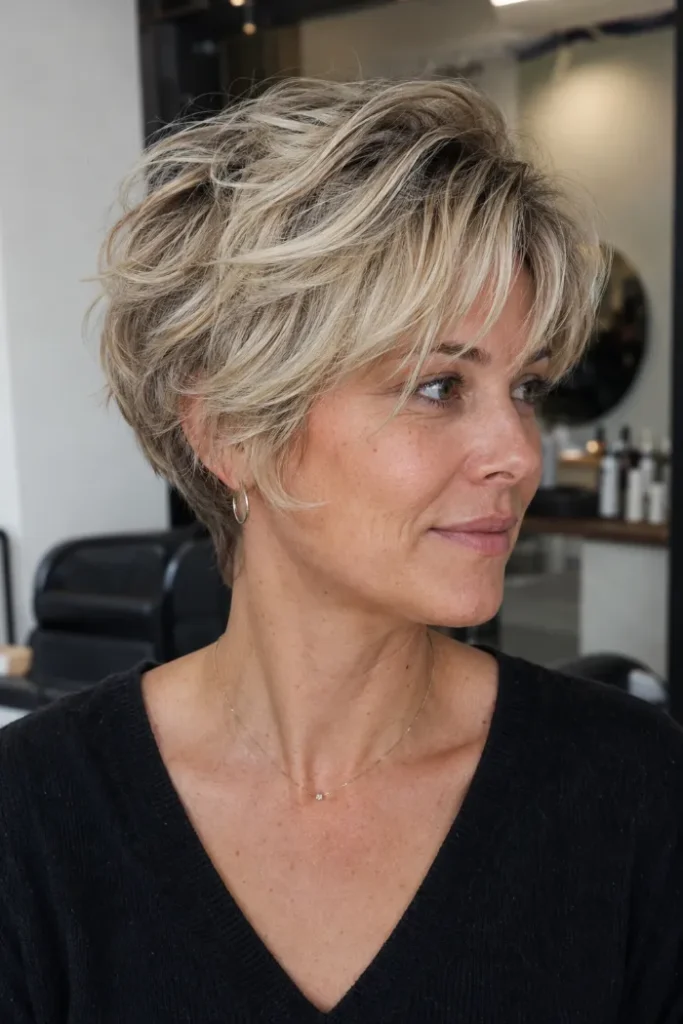
This pixie keeps plenty of length on top and uses it to create loose, sweeping movement. Rather than looking closely cropped, the silhouette is full through the crown with longer pieces falling around the temple and forehead. The pale blonde highlights over a deeper root make the tousled layers look even more dimensional, which works beautifully with naturally dense hair.
Ask your stylist for longer top layers with enough internal weight removal that they can lift and separate instead of collapsing into a solid cap. Keep the lower sides and nape more compact to balance that fullness. When styling, rough-dry for volume first, then use your fingers and a flexible cream to bend individual sections into place.
9. Modern Bowl Pixie with Broken Edges
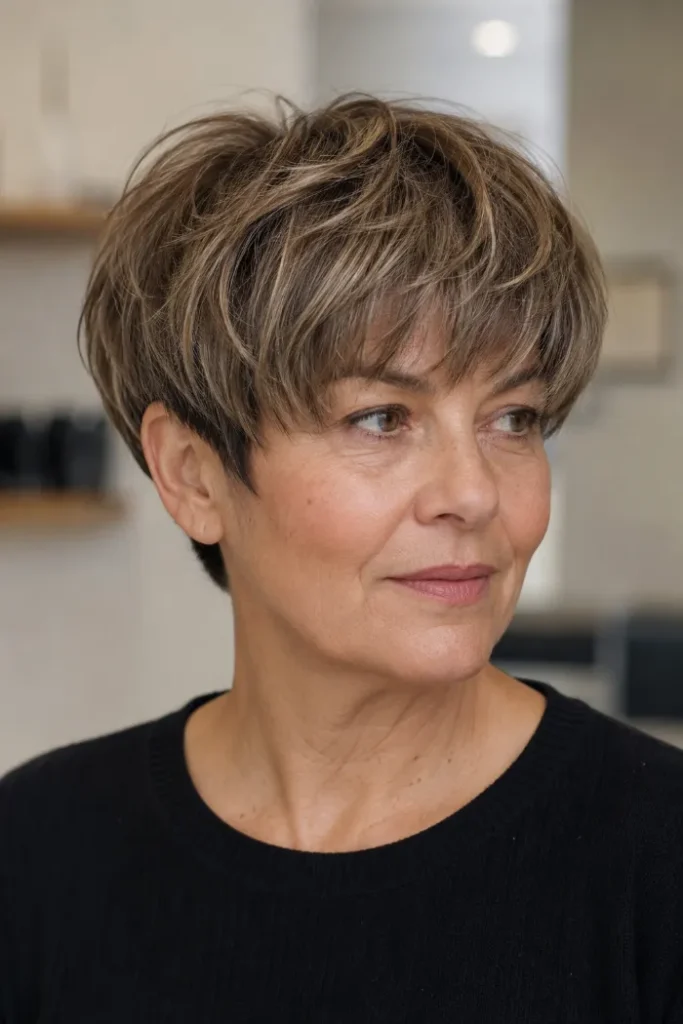
There is a definite rounded bowl influence here, but the broken edges keep it from feeling too precise. Fullness sits around the crown and upper sides, then the shape narrows around the ears and nape. The fringe falls forward in irregular, brow-skimming pieces, so thick hair gets to keep its natural density while still looking light around the face.
Ask your stylist for a rounded weight line through the upper part of the cut with a much neater taper underneath. Have the fringe and outer edge point-cut so they don’t read as one blunt horizontal line. This shape depends on the contrast between fullness and a snug perimeter, so regular reshaping will keep the outline looking intentional.
10. Polished Pixie with Rounded Side Bangs
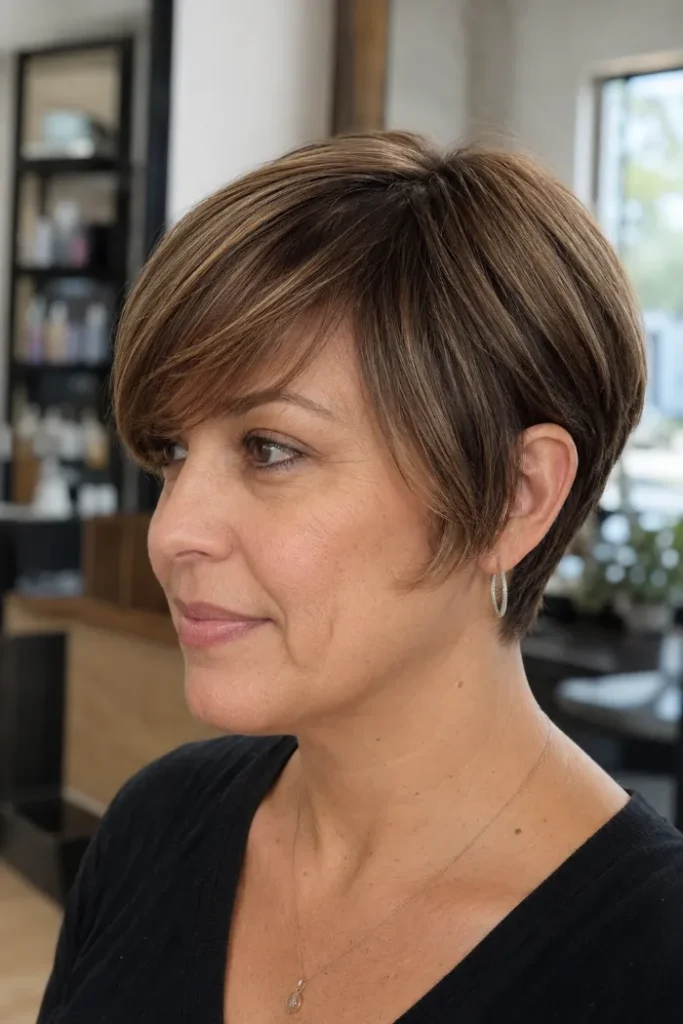
This is one of the sleeker options in the roundup. The brunette pixie has a smooth, rounded crown and a long side bang that curves across the forehead before blending into the temple. Around the ear, the hair is cut much closer with a neat sideburn detail. The result uses thick hair’s natural body without relying on lots of obvious texture.
Ask your stylist for controlled graduation through the back with enough weight left through the top to maintain that smooth rounded shape. Keep the side fringe substantial rather than over-texturizing it, and have the area around the ear refined closely. A smoothing lotion and directional blow-dry will give you the polished finish shown here.
11. Textured Pixie with a Softly Clipped Nape
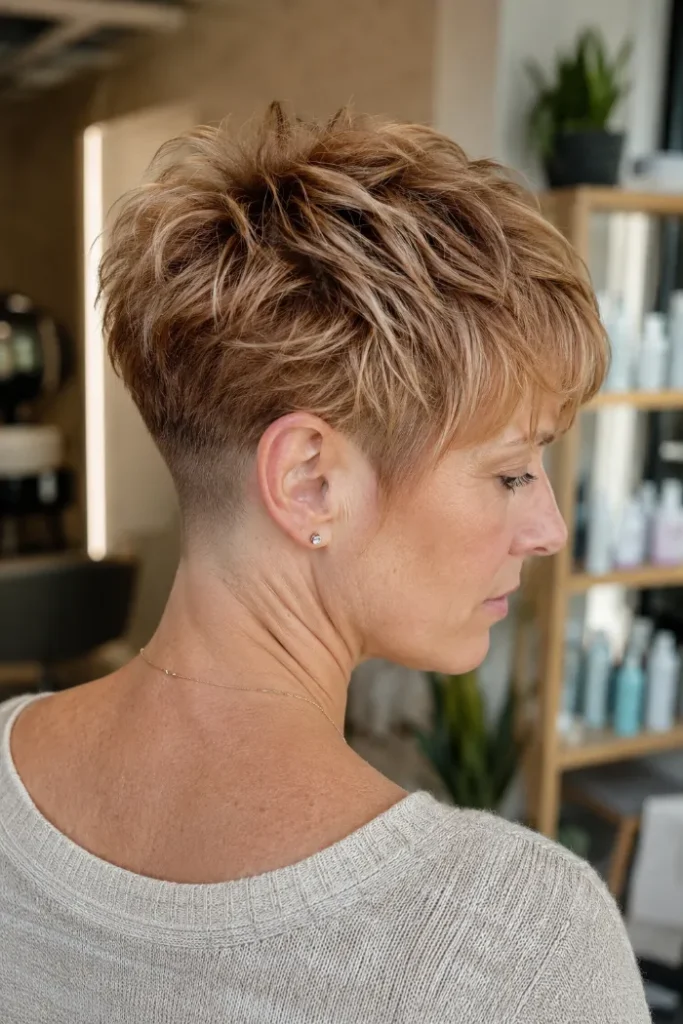
This side-and-back view shows exactly how much bulk can be removed from thick hair while still keeping a fun, textured top. The nape is clipped very close and fades softly upward, while the crown stays considerably longer and piecey. Warm blonde and copper tones across the surface make the separation through those top layers especially noticeable.
Ask your stylist for a close, softly blended nape with the crown left long enough to tousle forward and upward. If your hair is extremely dense, ask for interior texture through the longer section instead of thinning right at the scalp. A dry paste or styling powder will help the top separate while keeping the close nape clean.
12. Rounded Crop Pixie with Wispy Brow Bangs
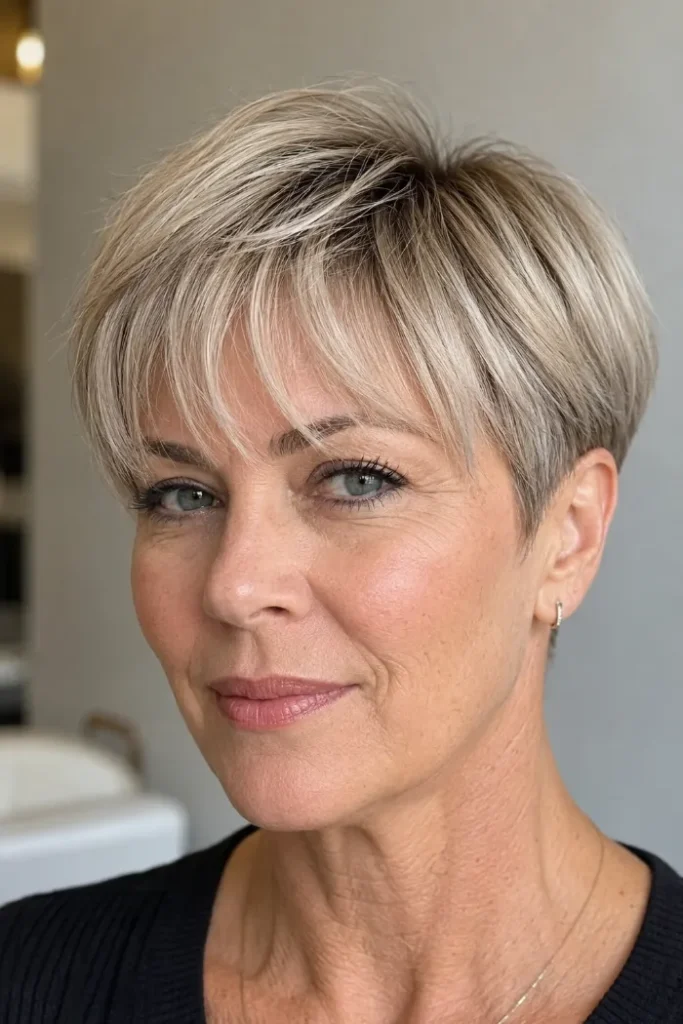
This silvery blonde pixie has a beautifully compact shape, with a smooth rounded top that becomes tighter through the sides. The fringe is fine and separated enough to show some forehead, which keeps the front from looking heavy even though the overall cut has plenty of density. It’s structured, but the softened edges stop it from feeling overly rigid.
Ask your stylist for rounded graduation through the crown and upper sides while keeping the ear area slim and tidy. Have the bangs cut with a light, irregular edge around brow level rather than making them thick and blunt. If you color your hair this cool, a toning gloss can also help maintain that clean, dimensional finish between appointments.
13. Shattered Pixie with Soft Crown Lift
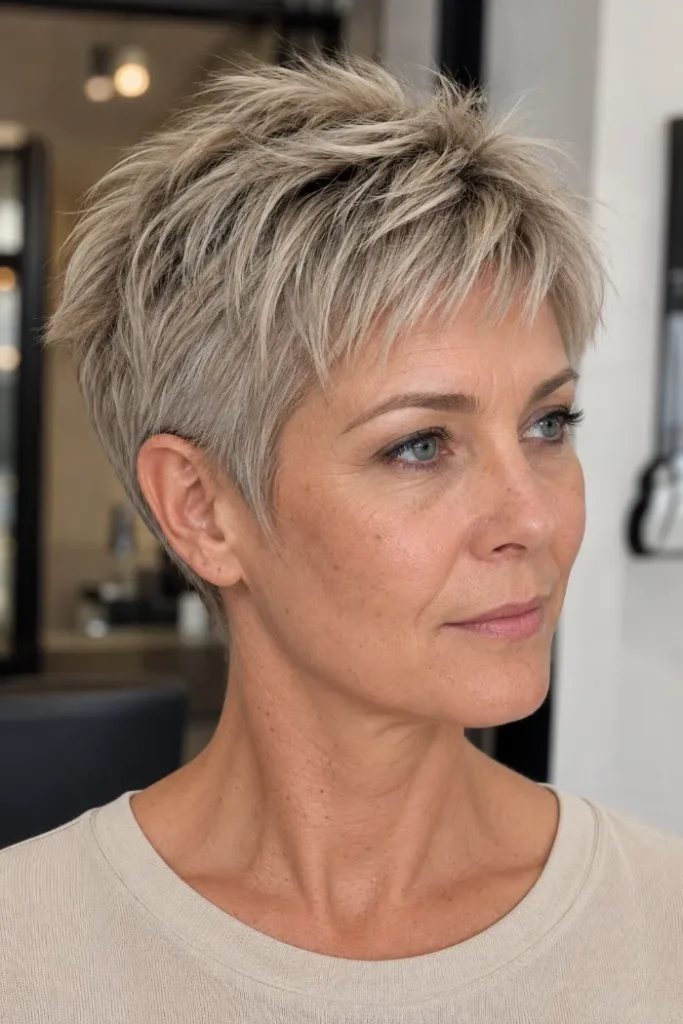
This pixie takes thick hair in a more tousled direction. The sides are short and fitted to the head, while the top is cut into lots of narrow, shattered pieces that create lift without one big mound of volume. The short fringe has the same irregular texture, and the cool blonde color makes the darker root and layer separation really visible.
Ask your stylist to keep the sides compact while building short, disconnected-looking movement through the crown and top. The ends should be point-cut or otherwise softened so they separate easily, but you still want enough density left to support the lift. Blow-dry against the growth pattern, then use dry texture spray rather than a heavy wax.
14. Short Sculpted Pixie with a Soft Matte Finish
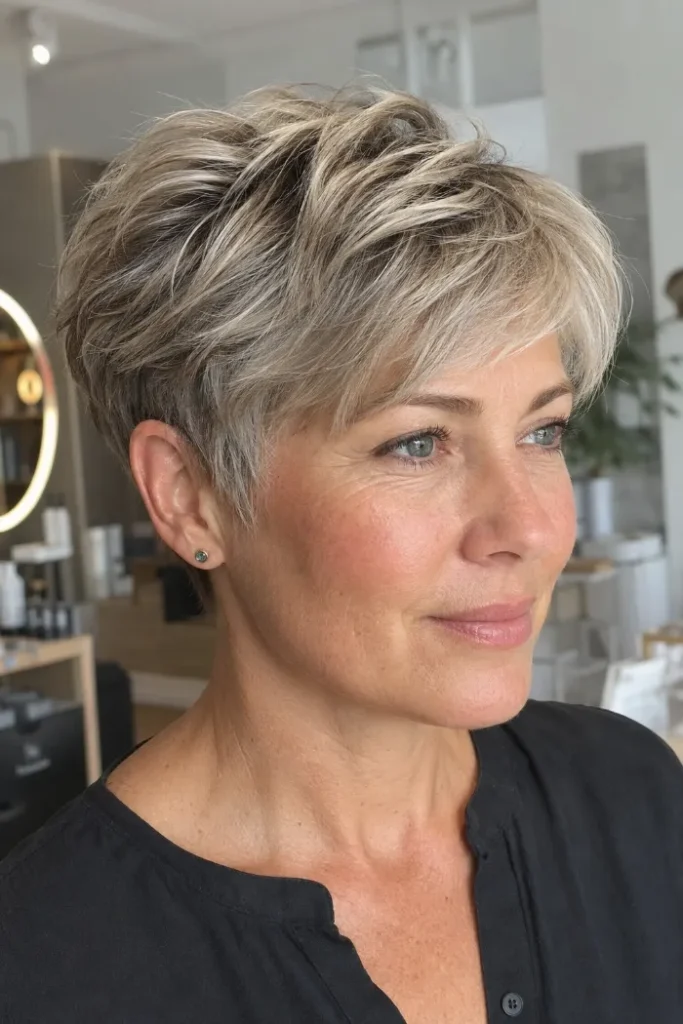
This short pixie is sculpted rather than spiky. The sides sit neatly against the head, while the top has just enough extra length to sweep forward and slightly to one side. Soft silver-blonde highlights give the shape dimension, and the finish stays airy and matte instead of slick. It’s a good reference if you want texture without obvious messiness.
Ask your stylist for a closely tapered lower shape with slightly longer layers across the crown and fringe so you can change their direction. Thick hair needs enough weight removed to sit close at the sides, but the top shouldn’t be over-thinned. Use a light matte molding cream, rubbing it fully between your hands before applying.
15. Side-Parted Pixie with Long Cheekbone Fringe
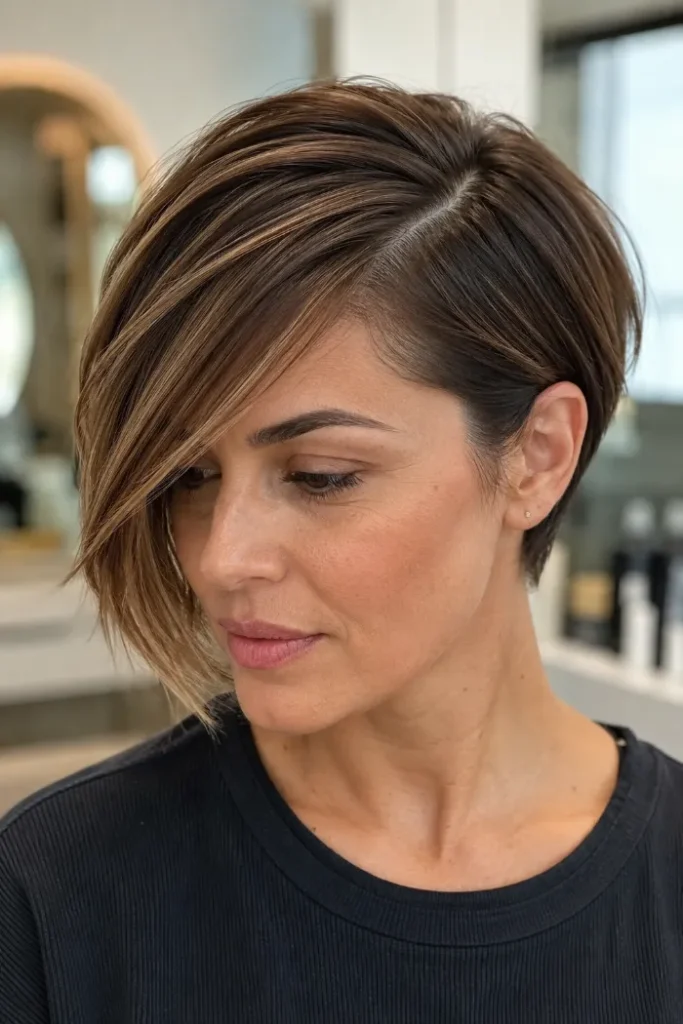
The deep side part gives this pixie a dramatic front without requiring lots of height. One side is kept sleek and close around the ear, while the opposite side has a long fringe sweeping across the forehead and down toward the cheek. Fine caramel ribbons through the brunette base emphasize the direction of the longer section beautifully.
Ask your stylist to leave the fringe genuinely long and substantial, then remove excess density beneath it rather than shredding the visible ends. The shorter side should blend closely around the ear and into the back. If you want that smooth sweep at home, blow-dry the fringe from the roots first and finish it with a flat brush.
16. Soft Spiky Pixie with a Tapered Silhouette
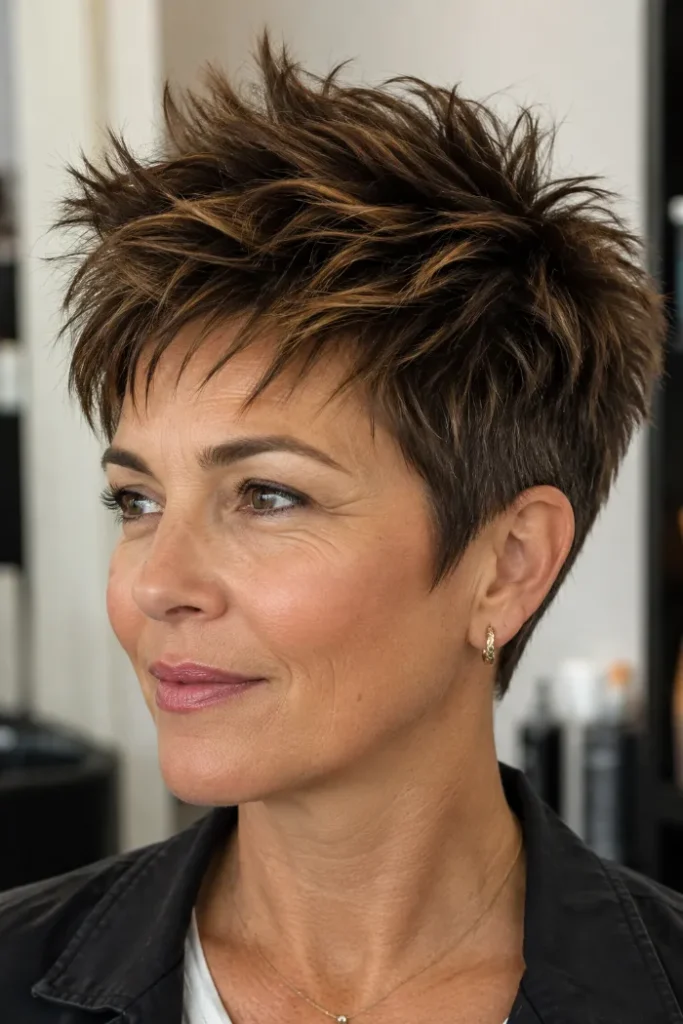
This brunette pixie uses thick hair’s natural strength to create soft spikes and separation across the whole top. The pieces point in slightly different directions, but the sides and lower back are kept short enough that the shape never becomes too wide. Warm caramel highlights placed through the textured sections give the style even more definition.
Ask your stylist for a short tapered base with enough length left through the crown and top to pinch into individual pieces. Have the ends heavily point-cut rather than cut into one uniform layer. For styling, a small amount of firm paste works best when applied mostly to the ends, so you get definition without flattening the roots.
17. Textured Pixie with Clean Sideburn Detail
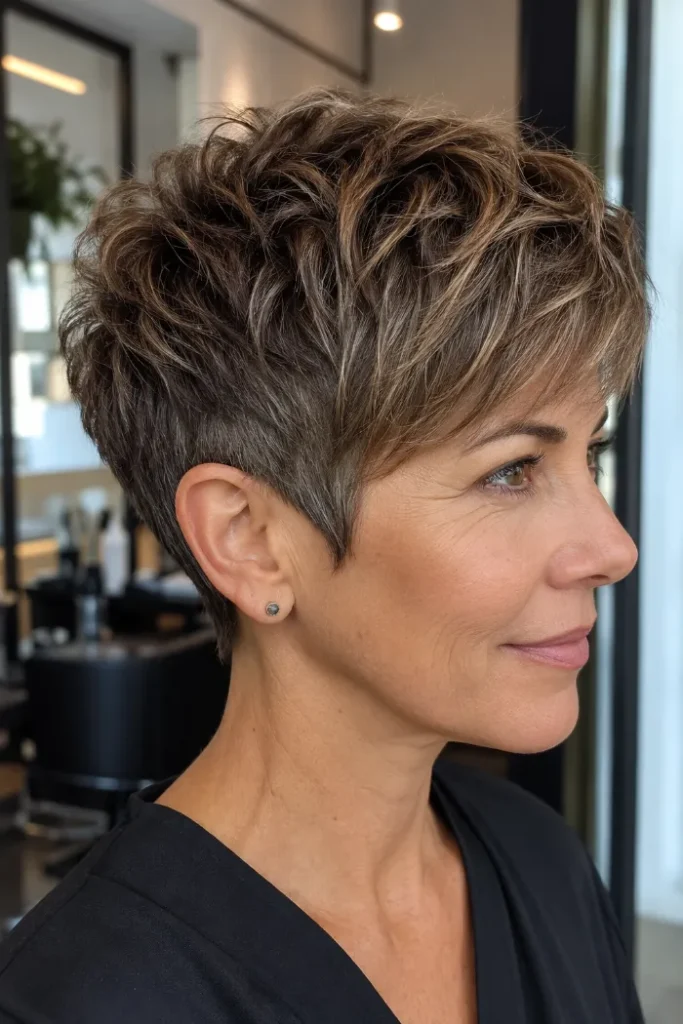
Here the crown stays visibly full, with chunky bends and separated layers creating movement over the top and back. In contrast, the area around the ear is trimmed close with a precise little sideburn point. That combination is especially smart on thick hair because you keep the lush texture where you want to see it while controlling width along the sides.
Ask your stylist for a snug taper around the ears and nape with a clearly defined sideburn, then leave more length and density through the crown. Request selective interior weight removal so the top can bend instead of puffing. A light mousse before blow-drying can support the volume, followed by a touch of cream to separate the highlighted pieces.
18. Thick-Hair Bixie Pixie with Tucked Sides
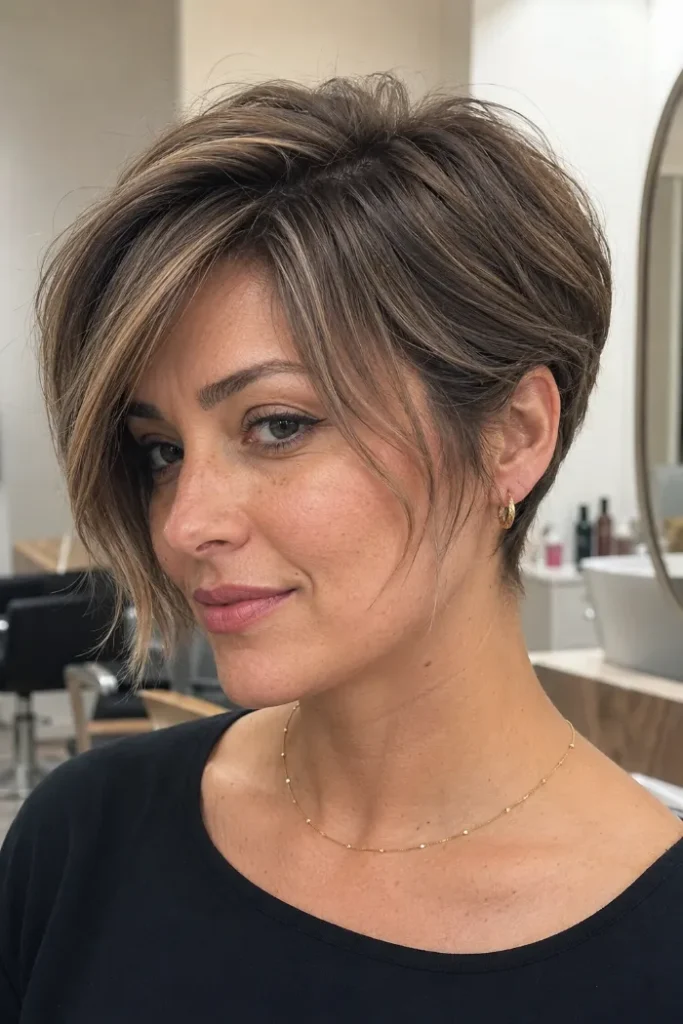
This longer pixie leans into bixie territory, which is a great compromise when you’re nervous about taking thick hair very short. The crown has rounded fullness, the front falls into a sweeping face-framing section, and the sides are long enough to tuck neatly behind the ears. A few loose pieces around the face stop the tucked shape from looking too strict.
Ask your stylist for sides long enough to tuck comfortably, with soft layers through the crown and front rather than a heavily graduated crop. If your hair is extremely dense, remove bulk underneath while preserving the surface length. This cut can handle a smooth blowout or a more undone finish, so it’s also forgiving between trims.
19. Undercut Pixie with a Heavy Swept Top
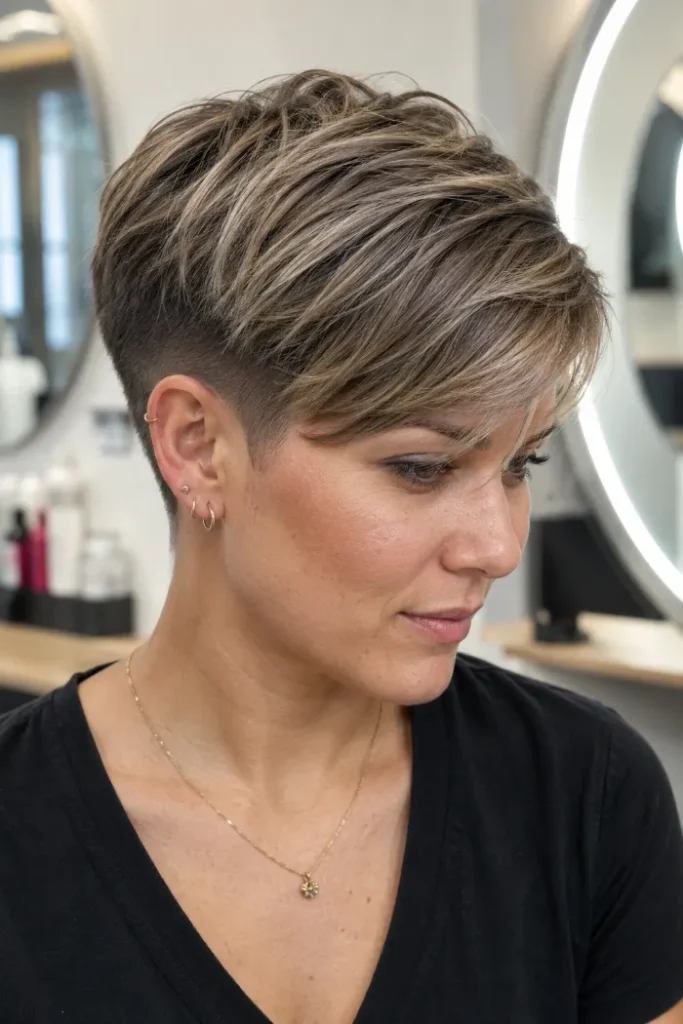
This undercut is one of the most direct ways to control very thick hair. The side and lower back are clipped close, while the entire upper section stays much longer and sweeps forward into a side fringe. Blonde ribbons over the darker base follow the direction of the top, making the contrast between the close undercut and heavier surface especially clear.
Ask your stylist for a close undercut around the side and nape with the longer top kept deliberately separate and substantial. Discuss exactly how high you want the short section before the clippers come out, because that changes the whole look. Blow-dry the top across the head with a paddle brush, then add light flexible hold.
20. Wavy Thick-Hair Pixie with Longer Top Layers
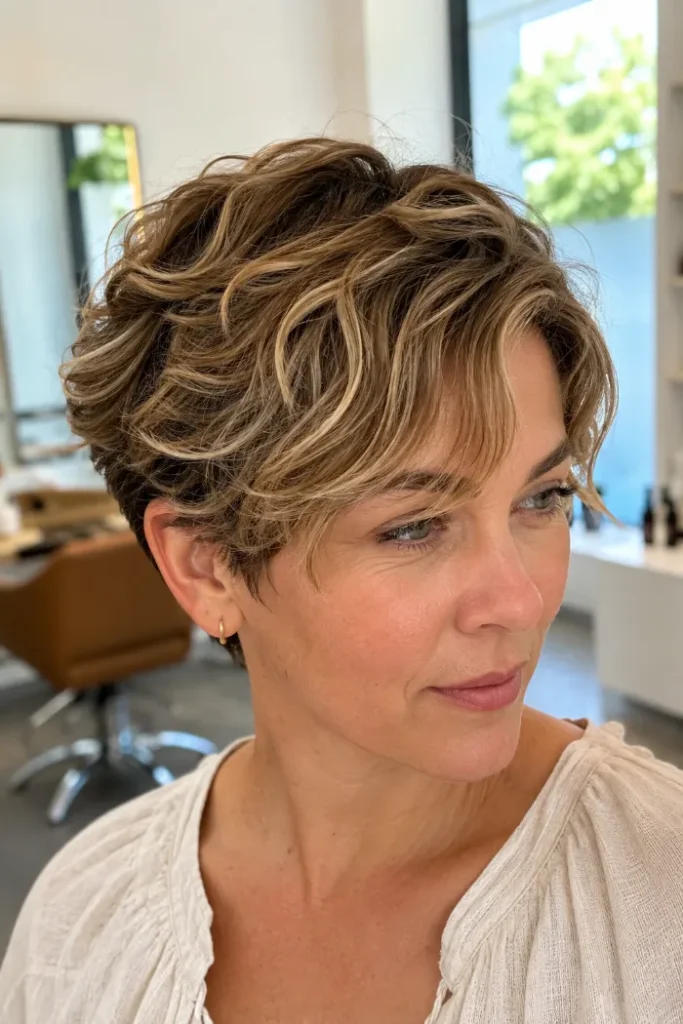
This is the one I’d save if your thick hair already wants to wave. The sides and nape stay comparatively short, but the top has enough length for broad bends and loose curls to form instead of getting chopped into fuzz. Warm dimensional highlights trace those curves beautifully, while the longer front pieces fall softly toward the forehead and temple.
Ask your stylist to preserve enough length through the top for your wave pattern to form, then remove bulk strategically underneath and around the sides. If your texture changes a lot when dry, discuss shaping it in its natural state before too much length comes off. Style with lightweight curl cream and diffuse gently instead of brushing the waves apart.
Pixie Haircuts for Thick Hair FAQs
Are pixie cuts a good choice for thick hair?
Yes. Thick hair can actually give a pixie beautiful structure and natural volume. The key is controlling where that density sits. A stylist can use graduation, shorter perimeter areas, and selective internal weight removal so you keep fullness at the crown or fringe without getting unwanted bulk around the sides.
Which pixie works best for thick, wavy hair?
I usually prefer a pixie with more length through the top for wavy, thick hair. Those extra inches give the bends somewhere to form, while shorter sides keep the overall silhouette balanced. Very short layers everywhere can make some wave patterns expand, so bring your stylist a photo that shows the amount of top length you want.
How often does a thick-hair pixie need trimming?
A closely tapered or undercut pixie may start losing its crisp shape after about four to six weeks, while a longer pixie or bixie can often stretch closer to six to eight. If you enjoy the grown-out stages, you may be able to wait longer. The shorter your nape and sides are, the more noticeable the grow-out tends to be.
Should thick hair be thinned out before cutting it into a pixie?
It often needs some weight removal, but I wouldn’t automatically thin everything. Too much thinning, especially close to the roots, can create short pieces that push the outer hair outward. Ask your stylist where your density actually needs to be reduced. Point cutting, carefully placed internal removal, and a stronger perimeter can give you movement without making the ends look sparse.
Choosing the Right Pixie for Your Thick Hair
Start with the feature you’re most drawn to. Maybe it’s the extra-long fringe, a snug tapered nape, a messy crown, or those longer wavy layers. Then think about how your own density and texture will behave in that shape. Straight thick hair can handle some beautifully sharp contrasts, while waves often benefit from a little more length and breathing room on top.
And definitely be realistic about maintenance. A close undercut or tiny fringe needs more frequent attention than a soft bixie or grown-out pixie. I’d take two or three of your favorite photos to your appointment and talk through what should stay full, what can be debulked, and how much daily styling you actually want to do.