How to Wear a Sweater Over a Dress Without Looking Frumpy
There is something almost suspiciously good about an outfit that lets you keep wearing your favorite dresses after the weather turns cold. Add a sweater, bring in a great pair of boots, and suddenly that floaty little dress has a second life.
The catch? A sweater over a dress can go from chic to shapeless very quickly if the proportions are off. The goal is not to hide the dress under a mountain of knitwear. You want the sweater to look like the intentional top half of the outfit, while the dress does the work of a skirt underneath.
Once you understand where the sweater should end, how much volume to keep, and when to define your waist, this becomes one of the easiest layering formulas in your closet. Here is how to wear a sweater over a dress so the whole thing looks styled, not accidental.
The trick is to make the sweater look like the top half of the outfit
Start by mentally turning your dress into a skirt. That tiny mindset shift makes the styling so much easier. Instead of asking whether the sweater “matches the dress,” look at the visible hem, the waistline, and the shoes as if you were building a sweater-and-skirt outfit from scratch.
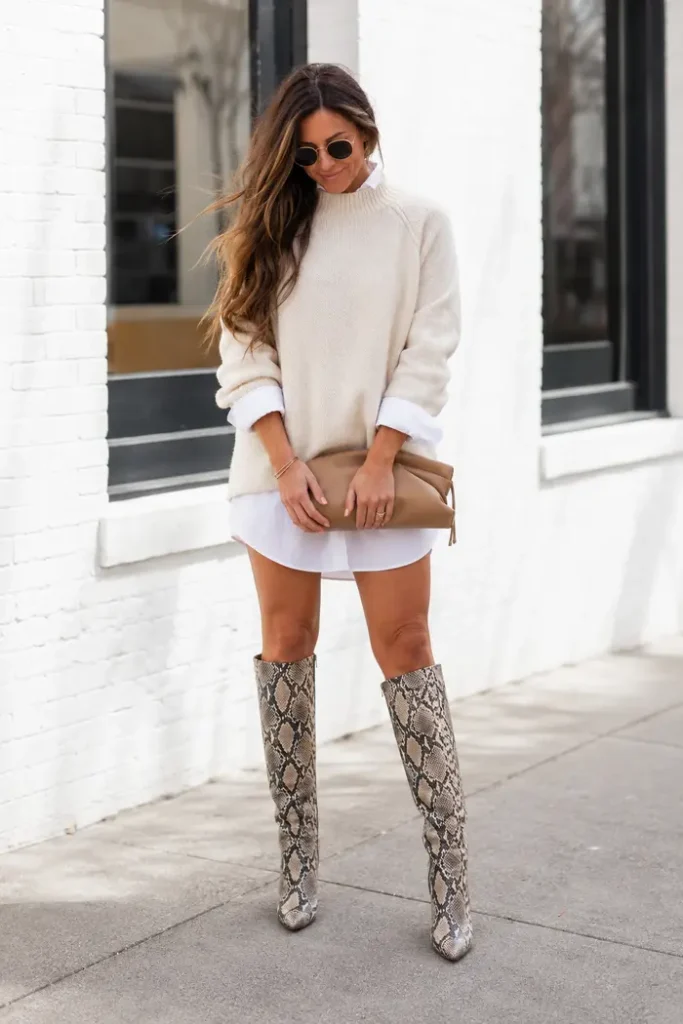
This cream knit over a crisp white shirt dress is such a good example. The sweater is relaxed and roomy, but the white hem still peeks out clearly underneath, so you can actually see the layering idea. Then the snakeskin knee-high boots come in with just enough drama to keep all those soft neutrals from feeling sleepy.
If your sweater is long, let a decent amount of the dress show below it. A tiny two-inch hem can look like your dress accidentally got trapped underneath. A visible skirt portion makes the contrast feel deliberate.

The same idea works with a midi dress, just with a little more movement. Here, an oversized ivory turtleneck sits over a black pleated midi, and the contrast is doing half the styling for you. The soft knit on top and sharp vertical pleats underneath create a clean break between the two pieces, while the snakeskin ankle boots keep the look from becoming too predictable.
For a longer dress, a sweater that ends around the high hip usually gives the easiest balance. You can go oversized, but you still want enough of the dress visible to keep your proportions long rather than boxy.
Get the proportions right before you worry about color
Color is fun, obviously, but proportion is what makes this outfit formula actually work. A fuller midi dress can handle a slightly slouchier sweater. A short dress usually looks better with a sweater that is cropped, cinched, tucked, or at least not hanging too far below the hips.
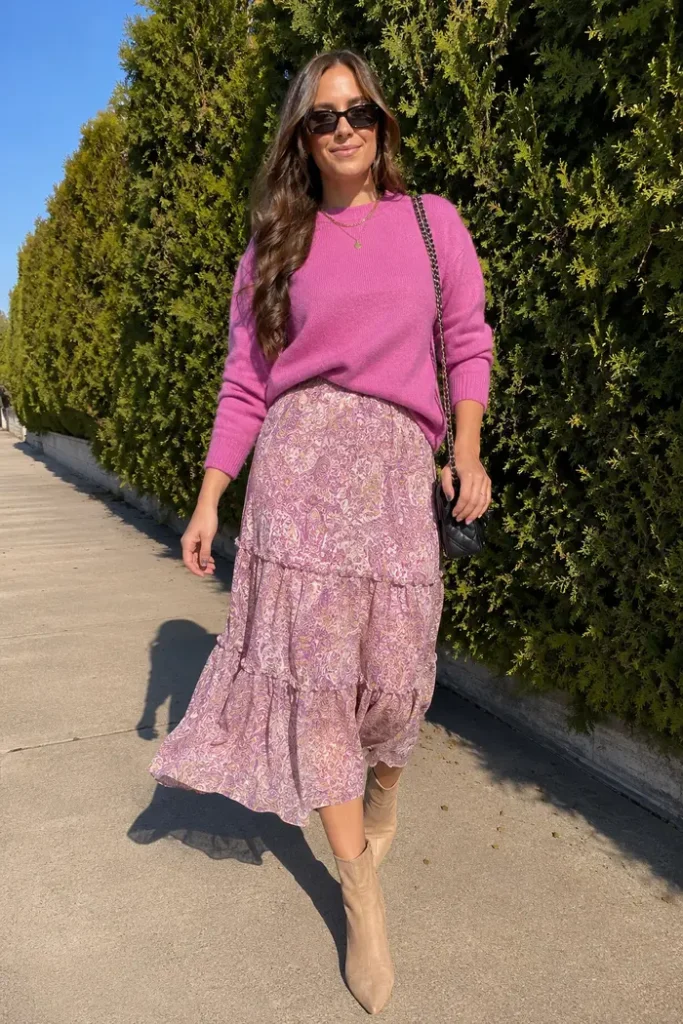
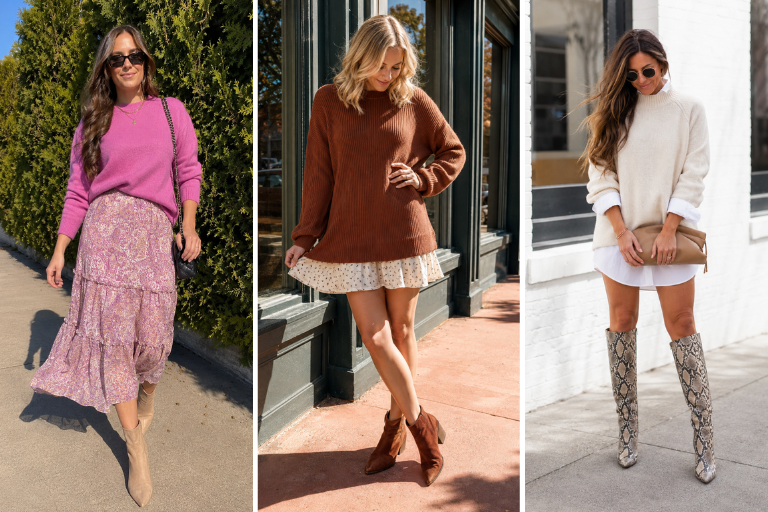
This pink sweater and paisley midi pairing works because the dress has enough length and softness to balance the knit. The colors also live in the same rosy family, so the print feels connected to the sweater instead of competing with it. Beige pointed boots and a small black shoulder bag keep the outfit grounded.
If you are nervous about mixing a sweater with a printed dress, steal this trick: pick one color from the print and repeat it on top. It is the fastest way to make two separate pieces look like they were always meant to be worn together.

Shorter hemlines need a little more waist definition, and this look absolutely gets it. The white ribbed turtleneck is cinched with a light belt, which creates a peplum-like shape over the teal mini. Tall caramel boots add visual weight at the bottom, so the outfit feels balanced instead of top-heavy.
This is especially useful when your sweater is too long to naturally hit at the waist. Belt it, blouse the knit slightly over the top, and suddenly you have the cropped effect without buying another sweater. Fashion math I fully support.
Define the waist when the knit starts swallowing the dress
The most common reason a sweater-over-dress outfit feels “off” is simple: the sweater drops too low and erases every bit of shape. You do not always need a fitted knit, but you usually need some clue about where your waist is.

A soft V-neck sweater over an ivory satin midi layer shows how pretty this can look without a hard belt or obvious tuck. The sweater drapes loosely, while the silky hem falls close to the body and keeps the outfit from becoming bulky. White sneakers make the whole thing feel casual and modern rather than overly precious.
When the dress fabric is sleek, you can get away with more softness on top. Satin, jersey, and fine knits skim instead of puffing out, which gives an oversized sweater somewhere to fall without adding a ton of visual volume.

A cardigan gives you another easy option because the button line naturally creates structure. This fuzzy taupe cardigan with the white crochet midi layer feels soft and romantic, but the cropped-ish length keeps it polished. The pointed taupe boots and matching little handbag make the neutral palette look very intentional.
If your dress has lots of texture, lace, crochet, ruffles, or gathering, keep the sweater shape relatively simple. Let one layer be the detail girl and the other be the calm friend who holds everything together.
Mix textures so the layers look intentional
One of the easiest ways to make this styling trick look expensive is to mix textures instead of piling on more accessories. A chunky knit over crisp cotton, a fuzzy cardigan over crochet, or a ribbed sweater over a floaty printed dress gives the eye something to read even when the colors are simple.
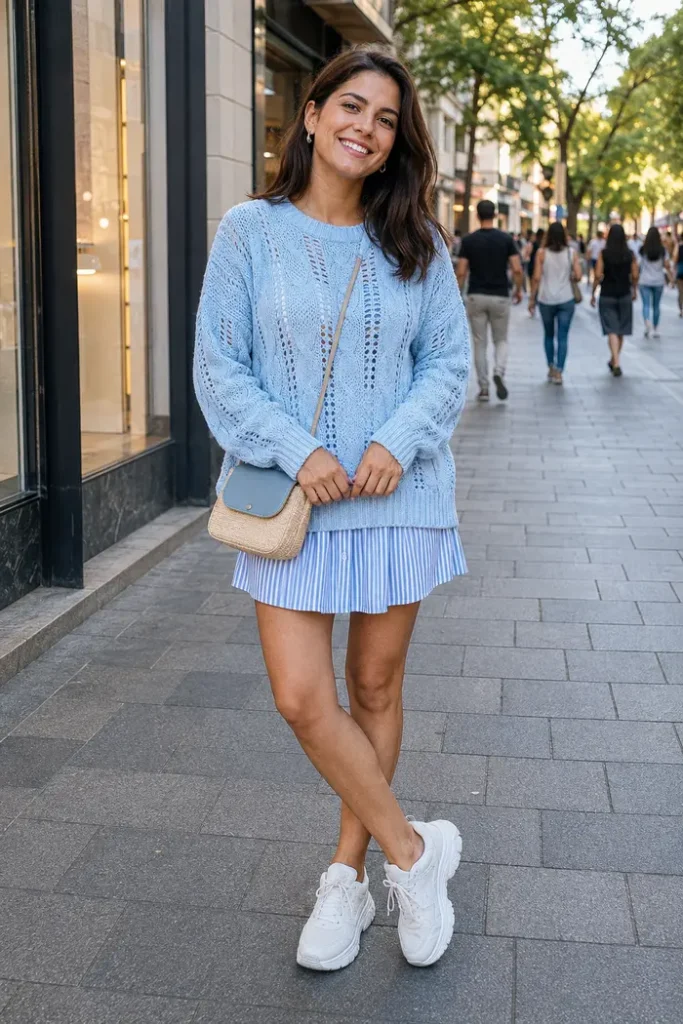
This pale blue knit over a blue-and-white striped mini is basically a masterclass in tonal layering. The open-knit texture makes the sweater feel light, the striped hem adds a crisp little contrast, and chunky white sneakers keep it playful. The woven crossbody bag also brings in a warm neutral so the blues do not feel too matchy-matchy.
For transitional weather, this is such an easy formula: lightweight dress, breathable knit, bare legs, sneakers. You get the layered look without dressing like it is already deep winter.
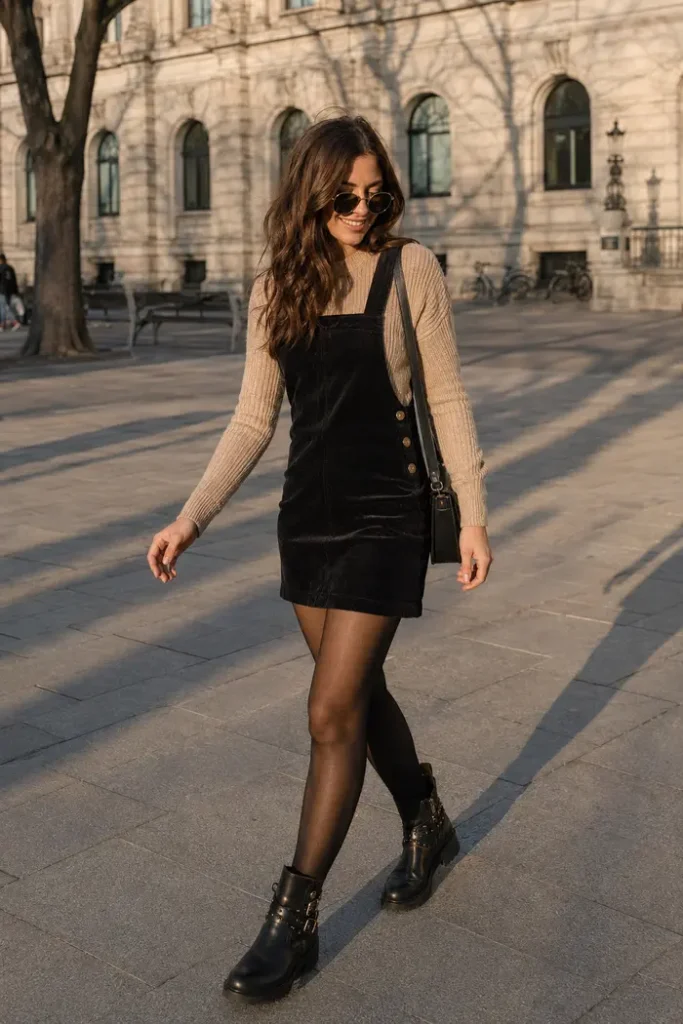
And then there is the exception worth knowing. If your dress is structured like a pinafore, the better move can be reversing the layers and putting the sweater underneath. A slim beige ribbed knit under this black mini pinafore keeps the shape of the dress visible, while sheer tights and chunky black boots make the whole thing feel properly fall-ready.
So yes, the sweater-over-dress rule has a loophole. When the dress has straps, a fitted bodice, or a really good neckline you do not want to hide, let the knit sit underneath instead.
Use a knot, crop, or vest when you want more shape
If you love the idea of a sweater over a dress but hate losing your waist, shorter sweater shapes are your best friend. You can buy them cropped, knot a thinner knit, use a hidden belt, or reach for a sweater vest when you want the dress to stay more visible.

This cream top knotted over a leopard midi skirt shows exactly why the trick works, even though this particular outfit uses a skirt rather than a dress. Pulling the top up to the natural waist lets the printed midi keep its full length and movement. Add white sneakers and a wide-brim hat, and the result is easy, feminine, and very weekend-coded.
You can copy the same knot placement over a dress with a fuller skirt. Keep the knot around the waistline, not down at the hips, so the dress still gives you shape instead of turning into one long column.

A sweater vest is the neatest shortcut of all. This cropped black vest over an oversized white shirt dress adds structure across the torso while still letting the sleeves, collar, cuffs, and mini hem do their thing. Black lace-up boots and a small black bag repeat the vest, so the outfit looks crisp instead of random.
This is a great option when a full sweater feels too warm or too bulky. You still get that cozy layered texture, but your arms stay free and the dress keeps more of its original personality.

A true cropped sweater makes the formula almost foolproof. The wide-sleeve white turtleneck here stops right around the waist, leaving the dark micro-print midi dress to flow underneath. Beige ankle boots echo the lighter tones and keep the outfit soft rather than high-contrast from head to toe.
If you already own a lot of midi dresses, a cropped sweater is probably the most useful knit you can add. It gives you shape without tucking anything, which is especially nice with delicate fabrics you do not want to bunch up.
Let your shoes finish the proportion
Shoes matter more here than they do in a basic sweater-and-jeans outfit because you are already playing with multiple hemlines. The right pair can make the layers feel connected. The wrong pair can make the outfit feel chopped into three separate sections.
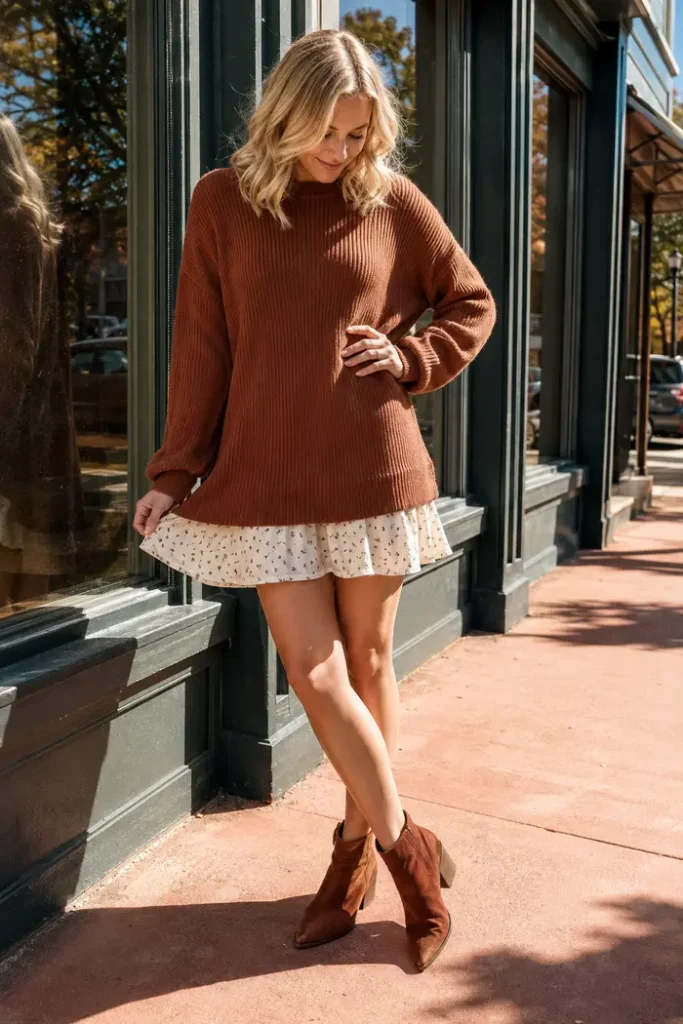
With a short dress, ankle boots are an easy win. The rust sweater here sits over a tiny cream printed hem, while brown pointed ankle boots repeat the warm tone up top. That repetition makes the outfit feel pulled together even though the sweater and dress are different colors.
If your sweater nearly covers a mini dress, boots with a little visual weight are usually better than a super-delicate shoe. They help anchor the oversized top half and make the visible sliver of dress feel intentional.

For a midi, sleek ankle boots keep the line clean. This chocolate turtleneck is belted over a dark floral midi, so you get a defined waist, a floaty skirt, and a sharp black boot underneath. The rich brown, black, rust, and muted floral tones all sit in the same autumn palette, which makes the outfit feel polished without being fussy.
Notice what the belt is doing too. It is not just there as an accessory. It controls where the sweater ends visually, which is exactly what makes the dress underneath read like a skirt instead of an extra layer of fabric.
The easiest sweater-and-dress formulas to remember
If you want the low-effort version, keep this in your back pocket: oversized sweater with a straight or pleated midi dress, cropped sweater with a fuller midi dress, belted sweater with a mini dress, and sweater vest with a shirt dress. Those four combinations cover a ridiculous amount of outfit territory.
Then use your shoes to decide the mood. Sneakers make the look casual and daytime-friendly. Ankle boots sharpen it up. Knee-high boots are perfect with minis and shirt dresses when you want more coverage. And if everything is neutral, a printed boot or bold bag can be the one interesting thing that keeps the outfit from disappearing into beige.
The biggest thing I would avoid is stacking volume everywhere. A chunky oversized sweater, a very full dress, a giant scarf, and heavy boots can start to feel like your clothes are wearing you. If one piece is big, let another part of the outfit bring back some shape.
FAQ: wearing a sweater over a dress
How do you keep a sweater cropped over a dress?
You can use a slim belt over the sweater and gently blouse the knit over it until the belt disappears. For a thinner sweater, a small hair elastic can also create a hidden knot that you tuck underneath. A naturally cropped sweater is the cleanest option if you wear this combo often.
What kind of sweater looks best over a midi dress?
Cropped crewnecks, slightly oversized turtlenecks, soft V-necks, and shorter cardigans all work well. The main thing is making sure the sweater ends high enough that a generous amount of the midi dress stays visible.
Can you wear an oversized sweater over a dress?
Absolutely. It looks best when the dress underneath is relatively streamlined or has enough length to balance the sweater. If the combination feels too boxy, add a belt, use a front tuck, or choose more fitted shoes to bring the silhouette back into focus.
Can you wear a sweater over a dress for work?
Yes. A fine-knit sweater over a midi dress is especially office-friendly. Keep the colors cohesive, choose a clean neckline, and finish with loafers or polished ankle boots. A sweater vest over a shirt dress can also look very put together without feeling stiff.
The bottom line
Learning how to wear a sweater over a dress is really learning how to play with proportion. Let enough of the dress show, give the waist a little definition when you need it, mix textures on purpose, and make the shoes part of the equation.
Once you stop thinking of the dress as one untouchable outfit and start treating it like the prettiest skirt in your closet, the combinations multiply fast. Which, frankly, is excellent news for every summer dress you were about to exile until spring.