How to Look Expensive on a Budget Without Buying a Whole New Wardrobe
Here is the mildly annoying truth about looking expensive: the price tag is doing far less work than you think. You can wear a pricey blazer and still look a little chaotic if the shoulders collapse, the trousers puddle, and your bag is hanging on for dear life. Meanwhile, a crisp shirt, well-cut pants, clean shoes, and a simple bag can look suspiciously luxurious.
So if you have been trying to figure out how to look expensive on a budget, good news, babe. You do not need a secret trust fund, a closet full of designer labels, or a weekly delivery from Net-a-Porter. You need better fit, smarter color choices, a little restraint, and the kind of finishing details people notice without realizing they are noticing them.
The goal is not to dress like a walking price tag. It is to look polished, intentional, and completely at ease in what you are wearing. That energy is much harder to fake, and thankfully, much cheaper to create.
Start with fit, because nothing looks richer than clothes that behave
If your budget is limited, spend your attention before you spend your money. Fit is the first thing to check. Shoulder seams should sit where your shoulders actually end. Waistbands should lie flat. Shirt buttons should not pull. Trouser hems should look deliberate with the shoes you actually wear.
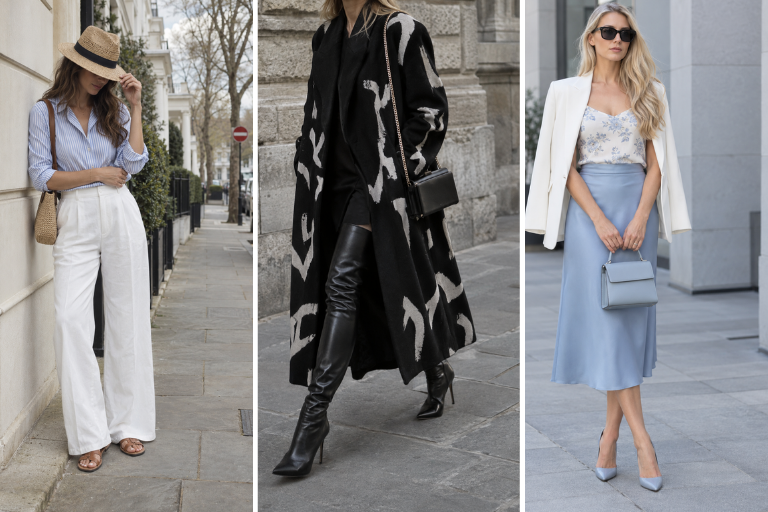
This is why a simple striped button-down tucked into high-waisted white trousers can look so expensive. The shirt has ease without drowning the body, the trousers fall in one long clean line, and the brown sandals, straw hat, and woven shoulder bag keep the whole thing relaxed instead of fussy. Nothing is screaming for attention, but every proportion is doing its job.
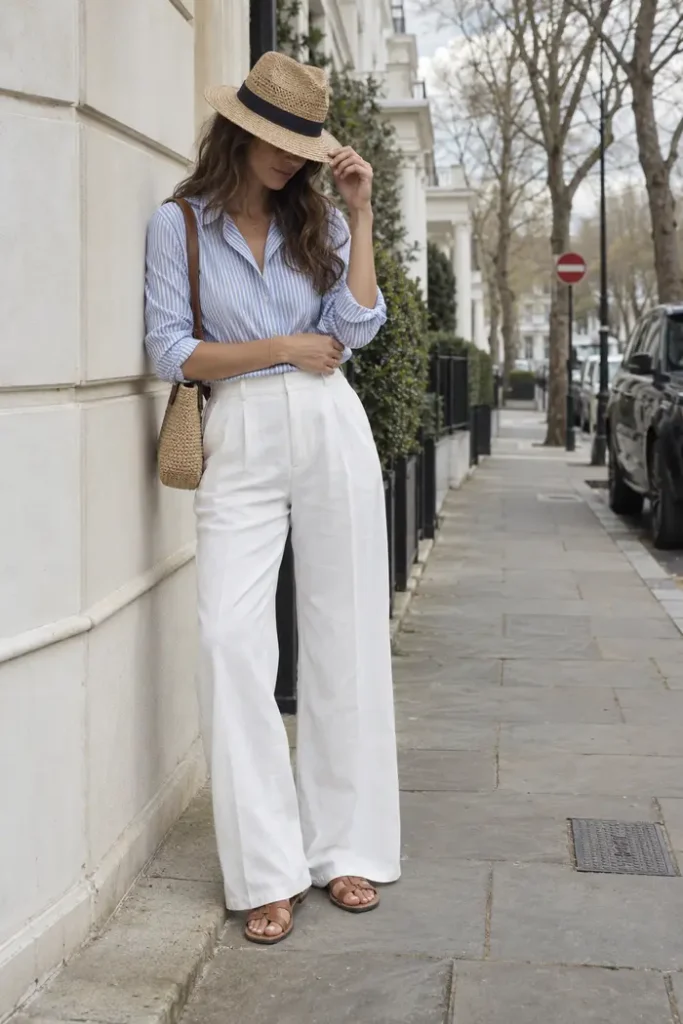
You also do not need full tailoring on everything. Hem a trouser. Move a button. Add a tiny waist adjustment. Cuff a sleeve neatly. If an inexpensive piece fits you beautifully, people read the silhouette before they ever read the label.
Use restraint, then give the outfit one thing to talk about
Expensive-looking style is rarely about piling on more. It is usually about editing better. Pick one hero element, then let the rest of the outfit support it. That could be a glossy trench, a satin skirt, a saturated top, an amazing pair of boots, or a sculptural bag. One memorable choice feels fashion-y. Five memorable choices start competing for custody of the outfit.
Take the caramel patent trench below. The shine is bold, so the rest stays grounded with a black turtleneck, brown plaid wide-leg trousers, a compact black belt bag, and sleek white accents. It looks dramatic, but not messy. That is the difference.
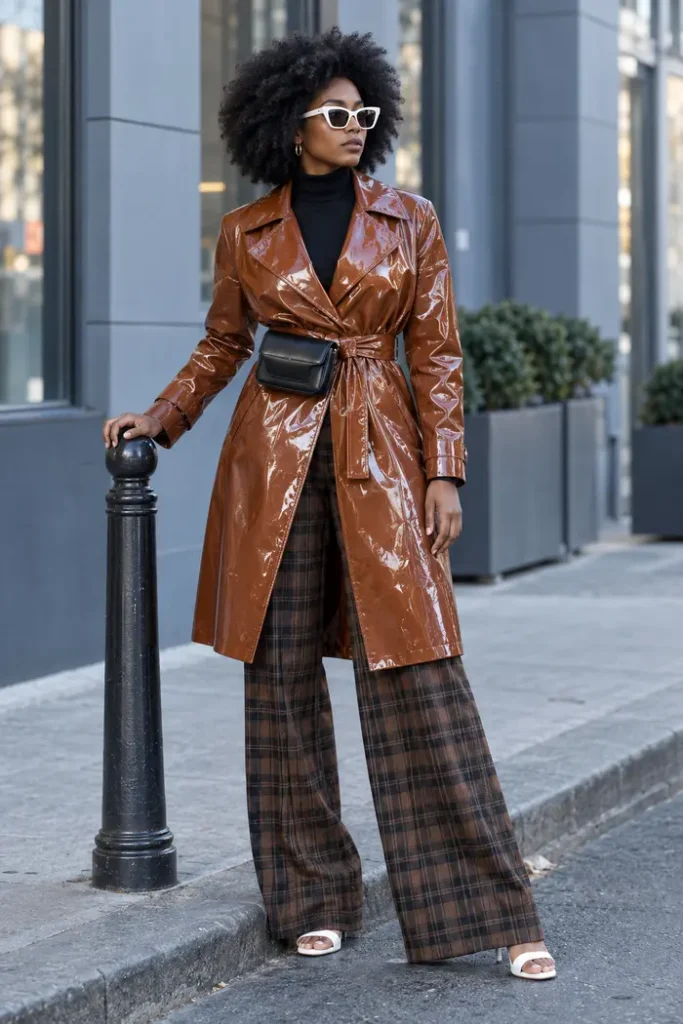
Soft, tonal combinations work beautifully too. Powder blue satin with a delicate floral camisole, a white blazer, a matching blue bag, and pointed pumps feels expensive because the color story is tight. The satin brings movement, the blazer brings structure, and the accessories repeat the same cool palette instead of introducing four unrelated ideas.
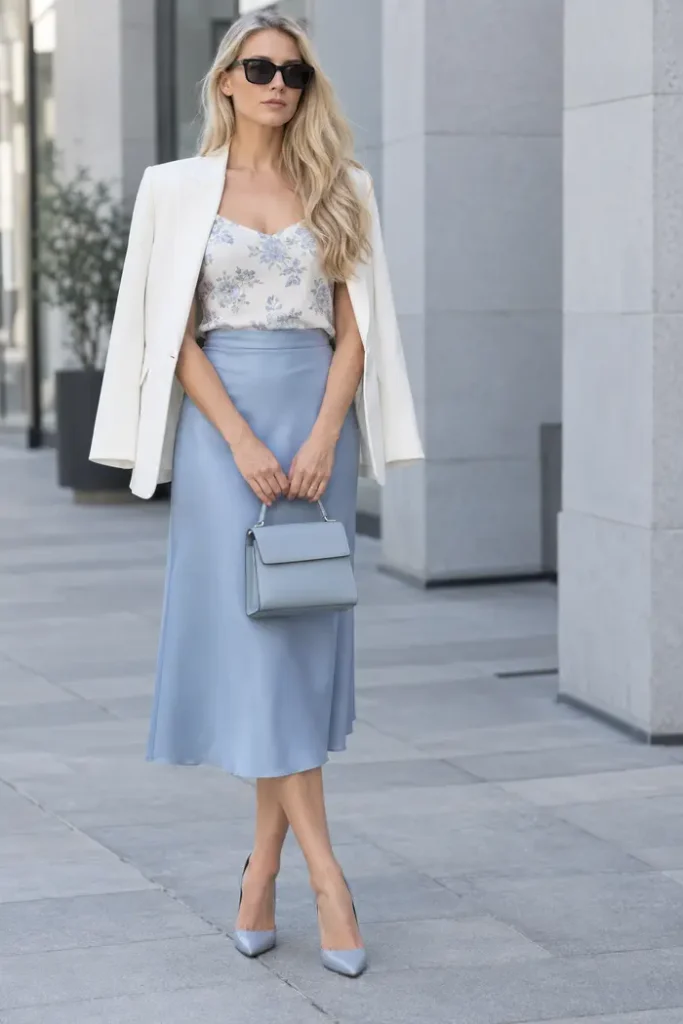
And no, looking expensive does not mean living in beige until the end of time. A rich fuchsia top with deep indigo denim can look just as polished when the shapes are clean. Here, the fitted off-shoulder top balances the exaggerated jeans, while the black studded bag and chunky shoes keep the bright color from feeling sugary. Saturated color looks luxe when the rest of the outfit knows when to be quiet.
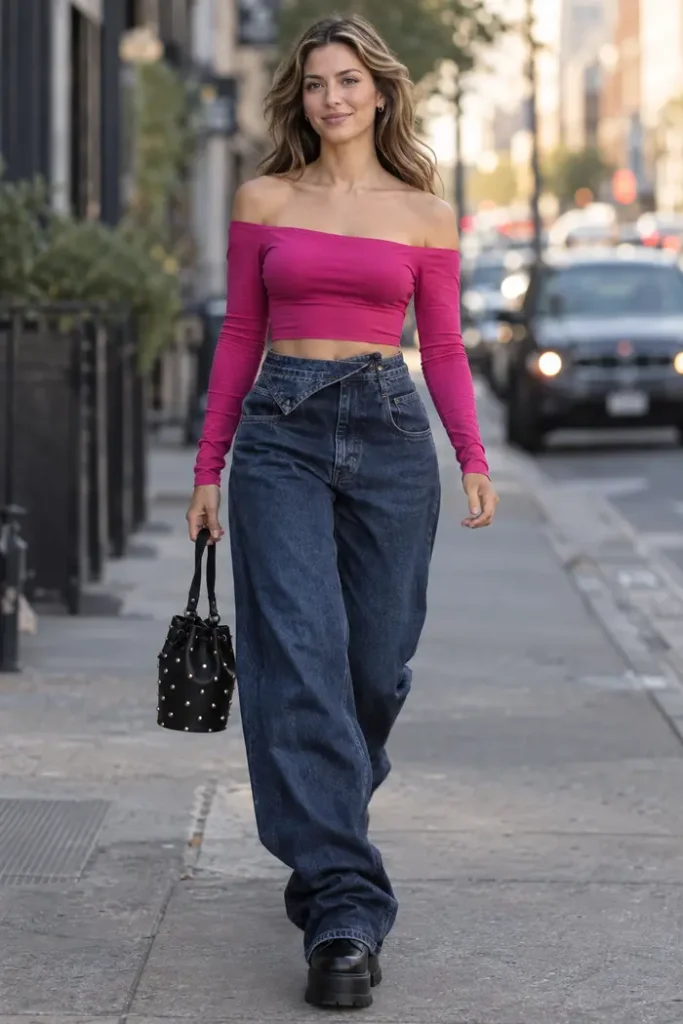
Make inexpensive basics look intentional, not accidental
Basics are where a budget wardrobe can absolutely win. A white tank, white shirt, blue jeans, black trousers, a plain knit, none of these need to be expensive. What matters is their condition and how you style them.
Keep whites actually white. Steam collars. De-pill knits. Snip loose threads. Replace a scratched button if it is bothering you. Clean the edges of your shoes. These tiny jobs are deeply unglamorous, but they are the reason a basic outfit looks considered instead of like you got dressed during a fire drill.
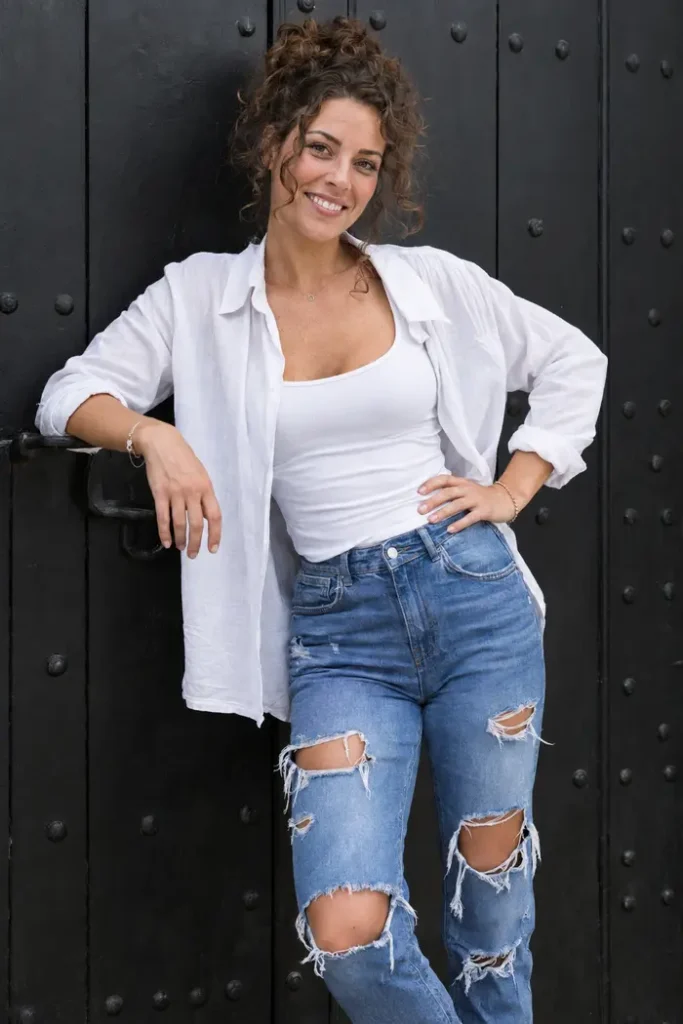
The layered white tank and button-down with distressed denim is a good example of casual pieces still looking pulled together. The shirt is crisp, the tank is fitted, the jewelry is delicate, and the denim is doing the visual heavy lifting. Even with ripped jeans, the top half feels fresh and clean, so the outfit reads relaxed rather than sloppy.
There is one more basic that barely gets credit because nobody sees most of it: your underwear. A smooth, well-fitting bra and seamless briefs can completely change how a dress, trouser, or fitted top sits. The point is not shapewear or changing your body. It is creating a clean foundation so the clothes on top can fall the way they were designed to.
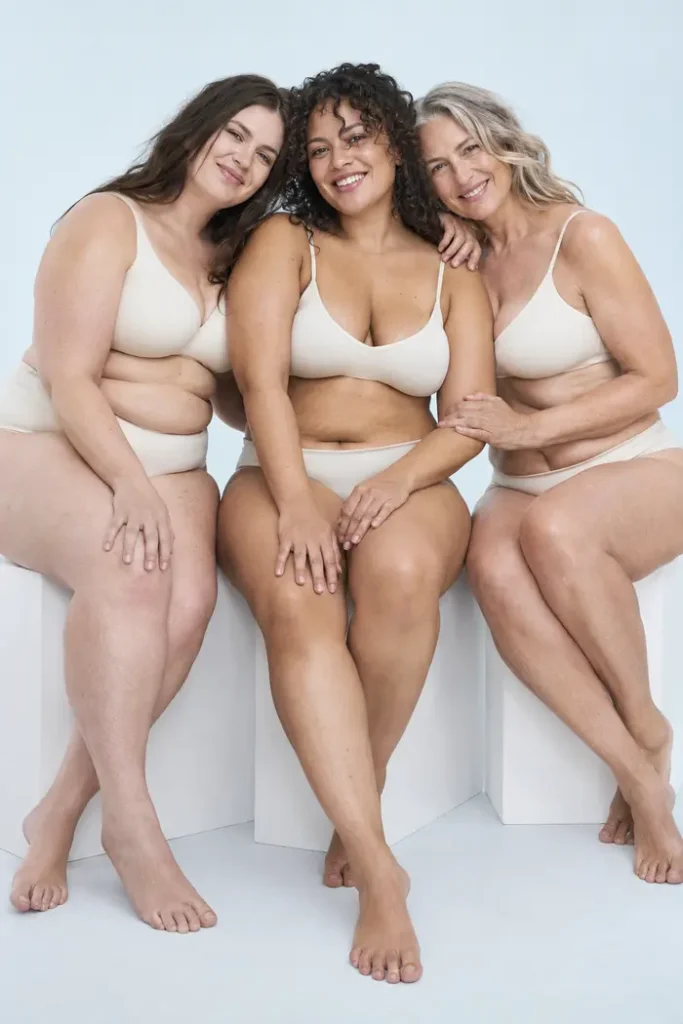
If your bra band rides up, cups gap, straps dig in, or underwear seams are cutting through a fluid fabric, fixing that can make an old outfit look better immediately. A nude-to-you base, the right bra shape for the neckline, and a slip under clingy skirts are low-drama upgrades with very high payoff.
Let structure and accessories finish the outfit for you
When you are working with affordable clothes, structure is your best little accomplice. A coat that holds its line, a blazer with a defined shoulder, a bag that keeps its shape, or a belt that creates a clean waist can make softer or cheaper pieces around it look instantly more elevated.
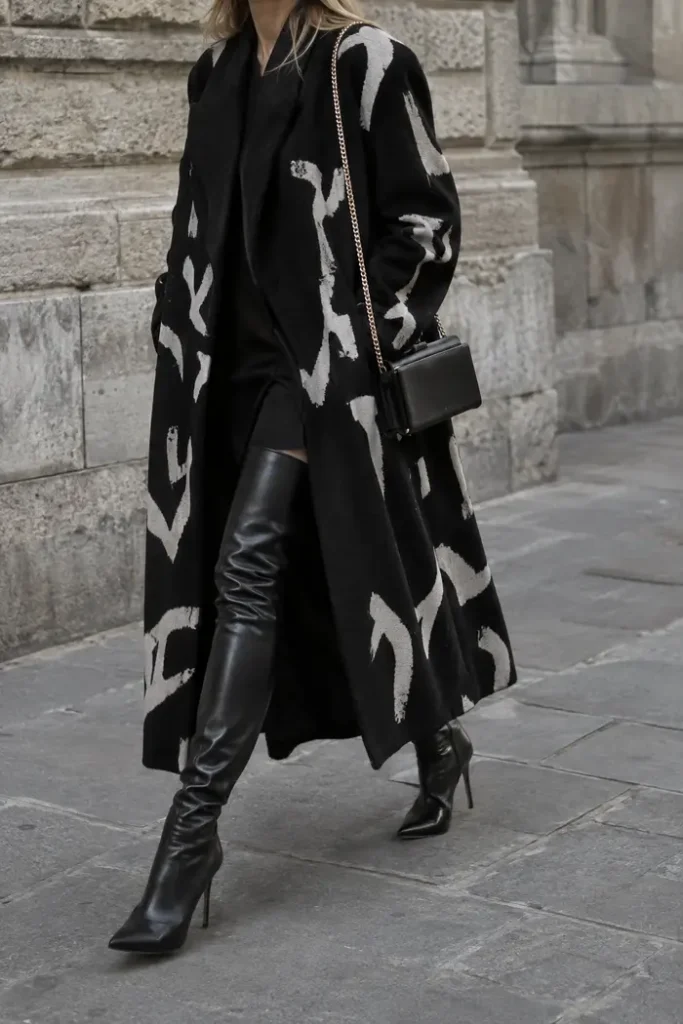
The long black coat here is the whole event, and it knows it. The oversized cream pattern gives it personality, while the black thigh-high pointed boots, small boxy bag, and all-black base make the look feel edited. You do not need a dozen accessories when the silhouette already has presence.
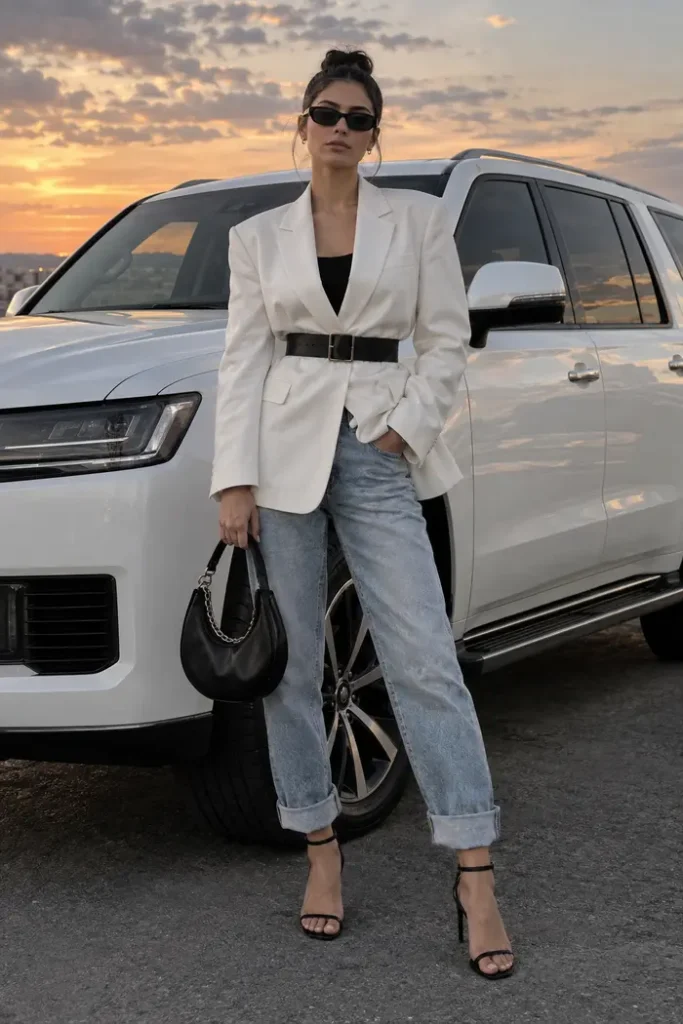
The same logic works with everyday denim. A white blazer over a black top and loose light-wash jeans could easily skew casual, but adding a wide black belt creates shape through the middle. Then the black ankle-strap heels and curved handbag repeat the same color, so the whole outfit looks connected rather than pieced together.
This is also where you can save money strategically. Instead of buying five random bags, own one or two that hold their shape and work with most of your wardrobe. Instead of chasing trendy shoes every month, keep a sleek pointed pair, a simple sandal, a polished loafer, or a clean boot in great condition. If the hardware is scratched, the heel cap is worn down, or the faux leather is peeling, that is when the expensive illusion usually clocks out early.
The polished woman effect is mostly maintenance
You know that person who somehow looks put together in a white tee and jeans? Half the magic is not the outfit. It is the everything around the outfit. Hair looks cared for. Nails are neat. Skin looks hydrated. Clothes smell fresh. Shoes are clean. Nothing seems forgotten.
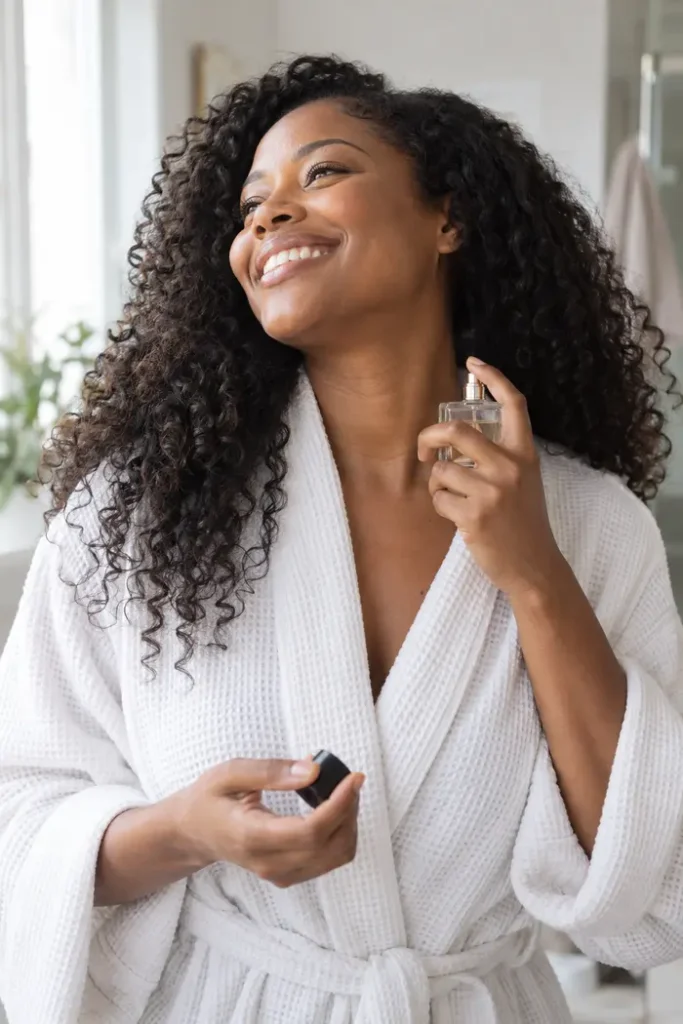
Scent is part of this too. You do not need the fanciest perfume in the department store. Pick a fragrance you genuinely love, apply it lightly, and let it become part of your getting-ready ritual. Clean skin, moisturized body, fresh laundry, and one consistent scent will always feel more luxurious than spraying half a bottle over yesterday’s sweater.
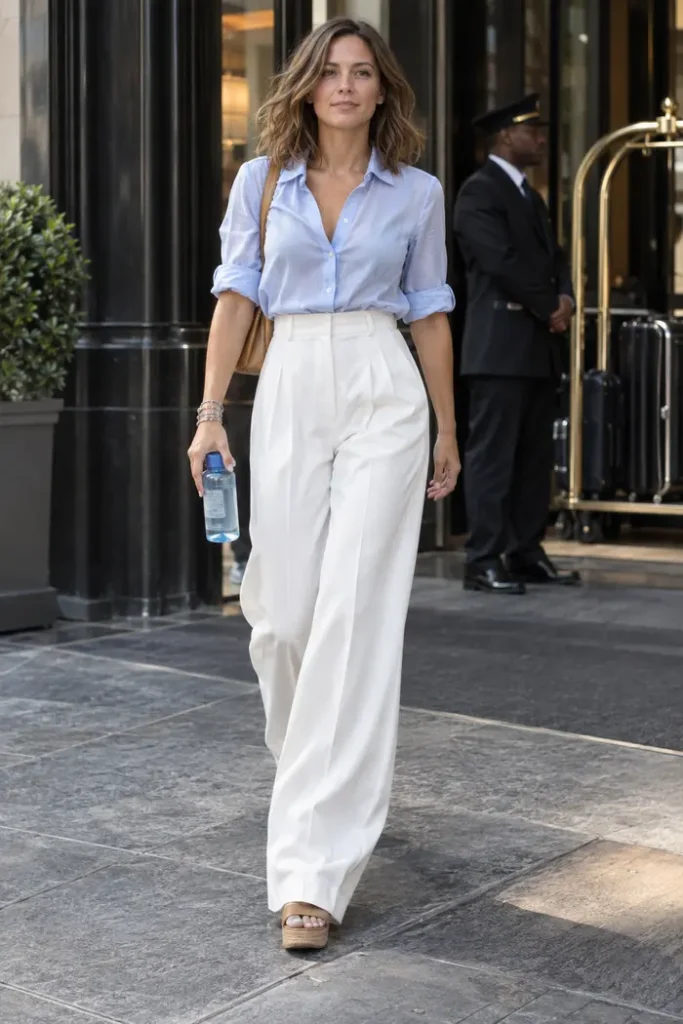
Clothing care gives you the same return. Look at how much mileage a pale blue shirt and flowing white trousers get from simply being pressed, proportioned, and clean. Add a tan shoulder bag, minimal jewelry, and neutral platforms, and suddenly the basics look deliberate enough for a nice hotel lobby, brunch, or a summer office.
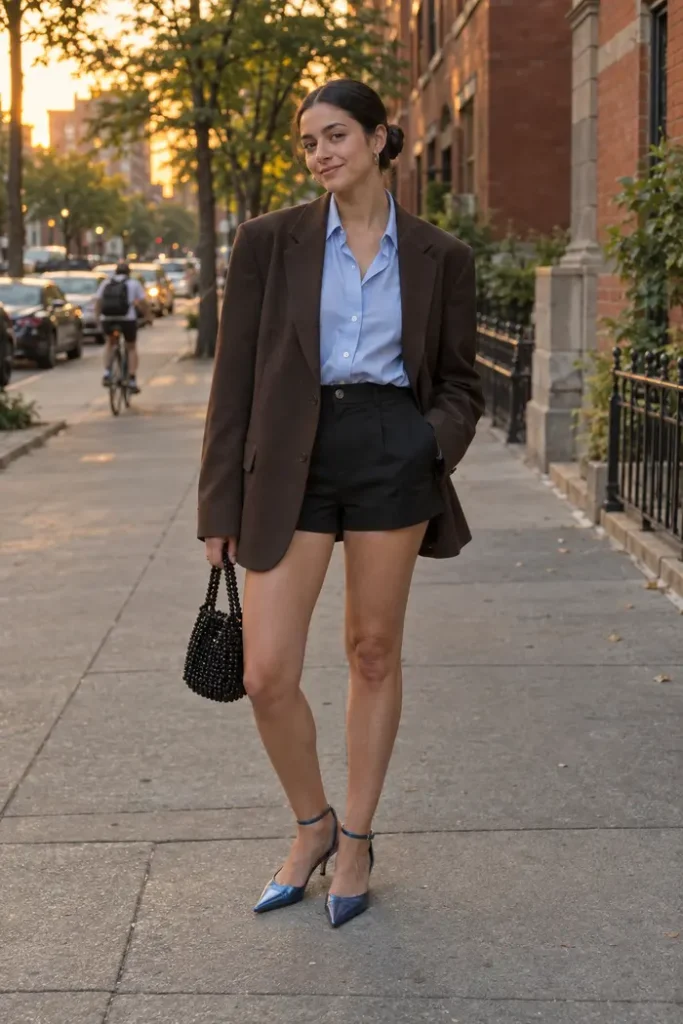
A polished look also does not need to be prim. The oversized chocolate blazer with a blue shirt, black tailored shorts, beaded bag, and pointed blue heels works because there is a conversation between relaxed and sharp. The blazer is roomy, the shorts are clean and compact, and the shoes echo the shirt. That tiny color repeat makes the styling feel thought-through.
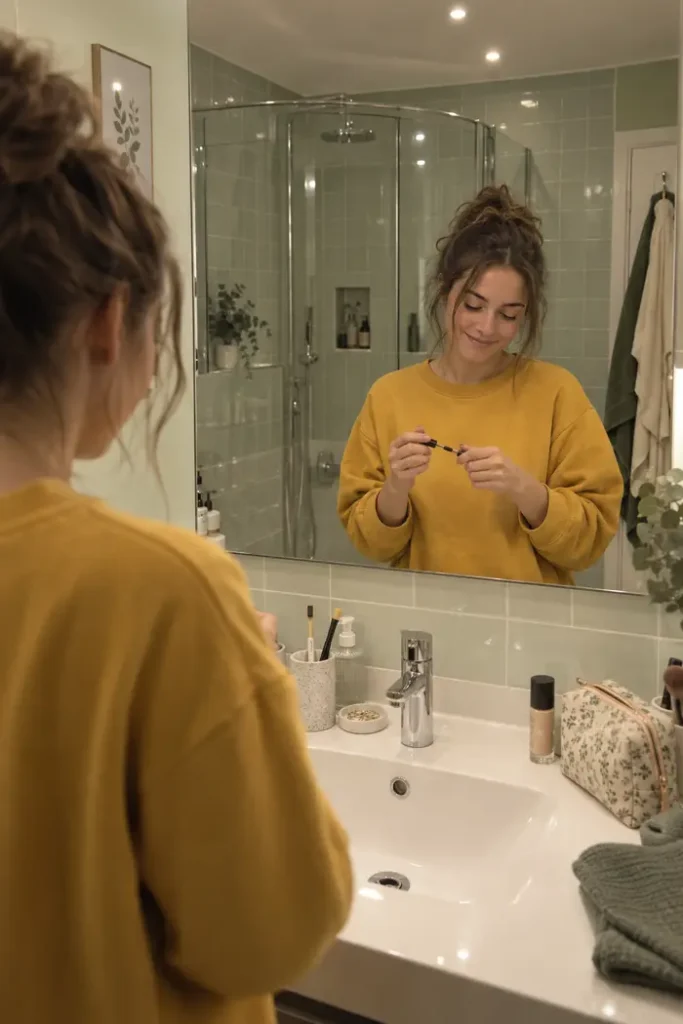
And yes, beauty counts as styling. A five-minute routine that makes you feel awake and pulled together can do more for the final effect than another impulse-buy top. Maybe that is brushed brows, mascara, cream blush, lip balm, and hair that looks intentionally tied up. Maybe it is bare skin and clean nails. The expensive part is not how much makeup you wear. It is that the result feels cared for.
Spend where people can actually see the difference
If you do have a little money to invest, put it where it changes the whole outfit. Tailoring is usually a better upgrade than another trendy top. A solid blazer is more useful than three flimsy jackets. Shoes you can maintain are smarter than a pair you are terrified to wear. A good steamer might genuinely improve more outfits than a new handbag, which is rude but true.
When shopping, look at fabric before brand. Hold it up to the light. Check whether the seams lie flat. Look at the lining. Tug gently at buttons. See whether the print matches at major seams. If the fabric pills in the store or the hardware already looks plasticky, it is not going to become more convincing once it gets home.
Secondhand shopping is brilliant for this because older blazers, wool coats, leather bags, silk scarves, and better-quality knitwear often cost less than new fast-fashion versions. You are not shopping for a logo. You are shopping for weight, drape, construction, and condition.
The easiest expensive-looking outfit formulas to repeat
If you want this to feel easy in real life, build a few formulas and stop reinventing the wheel every morning. Try a blue or white button-down with high-waisted trousers and simple leather or woven accessories. Or wear straight jeans with a fitted top, a structured blazer, a belt, and sleek shoes. For something dressier, pair a fluid midi skirt with a simple camisole, a blazer, and accessories that stay in one color family.
The formula is basically this: one clean silhouette, one elevated texture, one structured element, and one or two accessories that look intentional. That is enough. You do not need a belt, scarf, statement earrings, giant sunglasses, layered necklaces, and a novelty bag all reporting for duty at once.
What usually makes an outfit look cheaper than it is
The biggest culprits are usually fixable: wrinkles, pilling, stretched necklines, trousers dragging on the ground, too many logos, peeling faux leather, cluttered accessories, visible underwear that was not meant to be visible, and shoes that clearly need a clean.
Also, beware of buying something only because it is trying very hard to look luxurious. Giant gold buttons, extreme shine, fake designer motifs, and unnecessary embellishment can make a budget piece look more expensive in the product photo and less expensive in real life. Simple construction has less to prove, and that is exactly why it often wins.
A quick FAQ on looking expensive for less
Do I have to wear neutral colors to look expensive?
Not at all. Neutrals are easy because they mix well, but deep, saturated colors can look just as luxe. The trick is controlling the palette. Let fuchsia, burgundy, emerald, cobalt, or chocolate be the main character, then keep the rest of the outfit calmer.
What is the cheapest way to make clothes look more expensive?
Steam them, clean them, and fix the fit. Those three things cost little or nothing and have an immediate visual payoff. After that, pay attention to shoes, bag structure, underwear lines, and simple grooming.
Which items are actually worth spending more on?
Spend more only where quality changes wear, fit, or longevity for you. That is often a coat, blazer, everyday shoe, handbag, bra, or knit you wear constantly. Everything else can absolutely be mixed with budget and secondhand pieces.
The real trick is looking intentional, not expensive
That is the whole secret. Looking polished on a budget is not about convincing anyone your outfit cost more than it did. It is about making choices that look considered: the right hem, the cleaner shoe, the better proportion, the pressed shirt, the bag that holds its shape, the lipstick or perfume that makes you feel finished.
Wear the budget pieces. Repeat the outfit. Tailor the trousers. Baby the shoes. Choose the fuchsia top if beige bores you. Expensive-looking style is not a shopping problem, it is an editing skill. And once you learn that skill, your closet gets a lot more useful without your bank account having to suffer for it.