20 80s Shag Haircut Ideas with Soft Volume
If you’re looking at 80s shag haircut ideas, I’m guessing you want the fun part of the decade without feeling like you’re wearing a costume. Think lifted crowns, feathered layers, flicked ends, face-framing bangs, and lots of movement, but with enough softness to make the cut feel current.
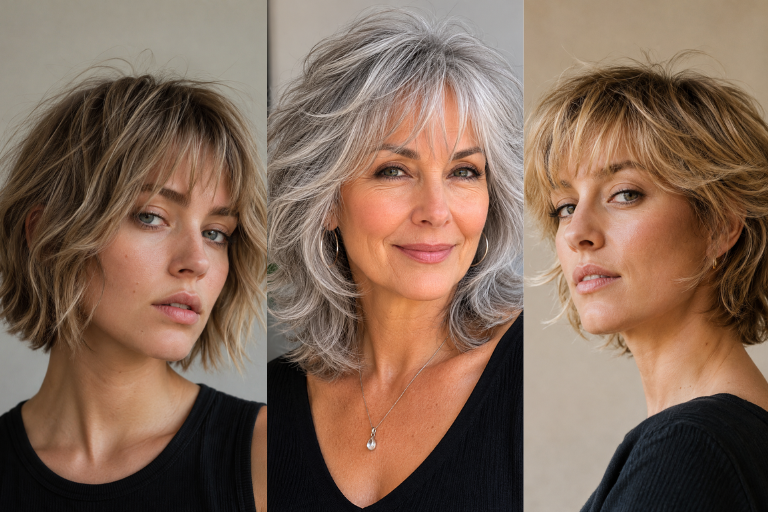
The biggest decision is how far you want to take the layering. A dramatic shag can have short crown pieces and a visibly disconnected shape, while a softer version keeps more weight through the bottom and concentrates the movement around the face. Length matters too. You can get the same 80s attitude from a tiny bixie, a collarbone cut, or hair that falls well past the chest.
Fringe changes the whole mood. Wispy bangs make the shape feel light, curtain bangs create those classic sweeping “wings,” and a micro fringe pushes the cut in a punkier direction. Your natural texture and density matter just as much. Fine hair usually benefits from strategic layering rather than endless thinning, while dense or curly hair may need more thoughtful weight removal and shaping.
I’d also be realistic about styling commitment. Some of these cuts look great with a quick air-dry and texture product, while the more polished feathered versions really come alive with a round brush or hot rollers. Below are 20 very different ways to wear the look, plus the details I’d actually mention in the salon chair.
20 80s Shag Haircut Ideas with Layers, Fringe, and Volume
1. Big-Crown 80s Shag with Soft Modern Ends
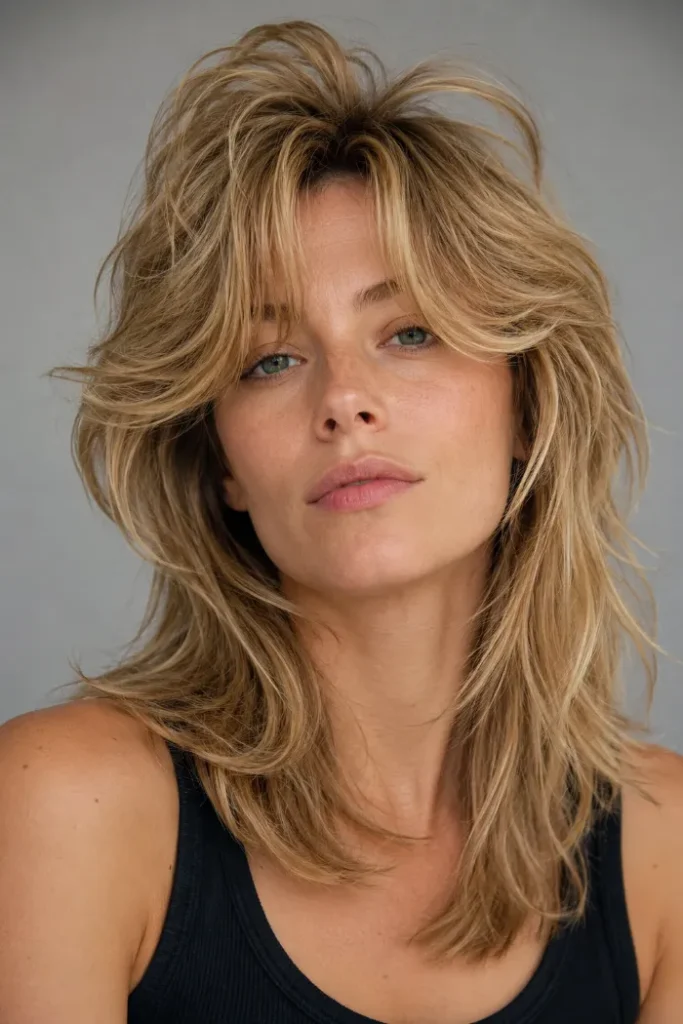
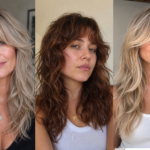
This shoulder-skimming blonde shag has the height I immediately associate with an 80s cut, especially through the crown and upper sides. Long face-framing pieces sweep away from the cheeks, while the ends stay softer and less aggressively feathered. The result is full and airy on top without making the lower half look overly thin or stringy.
Ask your stylist for short, lift-friendly crown layers that gradually connect into longer pieces through the sides and back. Keep enough density in the final few inches so the perimeter still feels modern. For styling, lift the roots while drying, then bend the face frame away from your face with a medium round brush.
2. Blonde Feathered 80s Shag
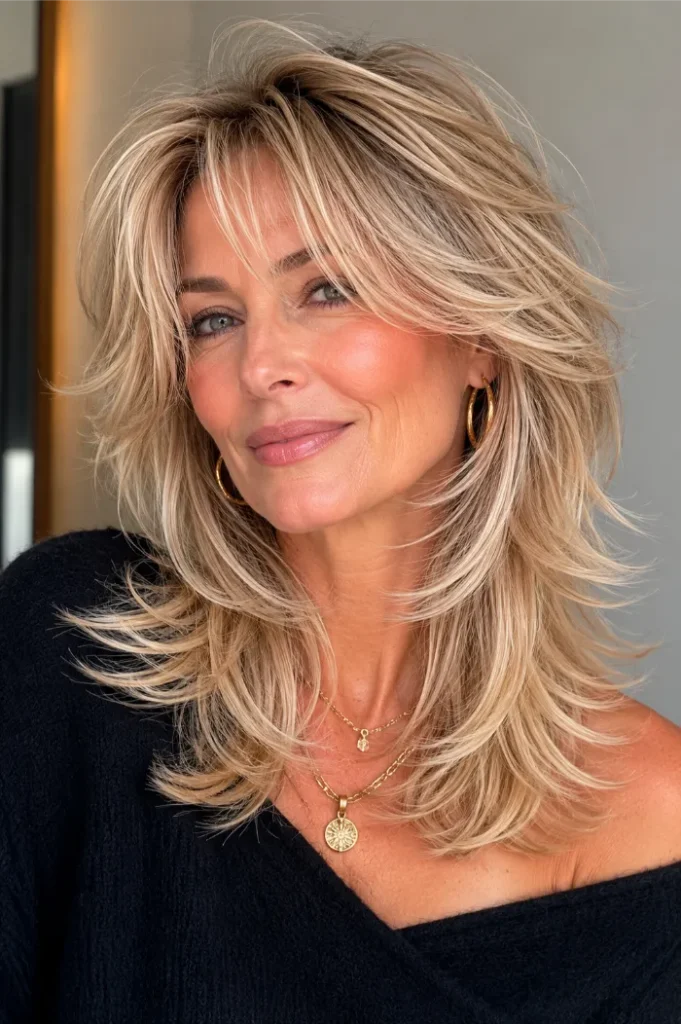
This is classic feathering turned up in the prettiest way. The blonde layers start high around the face and sweep outward in distinct, curved sections, while the longer lengths keep the silhouette flowing past the shoulders. A light, broken fringe blends into the sides instead of sitting as a separate heavy bang, which keeps all that volume looking soft.
Ask your stylist to build graduated face-framing layers from around the cheekbones downward, with longer feathered layers continuing through the perimeter. Request a light fringe that can separate naturally. At home, a round brush or large hot rollers will help you recreate those outward bends without making every layer look too perfectly curled.
3. Bouncy Blowout 80s Shag
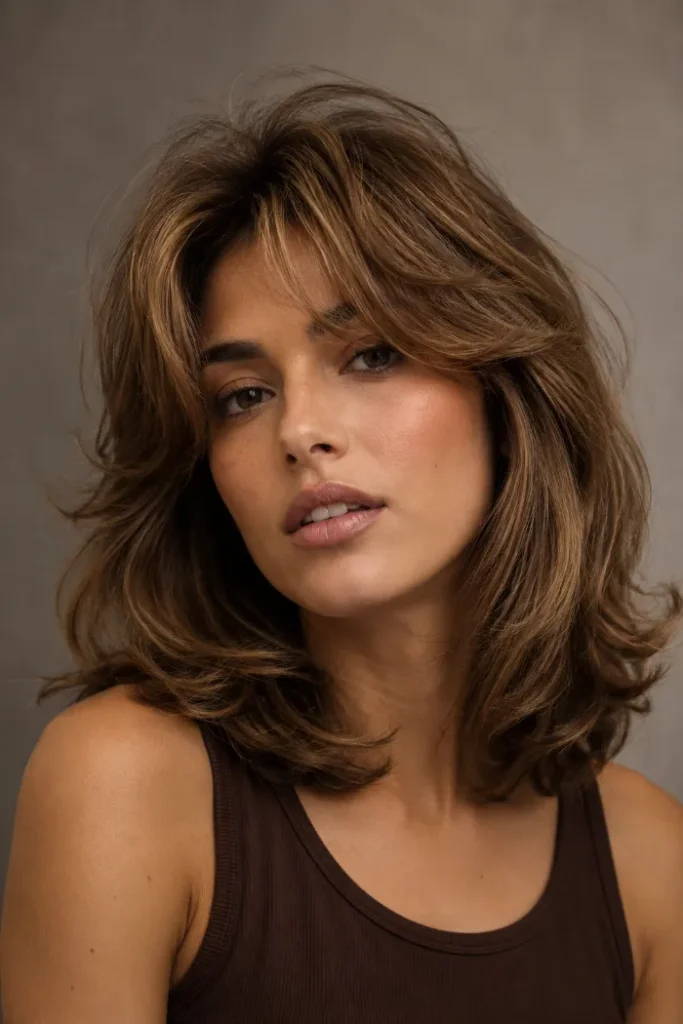
This brunette shag lands around the shoulders and gets its shape from rounded, bouncy layering rather than sharply separated pieces. The crown has plenty of lift, the cheekbone layers curve away from the face, and the bottom layers flip under and outward in different directions. Soft curtain-style fringe ties the whole blowout shape together.
Ask your stylist for connected layers with enough length left through the bottom to create a full, rounded finish. Have the front pieces cut so they can sweep away from the cheeks rather than dropping straight down. Style with a round brush in sections, alternating the direction slightly so the movement looks relaxed instead of helmet-like.
4. Choppy 80s Shag Bob
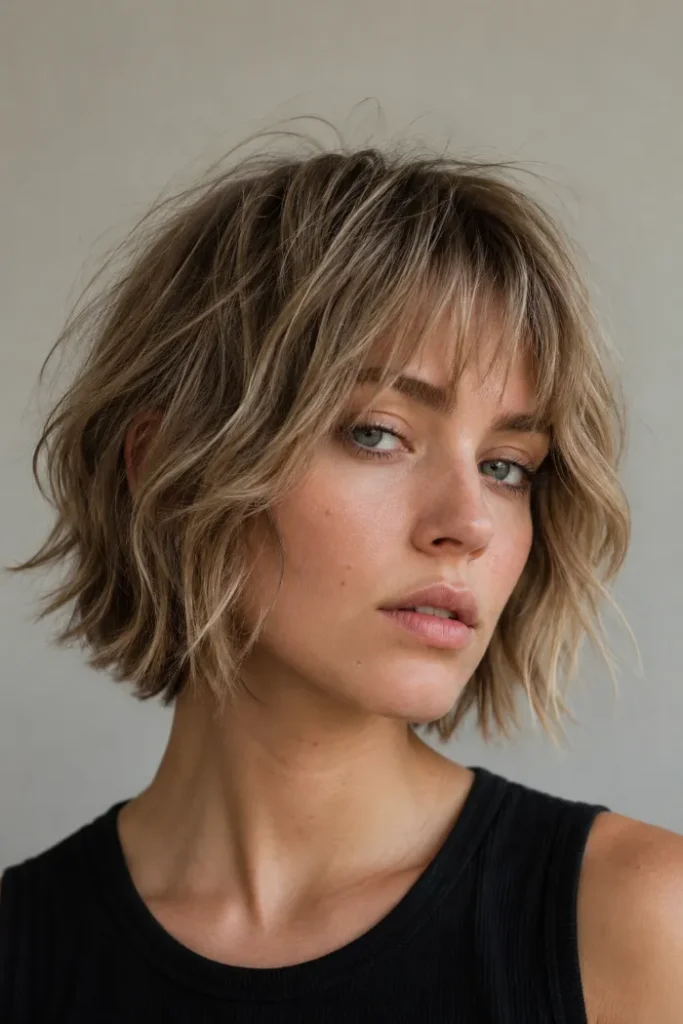
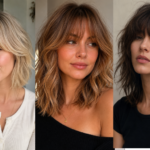
This short shag sits between a bob and a cropped wolf cut, with a loose jaw-to-neck-length perimeter and lots of broken movement through the sides. Wispy bangs skim the forehead, while longer pieces around the temples and cheeks keep the front soft. The lightly tousled finish makes the choppy layers feel casual instead of overly sculpted.
Ask your stylist for a bob-length perimeter with internal layers that release bulk and create movement without removing every bit of weight from the ends. Keep the fringe airy and slightly longer toward the temples. A small amount of texture cream scrunched through the mid-lengths can emphasize separation without flattening the crown.
5. Collarbone 80s Shag with Side-Swept Bangs
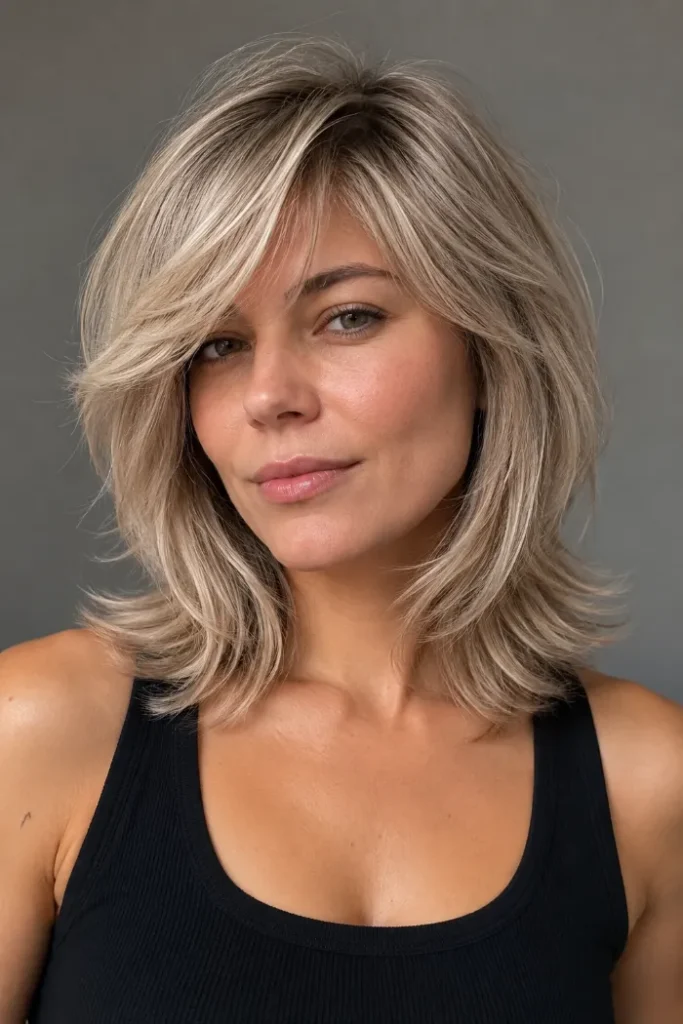
This blonde collarbone shag feels polished but still has that unmistakable feathered shape. The front is swept dramatically to one side, creating a long fringe that blends into cheek and jaw-length layers. Around the shoulders, the ends kick outward in soft sections, while the upper layers stay smooth enough to keep the silhouette controlled.
Ask your stylist for a collarbone perimeter with long, side-swept fringe and face-framing that begins around the cheekbone on the shorter side. Keep the crown layering moderate if you want this smoother finish. When styling, direct the fringe across the forehead first, then turn the lower layers outward with a round brush or iron.
6. Curly 80s Shag with Rounded Bangs
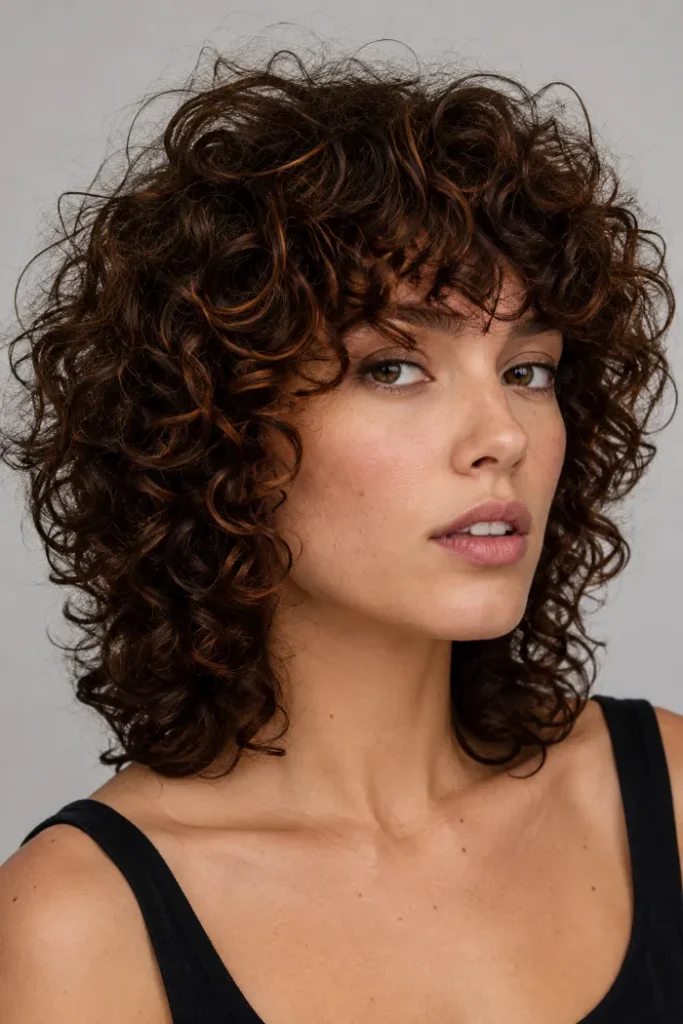
This curly shag is all about a rounded, full silhouette. The curls stack through the sides and crown rather than hanging in one heavy length, and the curly fringe sits naturally across the forehead. The overall length reaches around the shoulders, with enough layering underneath to let individual ringlets spring up and create that big 80s volume.
Ask your stylist to shape the cut around your actual curl pattern, with shorter layers where you need lift and enough length left where your curls shrink the most. Have the fringe cut conservatively so it does not bounce up too short when dry. Diffuse with minimal touching and use a light curl gel for definition.
7. Curved 80s Shag Lob
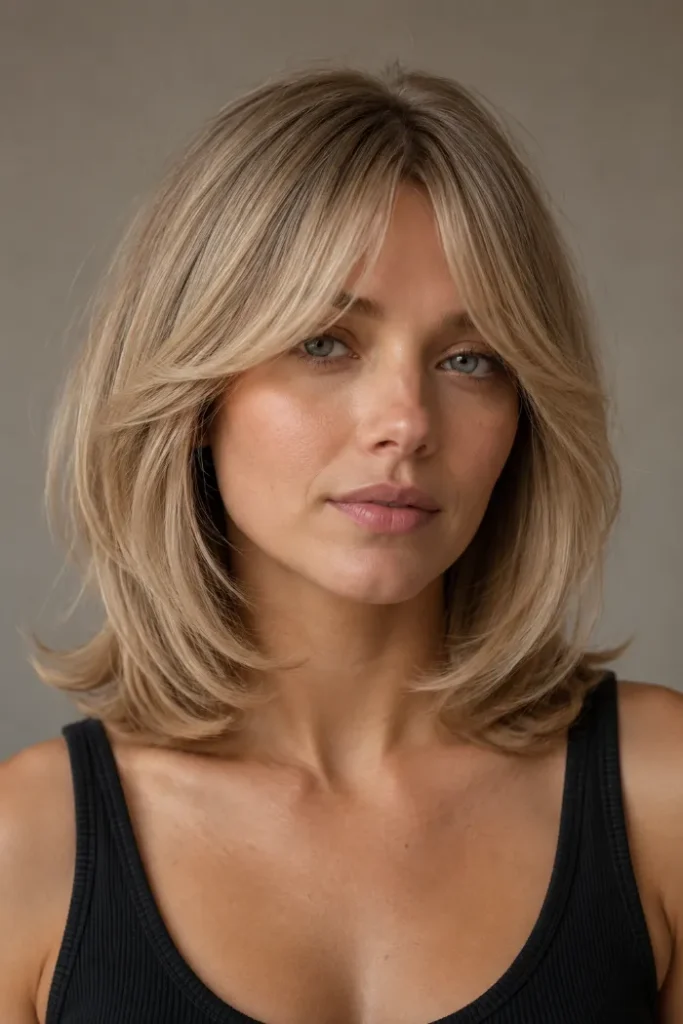
This lob takes the 80s shag in a smoother direction. The center-parted front sections curve away from the face, then the lower layers bend inward and outward around the shoulders to create a soft bell-like shape. There is visible layering, but the perimeter still looks substantial, making this a nice option if you do not want an aggressively piecey finish.
Ask your stylist for a shoulder-length lob with rounded face-framing layers and plenty of weight left through the baseline. The shortest front pieces can sit around the cheekbones and blend gradually into the sides. Use a large round brush to create smooth curves, concentrating the bend at the ends instead of adding tight curls.
8. Fine-Hair 80s Shag with Wispy Bangs
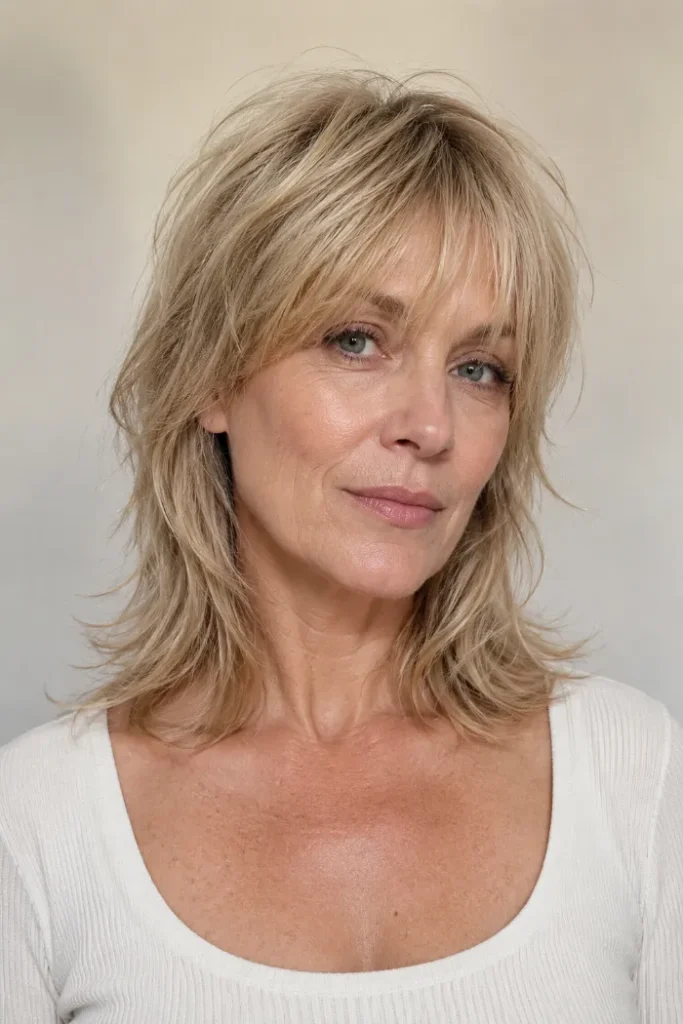
This lighter, airier shag has delicate layering around the face and a wispy fringe that softly breaks across the forehead. The length sits around the shoulders, and the ends flick outward without looking heavily thinned. What makes the shape work is that the layers create movement while the lower section still retains enough visual density to avoid looking sparse.
Ask your stylist for strategic face and crown layers rather than heavy texturizing throughout the entire cut. Keep the perimeter relatively solid and make the fringe narrow and light so too much hair is not removed from the front. Root mousse and a lightweight blow-dry spray can add lift without coating finer strands.
9. Long 80s Shag with Face-Framing Wings
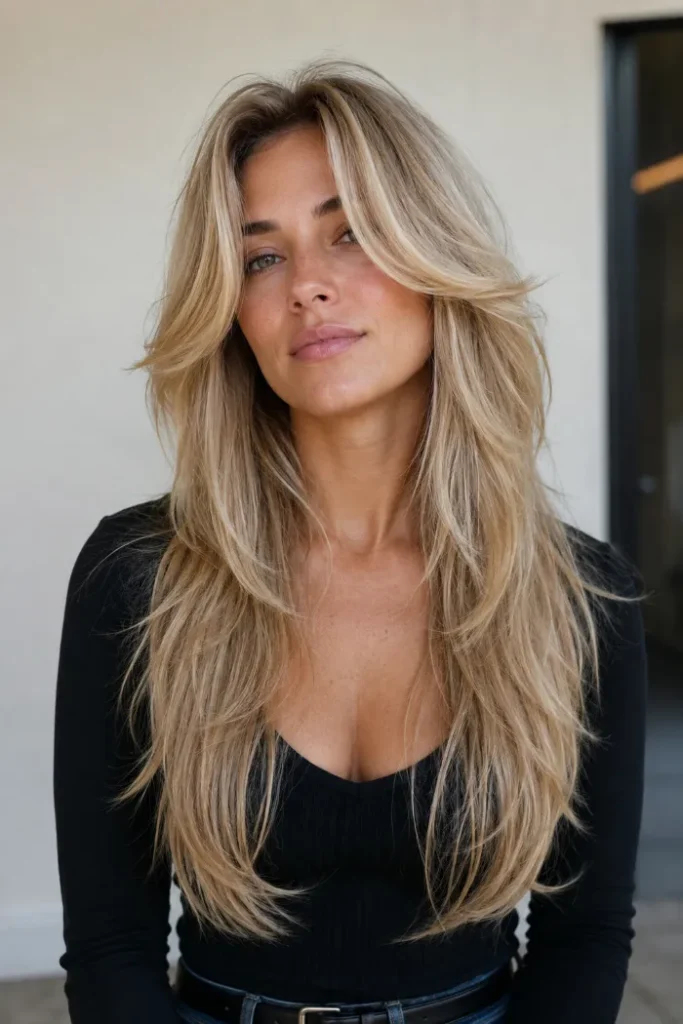
This is proof that you can keep serious length and still get the personality of an 80s shag. The hair falls well past the chest, while much shorter front layers sweep away from the face in wide wings. Long internal layers keep the lower lengths from looking like one solid curtain, but the overall perimeter still feels lush.
Ask your stylist for dramatic face-framing that begins around the cheekbones, then connects gradually into long layers through the chest-length hair. Be clear that you want to preserve density at the bottom. To style the wings, overdirect the front sections away from your face with a large round brush and let them cool in position.
10. Modern Mullet Shag with Airy Crown Layers
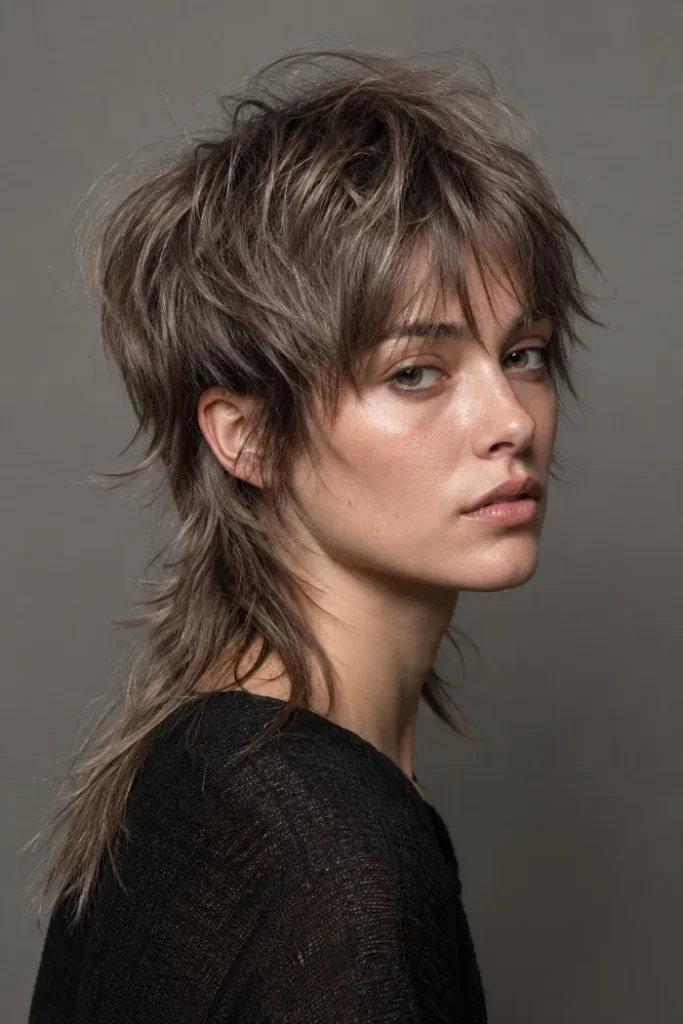
This cut leans much further into the mullet side of the shag family. The crown and sides are short, airy, and visibly disconnected from the long, narrow section extending down the back. A broken fringe falls around the forehead and temples, while the wispy nape length gives the profile that unmistakable short-in-front, long-in-back shape.
Ask your stylist to keep a clear length contrast between the crown and the nape instead of blending everything into one conventional layered cut. Request softness around the ears and fringe so the shape stays wearable. A dry texture spray worked into the roots will help the shorter crown pieces separate and stand away from the head.
11. Polished 80s Shag for Thick Hair
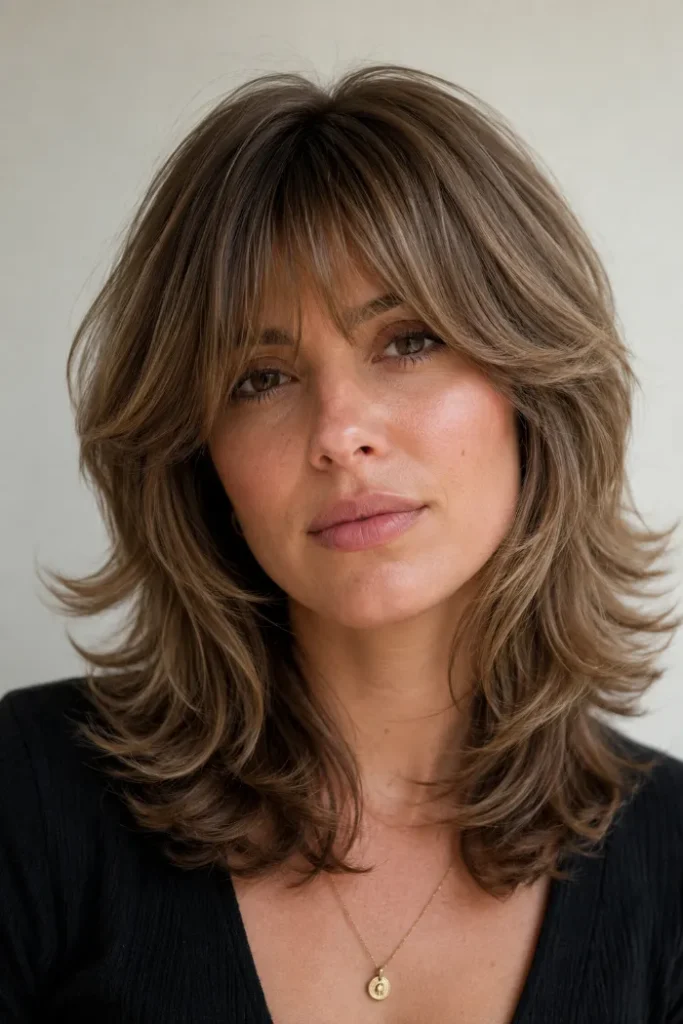
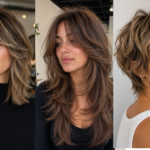
This brunette shag has plenty of layering, but the finish is smooth, glossy, and controlled. The curtain-style fringe opens around the eyes, while thick face-framing sections sweep outward around the cheekbones and jaw. Below that, longer layers curve through the shoulders, giving the cut movement without sacrificing the substantial shape that suits a fuller head of hair.
Ask your stylist for internal weight removal underneath the visible layers rather than thinning the outer surface excessively. Keep the face frame strong enough to move as broad sections, not tiny wisps. A smoothing cream before blow-drying can control expansion, while a large round brush will give the ends that polished feathered direction.
12. Punk-Lite 80s Shag with Micro Fringe
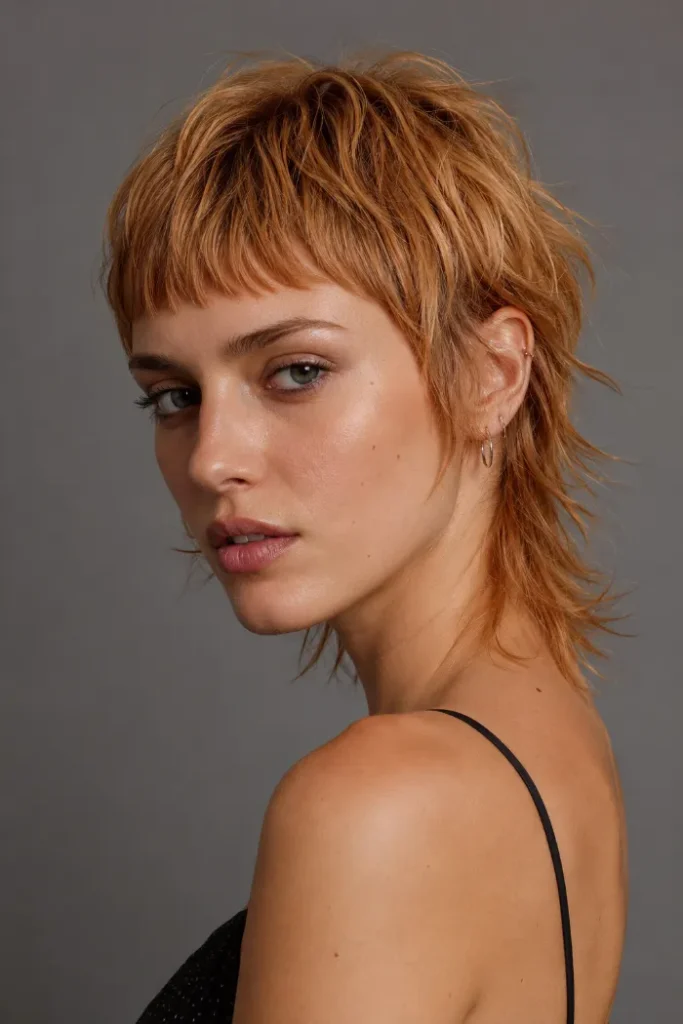
This copper shag goes short and sharp with a tiny fringe sitting well above the brows, cropped sides, and longer pieces trailing through the nape. The crown is choppy and lightly spiked rather than rounded and blown out. That contrast makes the cut feel punkier than the feathered shags, while the soft, separated ends stop it from looking too severe.
Ask your stylist for a deliberately short fringe and a cropped, textured crown that transitions into noticeably longer nape pieces. Decide on the fringe length while your hair is dry if it tends to spring up. For styling, pinch a lightweight paste through selected ends rather than coating the whole cut, which helps preserve the airy texture.
13. Razor-Cut 80s Shag with Piecey Fringe
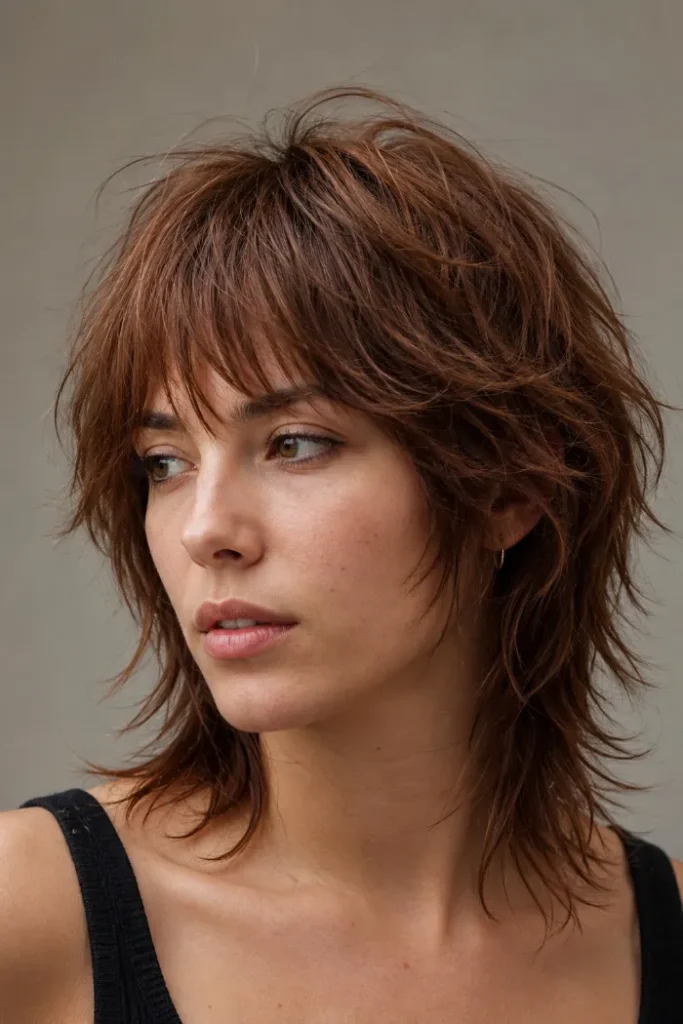
This auburn shag has a distinctly piecey finish, with narrow sections separating around the cheeks, jaw, and neck. The fringe is broken rather than blunt, and the crown carries loose height without becoming round or overly fluffy. Longer wisps at the nape give it a rocker feel, while the side layers create a slightly messy, lived-in outline.
Ask your stylist for lots of separation through the ends and a fringe that is intentionally irregular rather than cut as one straight line. If your hair responds well to razor work, discuss using it selectively for softness instead of everywhere. Style with a tiny amount of dry paste, twisting just a few ends for definition.
14. Shaggy Bixie with 80s Volume
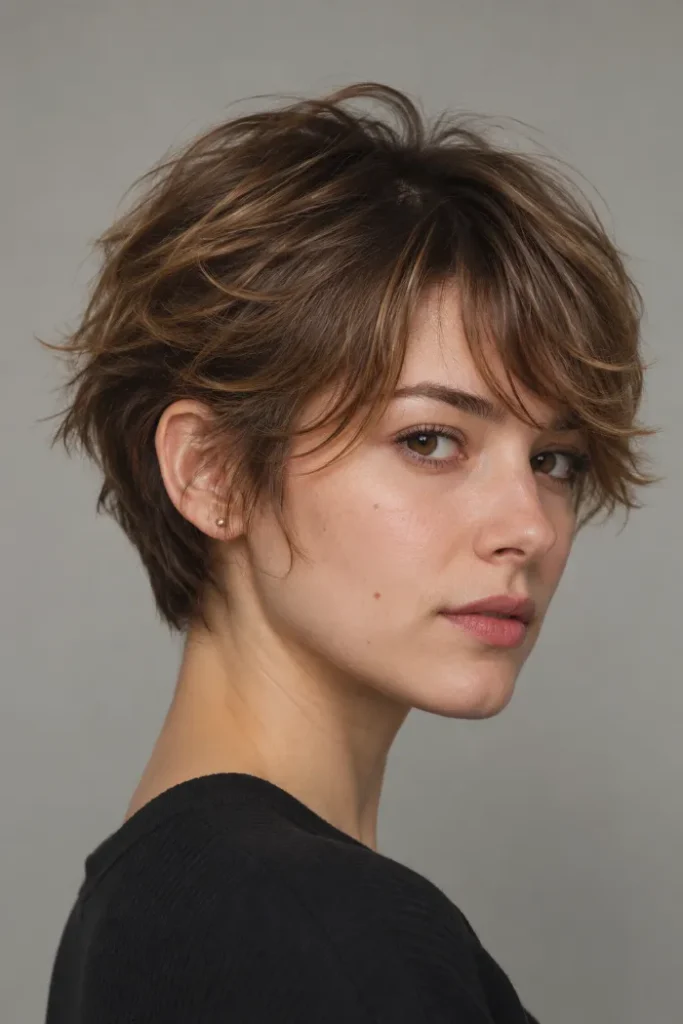
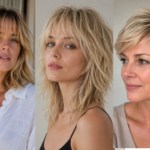
This little bixie packs the 80s volume into a much shorter shape. The nape is neatly cropped, while the top and sides are left longer and feathered enough to create lift and movement. A soft fringe falls toward the eyes, and wispy pieces around the temples keep the cut feminine and relaxed instead of turning into a traditional pixie.
Ask your stylist for a close, tidy nape with extra length preserved through the crown, front, and upper sides. The top needs enough hair to sweep and separate, so avoid over-thinning it. Blow-dry the crown in different directions for lift, then use your fingers and a light styling cream to place the fringe.
15. Short Feathered 80s Shag
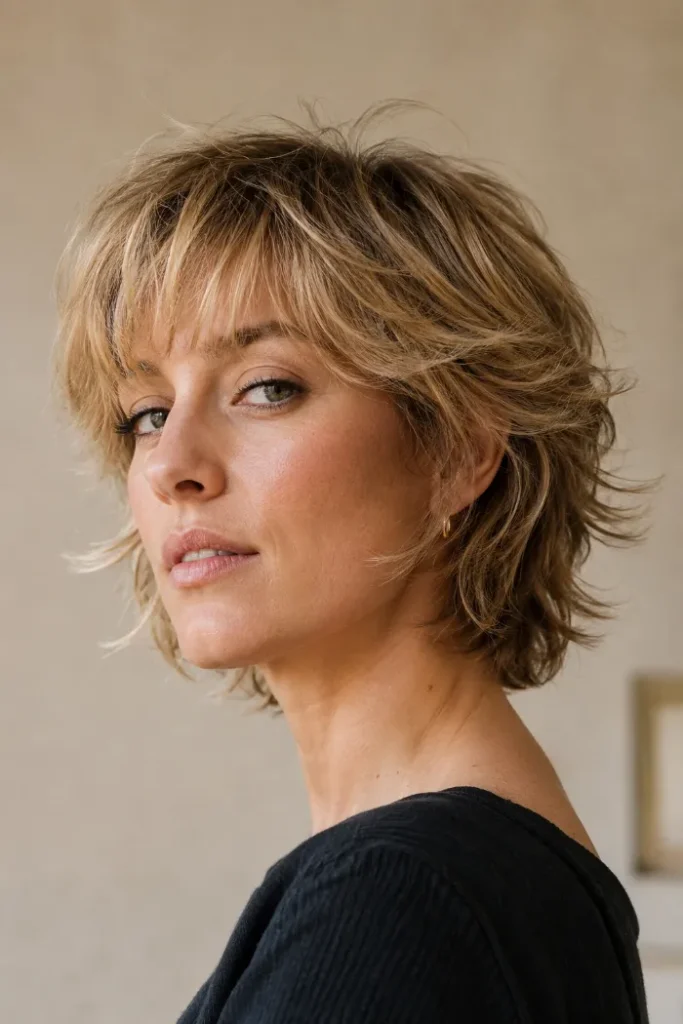
This short blonde shag sits around the ears and nape with feathered layers that sweep backward from the face. The fringe is light and slightly broken, while the sides flare outward instead of hugging the head. There is enough length at the back to keep it shaggy, but the overall outline stays compact and noticeably shorter than a shoulder-length version.
Ask your stylist for short graduated layers through the crown and sides with soft length left around the nape. Keep the fringe feathered and mobile rather than heavy. When drying, direct the side sections away from your face and use a small round brush just at the ends to create those light outward flips.
16. Shoulder-Length 80s Shag with Flipped Ends
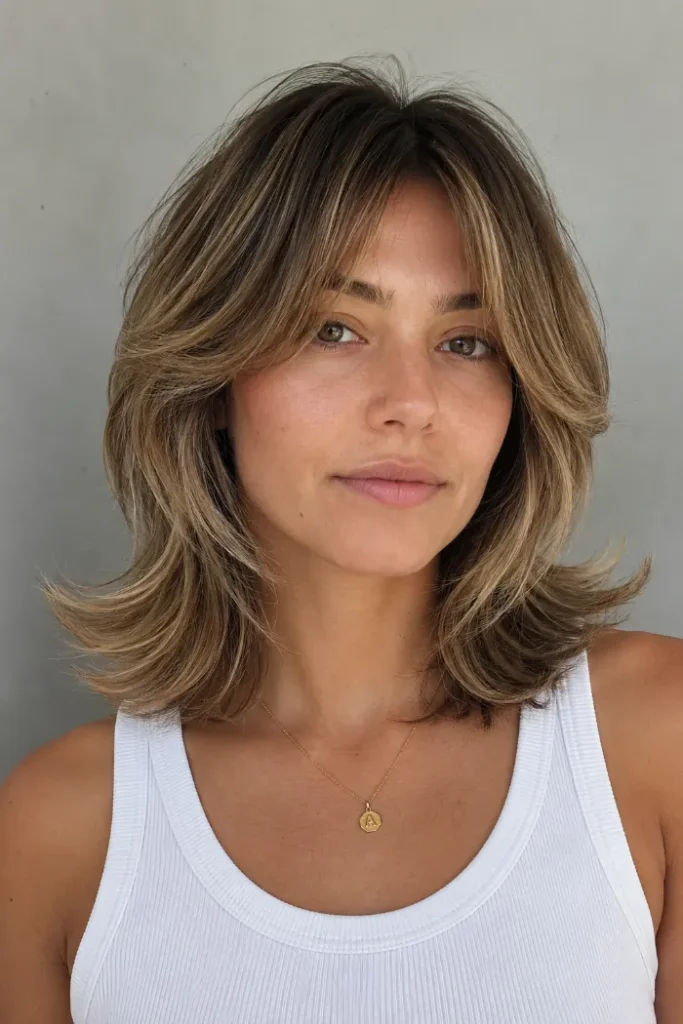
This shoulder-length shag gets most of its retro personality from the ends. The front opens into long curtain pieces, the cheek and jaw layers sweep outward, and the lower perimeter flips up in a wide curve. The highlighted color makes every layer easy to see, especially where the lighter face frame contrasts with the deeper interior sections.
Ask your stylist for shoulder-length layering with the shortest face-framing pieces around the cheekbones and longer pieces stepping down toward the collarbone. Keep enough weight at the bottom to form a visible flip. At home, turn only the last inch or two outward with a round brush or iron instead of curling the entire strand.
17. Soft 80s Shag for Natural Gray Hair
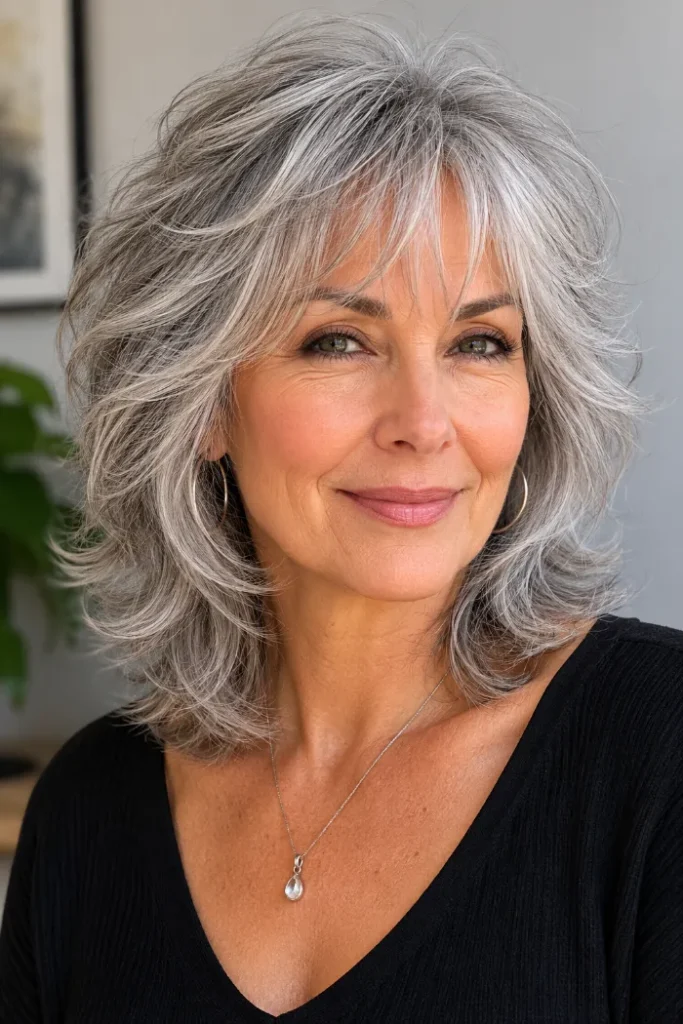
This silver shag has gorgeous movement without relying on an extreme cut. The fringe is light and softly separated, the crown has gentle lift, and feathered layers move backward around the cheekbones and jaw. Shoulder-grazing ends stay full enough to give the hair substance, while the natural variation in the gray makes the individual layers look especially dimensional.
Ask your stylist for soft, connected layering that removes bulk where needed but preserves a healthy-looking perimeter. Have the fringe cut long enough to sweep or separate on days you do not want it forward. If your silver hair tends to feel dry, prioritize lightweight moisture and heat protection before using a round brush.
18. Soft Rocker 80s Shag with Curtain Bangs
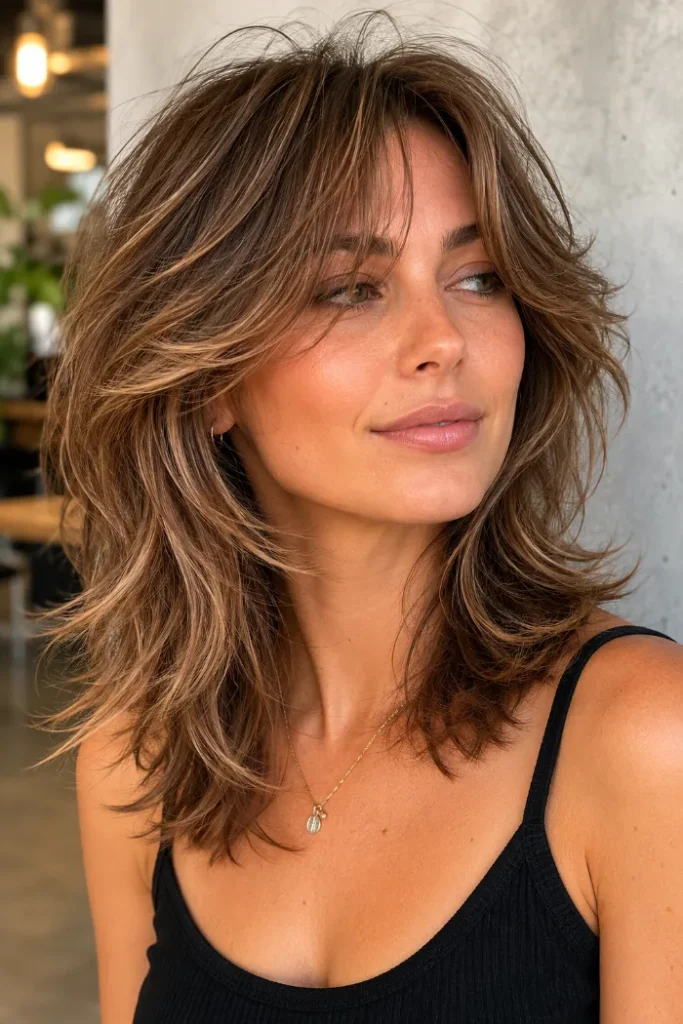
This warm brunette shag has that soft-rock, backstage kind of movement without going full mullet. Long curtain bangs part loosely through the center and melt into cheekbone-length layers. The remaining layers extend past the shoulders with feathery, uneven movement, and the lighter ribbons around the face help emphasize every bend and sweep in the cut.
Ask your stylist for curtain bangs that can tuck into the cheekbone layers rather than stopping abruptly at the temples. Keep the back layers long and flowing so the shape does not become too top-heavy. If you color your hair, subtle lighter pieces through the face frame can make the layered movement more visible.
19. Tousled 80s Shag with Long Wispy Fringe
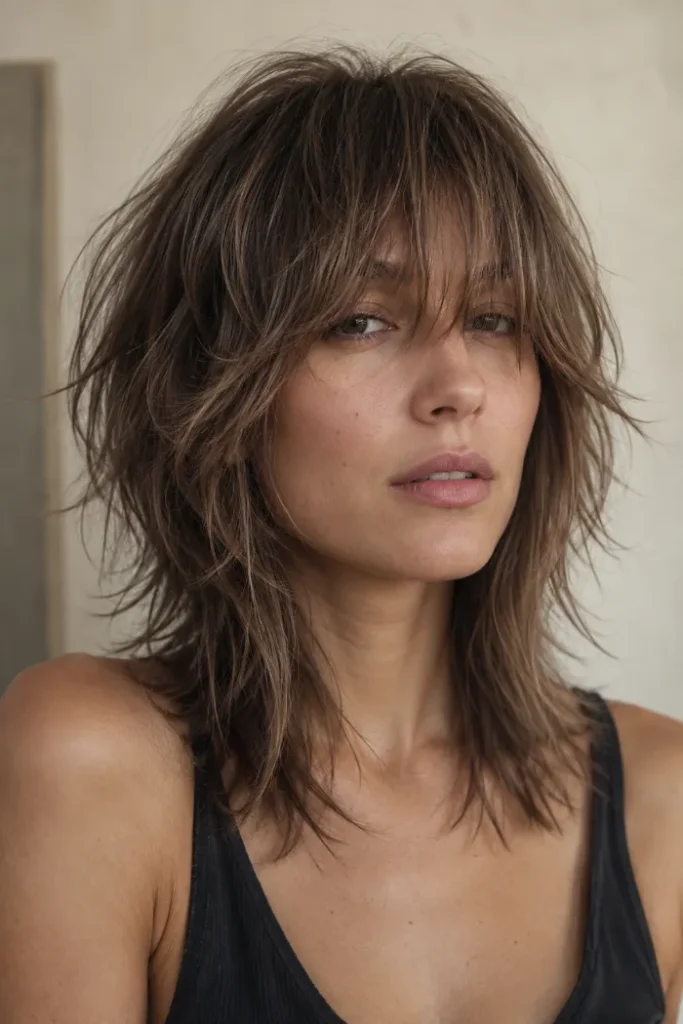
This darker brunette shag has a looser, less polished finish, with long wispy fringe dropping close to the eyes and narrow face-framing sections around the jaw. The collarbone-length ends look intentionally uneven and light, while shorter upper layers create a tousled halo around the crown. It feels more undone than the round-brushed feathered versions.
Ask your stylist for long fringe that can fall forward or split apart, plus shaggy layers that begin high enough to create movement through the crown. Keep some longer pieces underneath so the cut still has length. Try rough-drying with your fingers and finishing with texture spray rather than smoothing every section with a brush.
20. Wavy 80s Shag with Bottleneck Bangs
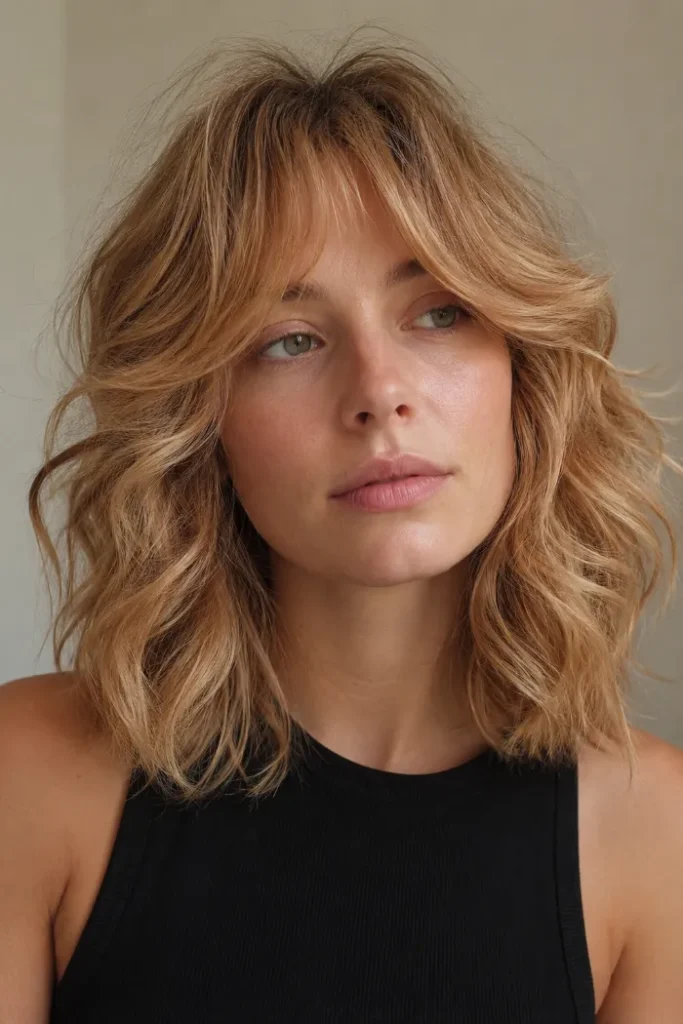
This wavy blonde shag lands around the shoulders with a softly expanded shape through the sides. The fringe is shorter near the center and lengthens toward the cheekbones, giving it that bottleneck effect without forming a heavy wall of bangs. Loose waves break up the layers below, so the entire cut has movement without needing sharply flicked ends.
Ask your stylist for bottleneck bangs that graduate from a shorter center into longer face-framing pieces, then blend those pieces into shoulder-length layers. Have the lower layers shaped to encourage your natural bend rather than forcing them into a uniform curl. A light mousse and gentle diffusing can bring out this softer, wavier finish.
80s Shag Haircut FAQs
Does an 80s shag work on fine hair?
Yes, but I’d be careful about taking out too much density. Fine hair usually looks fuller when the stylist keeps a stronger perimeter and uses shorter layers strategically around the crown and face. Very aggressive thinning can make the bottom look transparent. Root mousse, lightweight texture spray, and a little lift at the crown can do the rest.
What should I ask for if I want an 80s shag without a mullet?
Tell your stylist you want connected layering and visible face-framing, but you do not want a strong disconnect between the short crown and long nape. Bringing a photo is especially useful here. A fuller perimeter, gradual layer progression, and longer crown pieces will usually keep the silhouette closer to a shag than a mullet.
How do you style an 80s shag at home?
It depends on the finish you want. For classic feathering, lift the roots and use a round brush to direct face-framing layers away from your face. For a messier rocker shag, rough-dry or diffuse and add texture product through selected pieces. I’d avoid loading every layer with product because movement is really the point of this cut.
How often does an 80s shag need trimming?
If you want to keep a very specific fringe, short crown, or mullet-like outline, you may notice the shape changing sooner and prefer trims around every six to eight weeks. Longer, softer shags can usually tolerate more grow-out. The best schedule is the one that keeps your shortest layers and fringe sitting where you actually like them.
Choosing the Right 80s Shag for You
I’d choose your version by starting with the feature you keep noticing in these photos. If it’s the huge feathered wings, you’ll want enough front layering to style them. If it’s the messy crown, prioritize shorter upper layers. If you have curls or lots of density, talk about where weight should stay as carefully as where it should be removed.
And definitely factor in maintenance. A soft shoulder-length shag can be pretty forgiving, while micro bangs, a cropped bixie, or a highly disconnected mullet will show its grow-out much faster. The best 80s-inspired cut is the one that gives you the movement you want without demanding a styling routine you already know you won’t do.