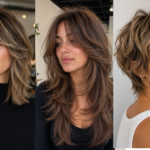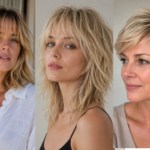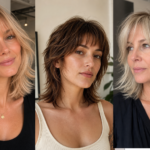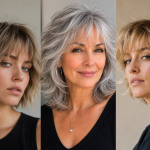
20 Short Layered Shag Haircuts That Keep Their Shape
Short layered shag haircuts are one of my favorite ways to go shorter without making the hair feel stiff or overly precise. The layers do most of the work, creating movement around the crown, face, and ends while still leaving you plenty of options for how polished or undone you want the finish to look.
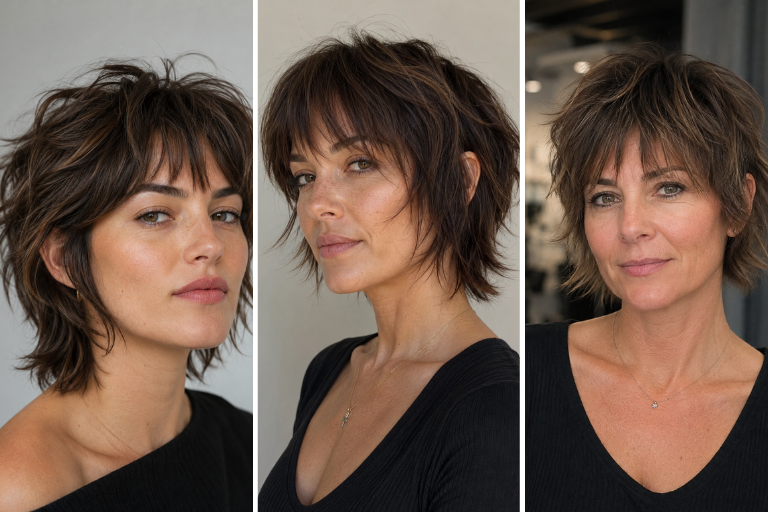
The biggest decision is really where you want the length to sit. A jaw-length shag can feel light and almost bob-like, while a longer nape pushes the shape closer to a wolf cut or soft mullet. Fringe matters just as much. Wispy bangs keep things airy, curtain bangs add softness around the cheekbones, and a shorter textured fringe gives the cut more attitude.
I’d also think about your natural density before choosing your reference photo. Fine hair usually benefits from keeping some weight through the perimeter and using subtler layers for lift. Thick hair can handle much more internal weight removal. Waves and curls bring their own shape, so those cuts need enough length left behind for bend, curl pattern, and shrinkage.
Below, I’ve broken down 19 different versions so you can see exactly what changes from one shag to the next. Save the details you like most, especially the fringe length, nape shape, layer placement, and overall silhouette. Those specifics will make your salon conversation much easier.
19 Short Layered Shag Haircuts to Save for Your Next Appointment
1. Airy Jaw-Length Shag With Wispy Curtain Bangs
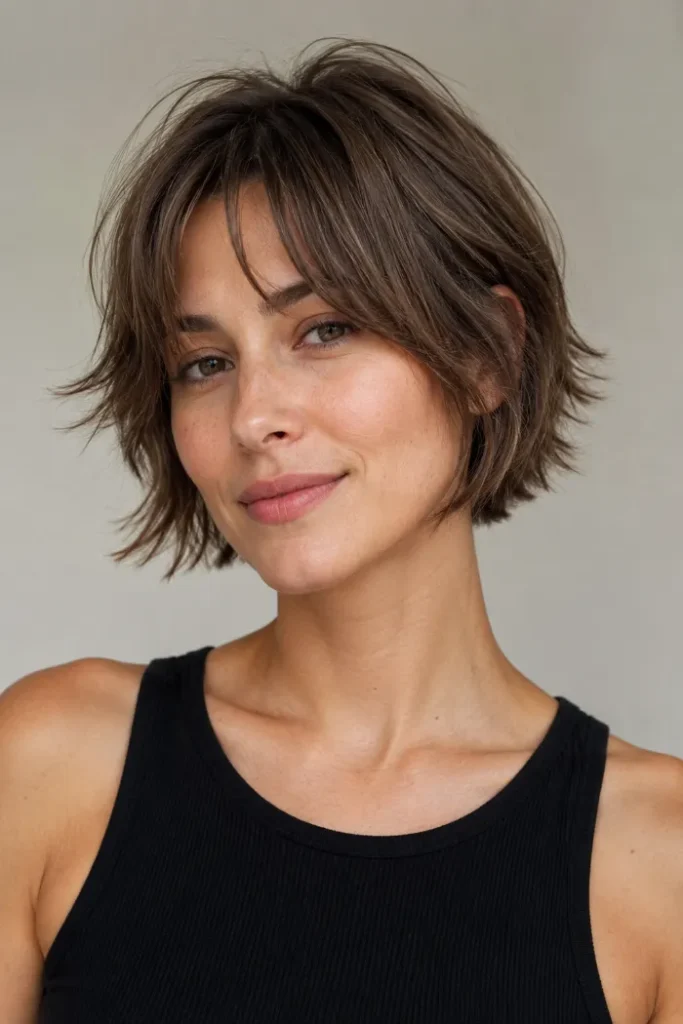
This airy shag lands around the jaw with soft, flicked pieces instead of a solid bob perimeter. The wispy curtain fringe opens through the center and blends into cheek-skimming layers, while the crown stays lightly lifted rather than heavily stacked. The loose, piecey finish gives the brunette shape movement without making it look overly choppy.
Ask your stylist for a jaw-length perimeter with light internal layering and face-framing pieces that begin around the cheekbones. Keep the curtain fringe fine enough to separate naturally rather than cutting it too densely. At home, a small round brush or quick bend with a flat iron can encourage those outward flicks.
2. Chin-Length Shaggy Bob With See-Through Bangs
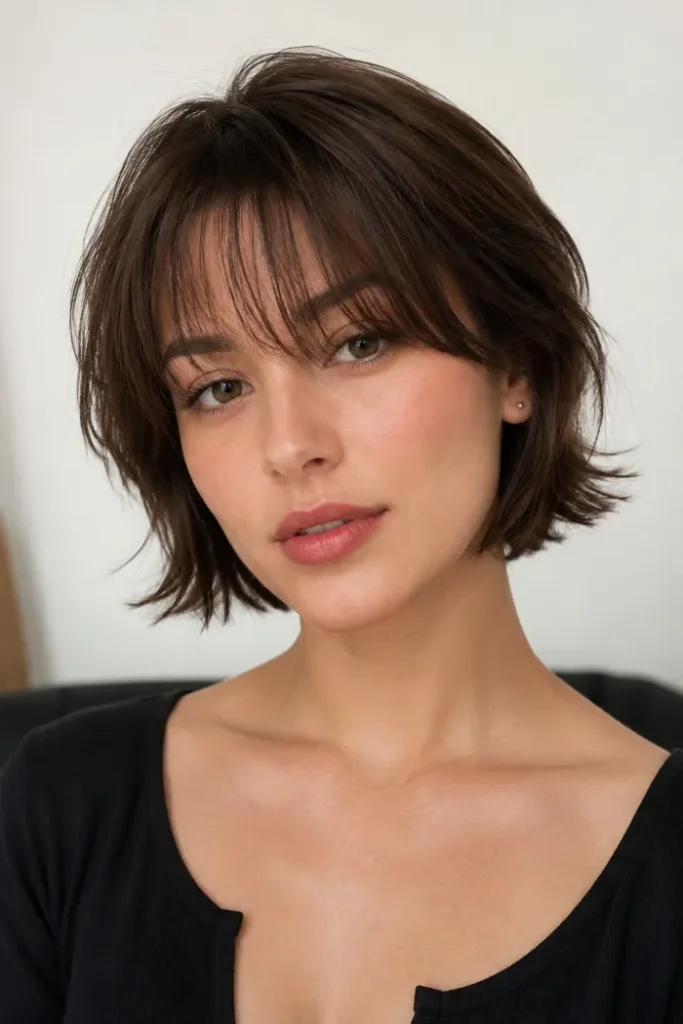
This version keeps the overall silhouette close to a chin-length bob, then breaks it up with airy layering and soft movement around the sides. The bangs are narrow and see-through, letting plenty of forehead show between the pieces. Slightly flipped ends around the nape stop the shape from feeling too round or tucked under.
Ask your stylist to keep enough density through the bottom that the cut still reads as a bob, then soften the interior instead of heavily thinning the perimeter. Request a light fringe that falls around brow level with longer pieces at the corners. A tiny flat iron can add bends without turning the finish too sleek.
3. Cropped French Shag With Piecey Micro Fringe
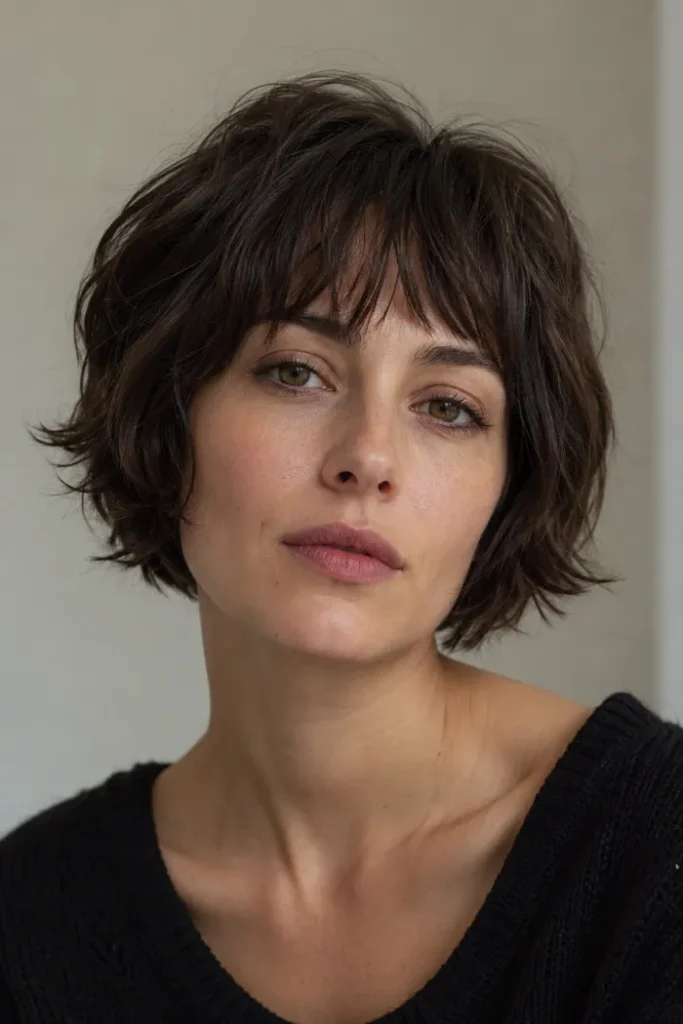
This cropped shag has a compact, rounded shape with plenty of broken-up texture around the sides and crown. The short, piecey fringe sits above the brows, giving the cut a slightly French, gamine feel. Longer wisps around the ears and lower sides keep the silhouette soft instead of turning it into a traditional pixie.
Ask your stylist for a short rounded shape with disconnected-looking texture through the crown and sides rather than one uniform layer length. Keep the fringe irregular and lightly separated, not blunt. If your hair is dense, remove bulk through the interior while leaving enough surface hair to maintain that soft, tousled outline.
4. Curly Short Shag With Rounded Bangs
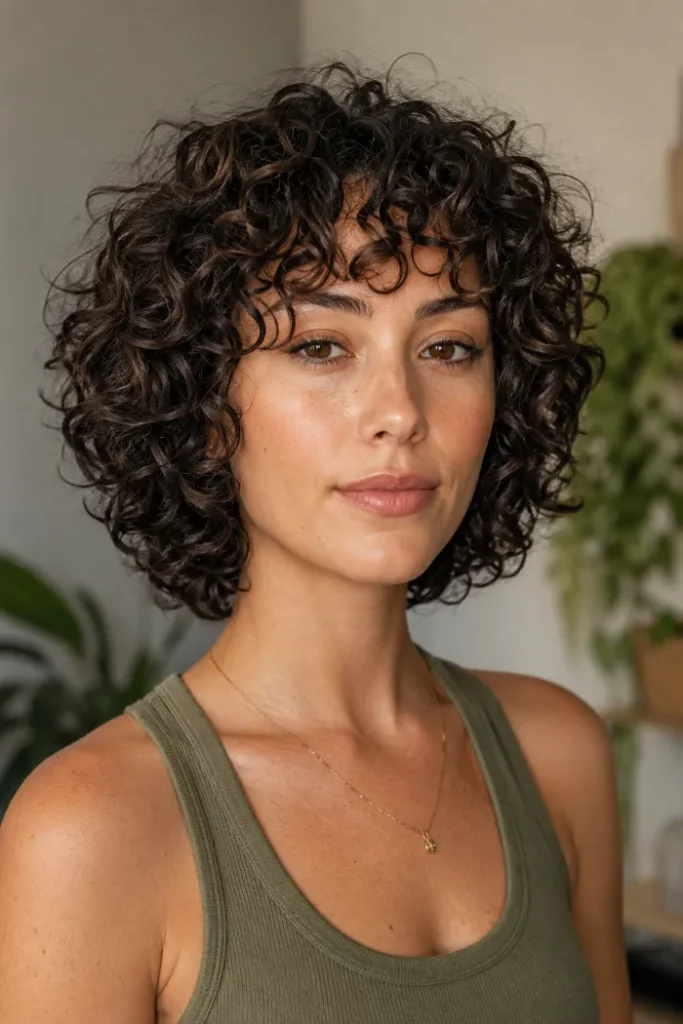
Here the shag is shaped around the natural curl pattern, creating a full rounded silhouette that sits close to the jaw and upper neck. The curly fringe blends directly into the side layers instead of looking like a separate set of bangs. Shorter pieces at the crown encourage lift, while the lower curls keep the outline balanced.
Ask your stylist to shape the cut with your curl pattern and shrinkage in mind, especially through the fringe. Request a rounded outline with graduated layers rather than removing too much weight from every curl. For styling, apply curl cream or mousse on wet hair, then diffuse gently so the individual spirals keep their definition.
5. Fine-Hair Short Shag With Invisible Layers
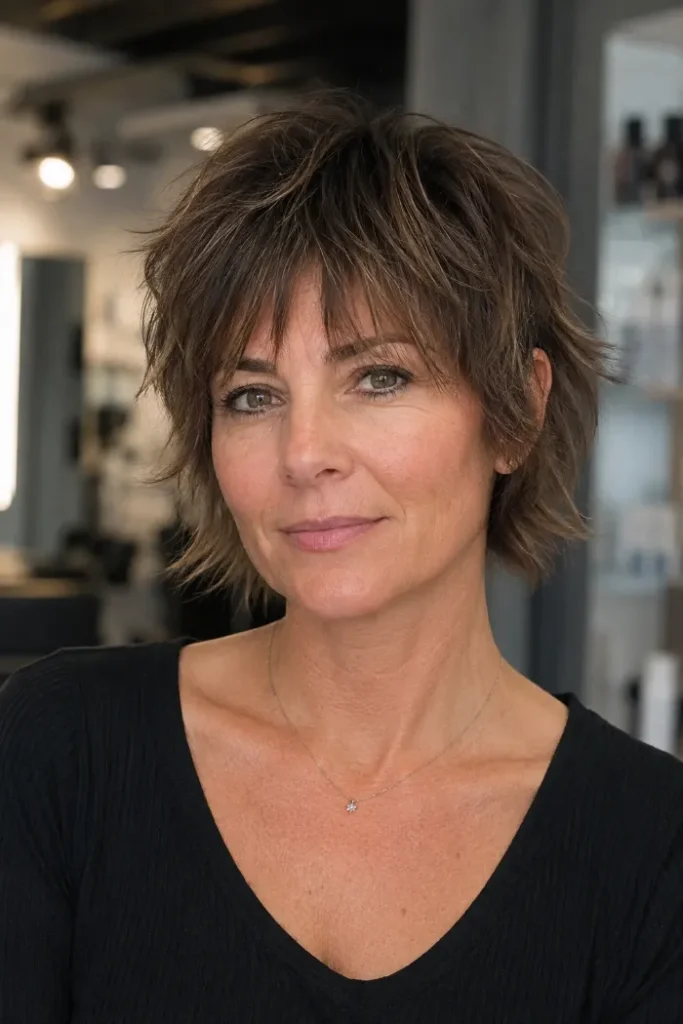
This short shag has plenty of movement, but the layers are blended enough that the ends still look substantial. Soft fringe brushes the brows, while airy crown pieces create lift without exposing obvious gaps in the shape. The sides and nape stay feathered and slightly elongated, which gives finer-looking hair texture without sacrificing too much fullness.
Ask your stylist for subtle internal layers with more weight left through the perimeter, especially if your strands are fine. Keep the crown layering soft rather than very short and spiky. A lightweight volumizing foam at the roots plus a quick rough-dry with your fingers can help emphasize the movement without coating the ends.
6. Modern Short Shag With Soft Wolf-Cut Layers
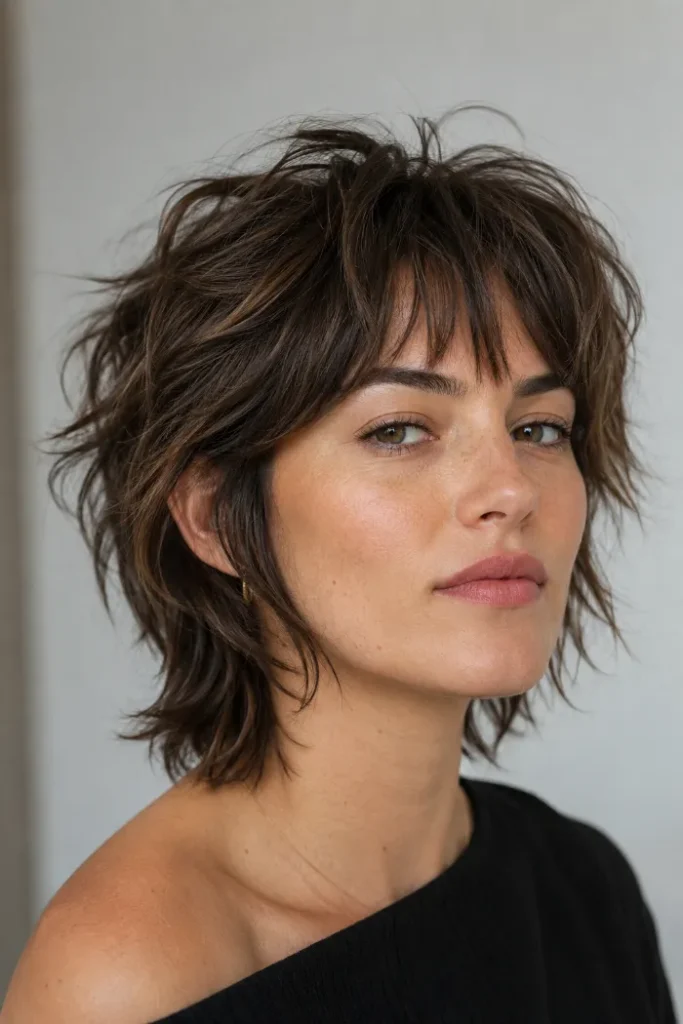
This shag leans toward a wolf cut with fuller crown volume and noticeably longer pieces through the back and nape. The fringe is light and brow-skimming, while longer cheek and jaw pieces keep the front soft. Tousled bends through the mid-lengths give the dark brunette cut its loose, slightly undone texture.
Ask your stylist for shorter layers through the crown that gradually connect into a longer nape rather than creating a sharp mullet contrast. Keep the front pieces long enough to tuck or frame the cheekbones. A dry texture spray worked through the roots and mids will help separate the layers without making them stiff.
7. Razor-Soft Short Shag With Long Face-Framing Pieces
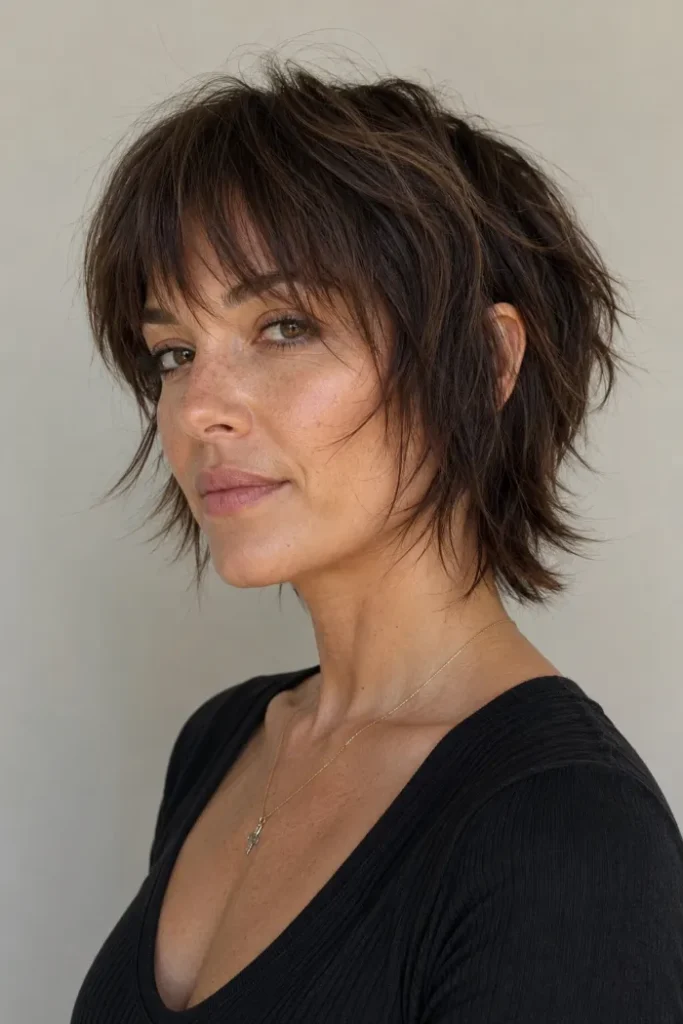
The defining detail here is the long, tapered face framing that drops past the cheekbones while the rest of the shag stays short and airy. Fine fringe pieces blend into the front layers, and the ends around the nape flick outward. The perimeter looks deliberately feathered, giving the cut a soft razor-like finish rather than a blunt edge.
Ask your stylist for long facial pieces that taper from the fringe toward the jaw, with softly carved ends instead of a heavy line. If a razor suits your hair texture, it can help create this wispy finish. Keep enough density near the crown so the overall silhouette still has shape after the perimeter is softened.
8. Rounded Pixie Shag With Long Wispy Bangs
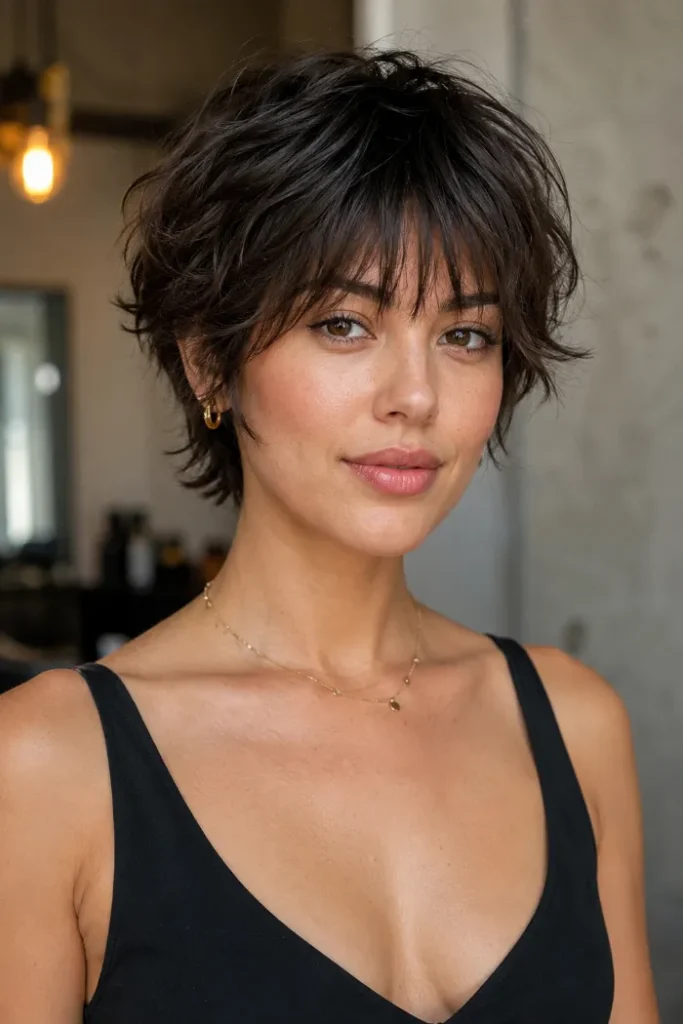
This is one of the shortest shapes in the roundup, with a pixie-like length around the ears and nape but a much softer, shaggier top. Longer wispy bangs skim the brows and blend into curved temple pieces. The crown stays full and rounded, while the lower outline is tapered enough to keep the cut light.
Ask your stylist for a rounded pixie base with extra length left through the crown and fringe so you can style it in loose pieces. The nape should be softly tapered rather than sharply clipped. Use a small amount of flexible paste on dry hair to separate the ends and keep the fringe from collapsing together.
9. Shattered Short Shag With Textured Brow Bangs
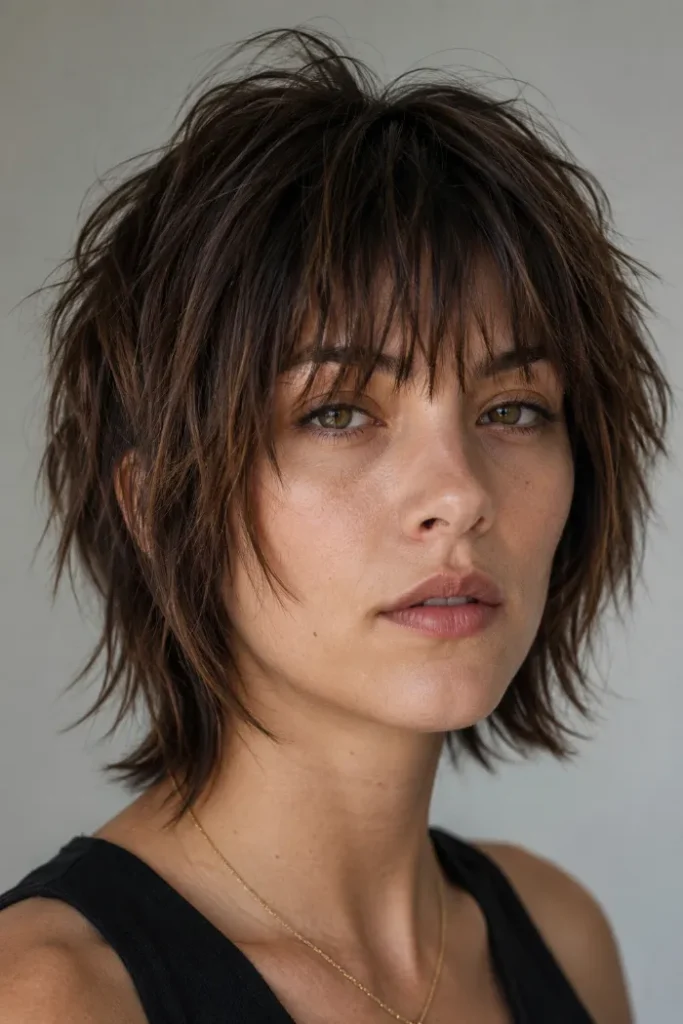
This shag has a deliberately shattered finish, with uneven-looking movement through the sides, crown, and longer nape. The bangs land around brow level and separate into textured sections rather than forming a smooth curtain. Longer pieces beside the face and at the back create that recognizable shag silhouette while keeping the overall length manageable.
Ask your stylist to create separation through the mids and ends while avoiding aggressive thinning right at the roots. Request brow-length bangs with a broken, piecey edge and slightly longer corners. When styling, twist a few sections with a light texture cream so the haircut looks separated rather than fluffy or overly blown out.
10. Short Layered Shag With Bardot Curtain Fringe
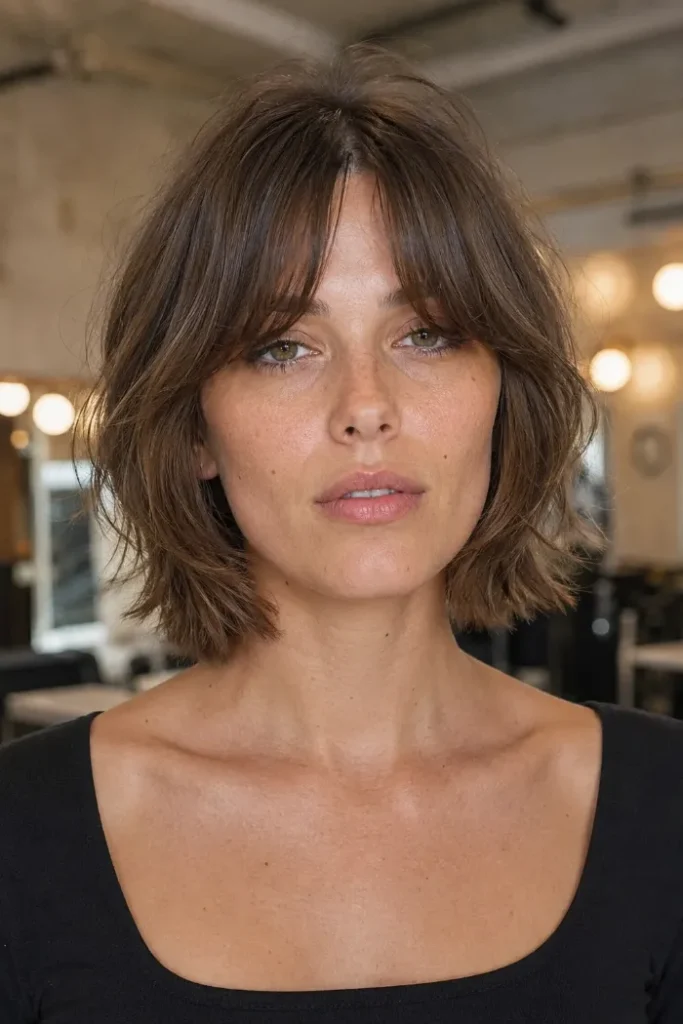
This softer shag sits near the jaw with a gently flipped perimeter and a fuller Bardot-style curtain fringe. The bangs open through the center, then sweep toward the cheekbones, creating a rounded frame around the eyes. Compared with the choppier cuts here, the layers are smoother and more blended, giving the silhouette a polished, bouncy finish.
Ask your stylist for a curtain fringe with enough length at the outer corners to sweep into the cheekbone layers. Keep the bottom softly layered but not overly thinned so it can hold that flipped shape. Blow-dry the front away from your face with a round brush, then let it separate naturally down the middle.
11. Short Shaggy Lob-Bob With Flipped Ends
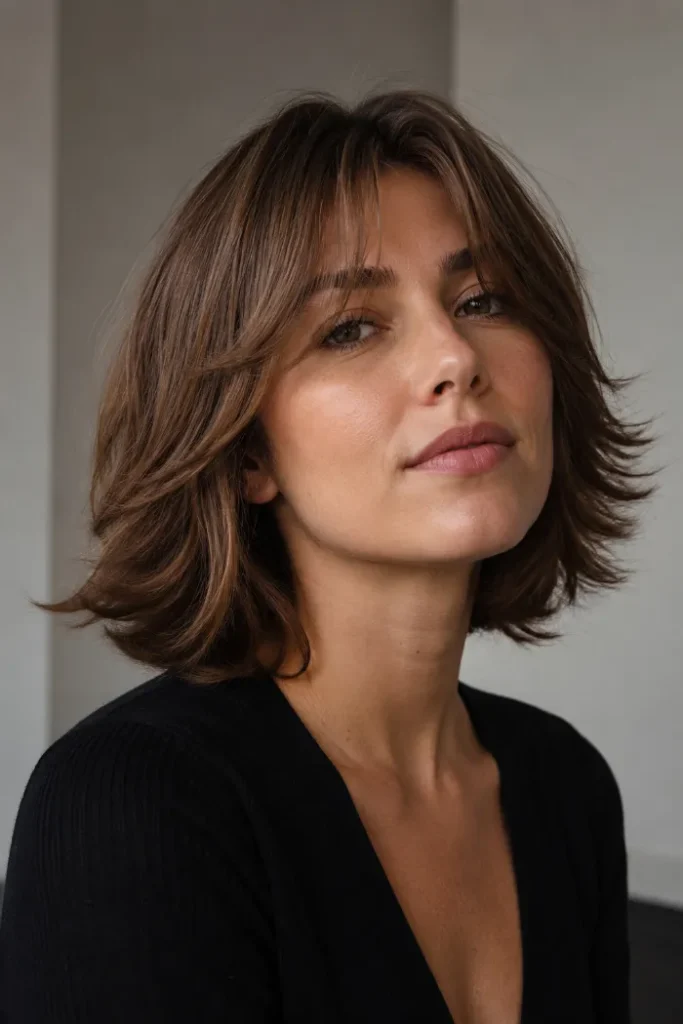
This is a slightly longer take on the short shag, with the perimeter brushing the lower neck and the outer layers flipping away from the face. Long curtain pieces sweep across the cheekbones, while the body of the cut stays smooth and full. The result sits somewhere between a layered bob and a cropped shaggy lob.
Ask your stylist to keep most of the overall length intact and concentrate the shorter layering around the face and lower half of the cut. Request long curtain pieces that can be blown outward rather than a short fringe. A medium round brush on the ends will create the soft flip without needing lots of product.
12. Short Shag Mullet With Soft Feminine Edges
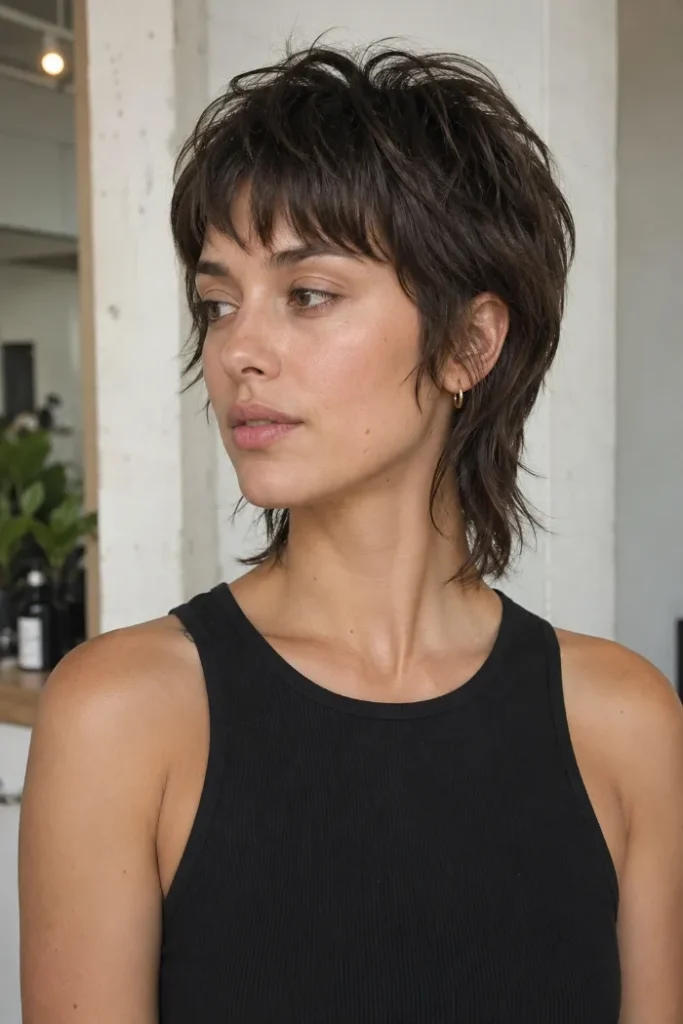
This cut has a clear shag-mullet structure, with a compact crown, shorter sides, and extra length left through the nape. The short fringe and close shape around the temples make the top feel cropped, but wispy pieces at the back soften the contrast. Everything is textured enough that the silhouette feels light instead of severe.
Ask your stylist for a short, textured crown and sides with noticeably more length retained through the nape. Keep those back pieces feathered and narrow rather than cutting a heavy tail. Because the silhouette depends on the length contrast, regular trims can tidy the top while allowing the softer nape section to stay visible.
13. Short Shag With Curved Cheekbone Layers
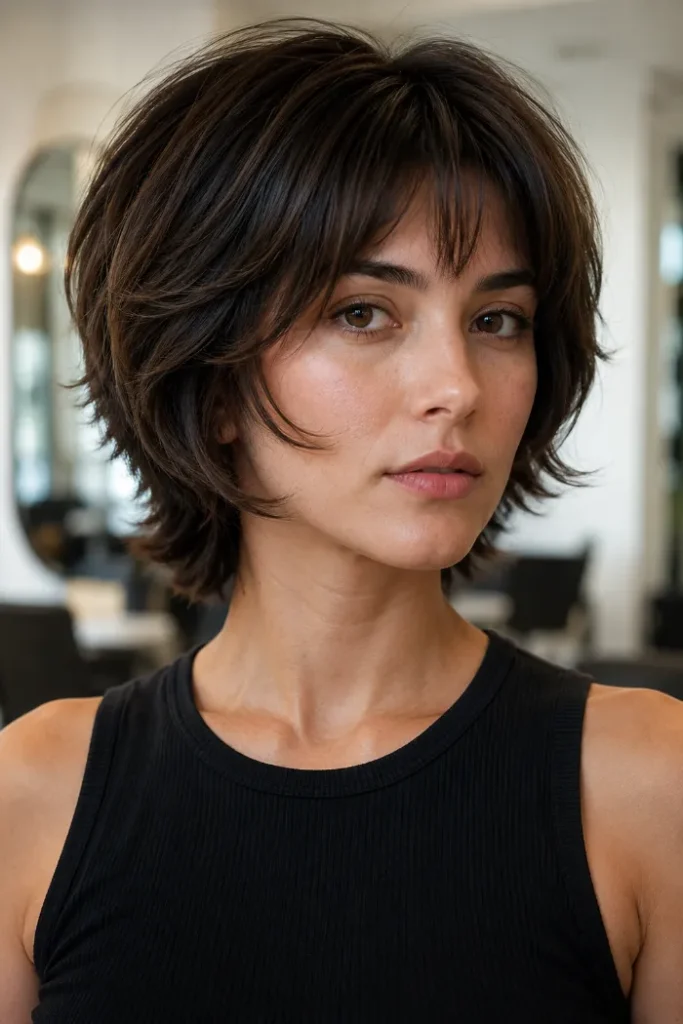
The face framing is the star of this shag. Curved layers sweep from the fringe toward the cheekbones, then continue into a softly flipped jaw-length shape. The crown has enough layering for lift, but the surface stays smooth and glossy. That combination makes the cut feel airy while still keeping a defined, rounded silhouette.
Ask your stylist for face-framing layers that curve around the cheekbones instead of dropping straight down beside the face. Keep the fringe light and connect its outer corners into those longer sections. For this smoother finish, direct the front pieces away from your face with a round brush and finish with a flexible hold spray.
14. Short Wolf Shag With a Tapered Nape
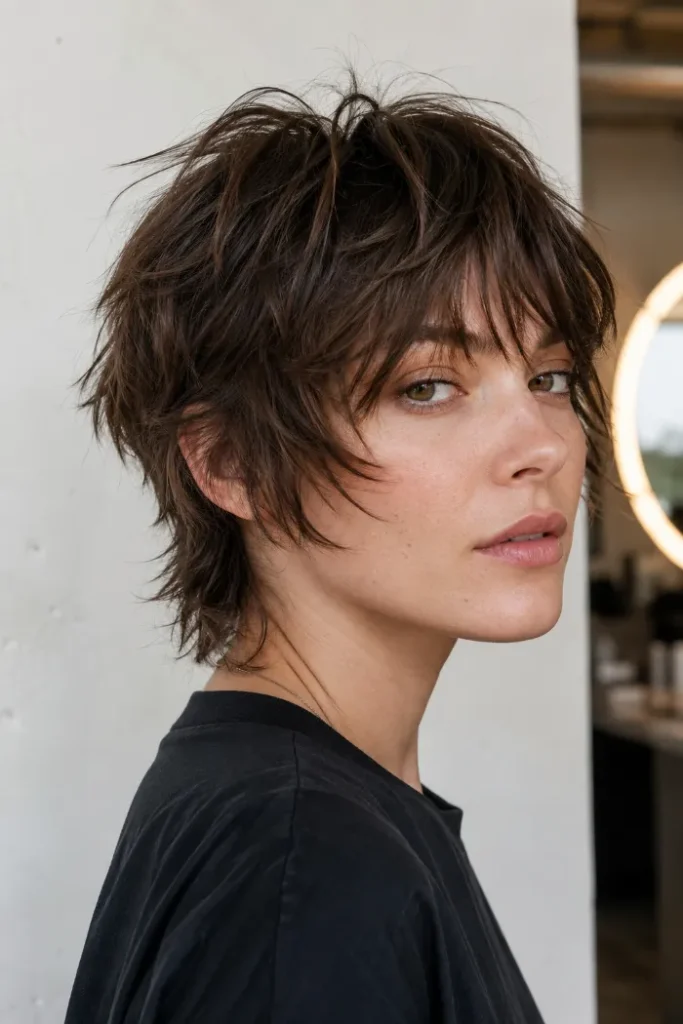
This short wolf shag builds most of its volume high on the head, then narrows toward a longer, wispy nape. The fringe is short and textured, and the side layers hug closer around the ears before kicking out behind them. The intentionally messy crown gives the cut its strong wolf-inspired shape without making the back overly heavy.
Ask your stylist for graduated crown layers with a slimmer shape through the sides and a tapered extension at the nape. Keep the back soft enough to move rather than leaving one thick section. A lightweight styling paste worked upward through the crown can exaggerate the separation while the nape stays loose and touchable.
15. Soft Bixie Shag With Feathered Crown Layers
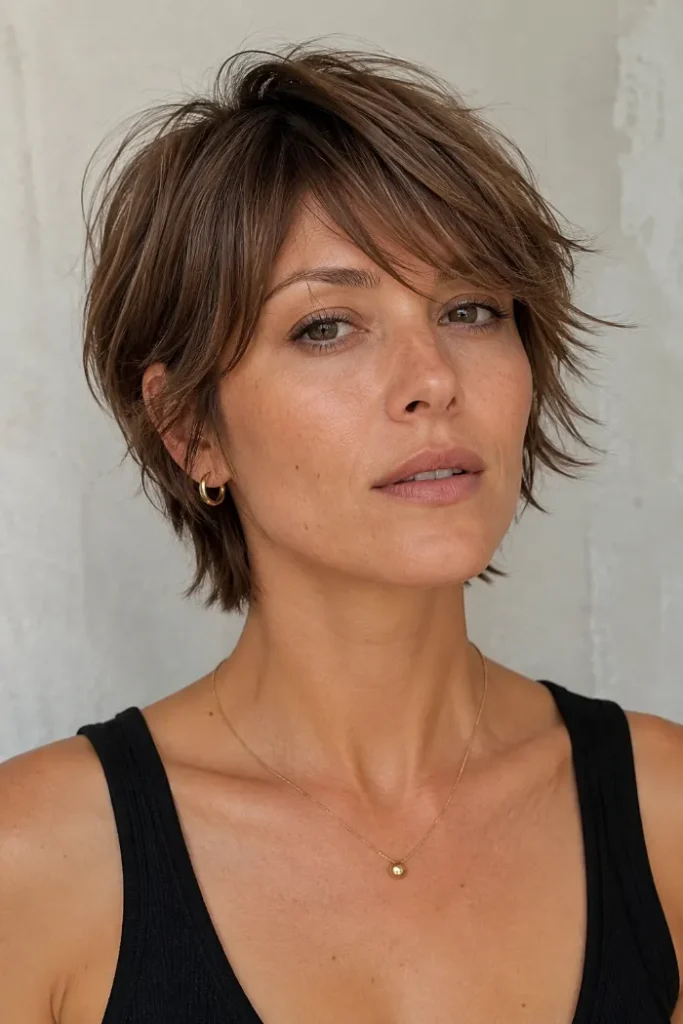
This soft bixie combines a shorter nape and ear area with enough length on top to create a feathered shag effect. The fringe sweeps gently to one side rather than falling straight across, and the crown has visible lift without looking spiky. Wispy ends around the temples keep the close-cut silhouette delicate and flexible.
Ask your stylist for a bixie-length base with longer, feathered crown layers that can move in different directions. Leave the front long enough to sweep sideways and keep a few fine pieces around the ears. For daily styling, use a pea-sized amount of soft pomade and pinch only the ends you want separated.
16. Soft Grunge Short Shag With Heavy Curtain Bangs
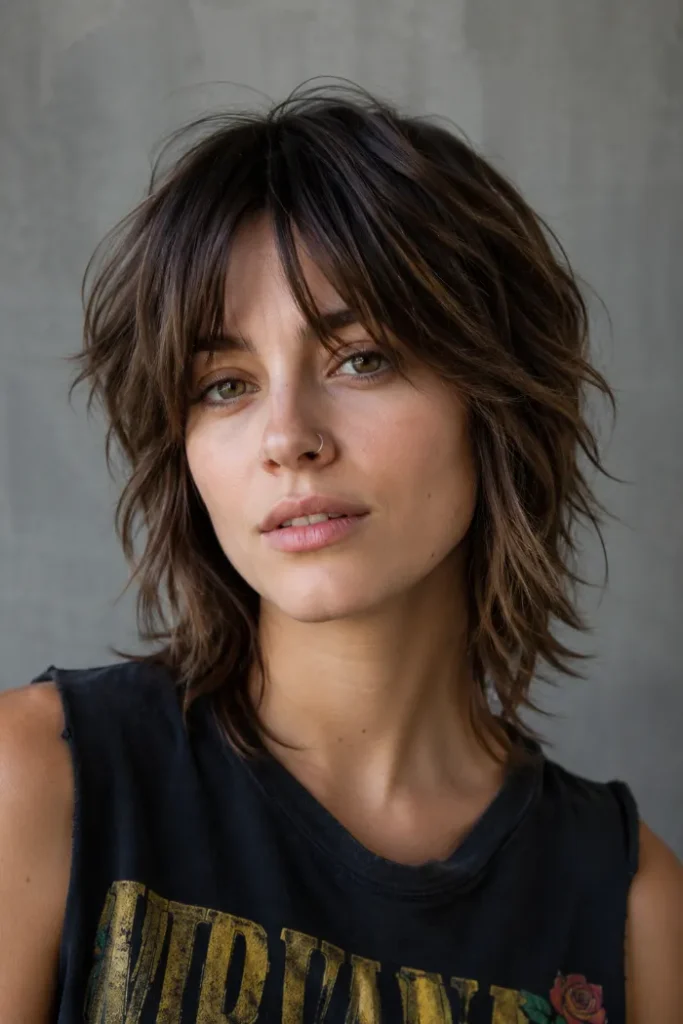
This shag has a longer, messier shape with substantial curtain bangs and layered pieces falling around the jaw and upper neck. The fringe is fuller than the wispy versions in this roundup, creating more coverage across the forehead before opening near the center. Loose bends and uneven-looking ends give it that relaxed, slightly grunge-inspired texture.
Ask your stylist for a fuller curtain fringe with plenty of length at the sides so it can blend directly into the face frame. Keep the lower layers loose and piecey rather than overly graduated. If you want this undone finish, work a small amount of styling cream into damp hair and let your natural texture lead.
17. Thick-Hair Short Shag With Weightless Ends
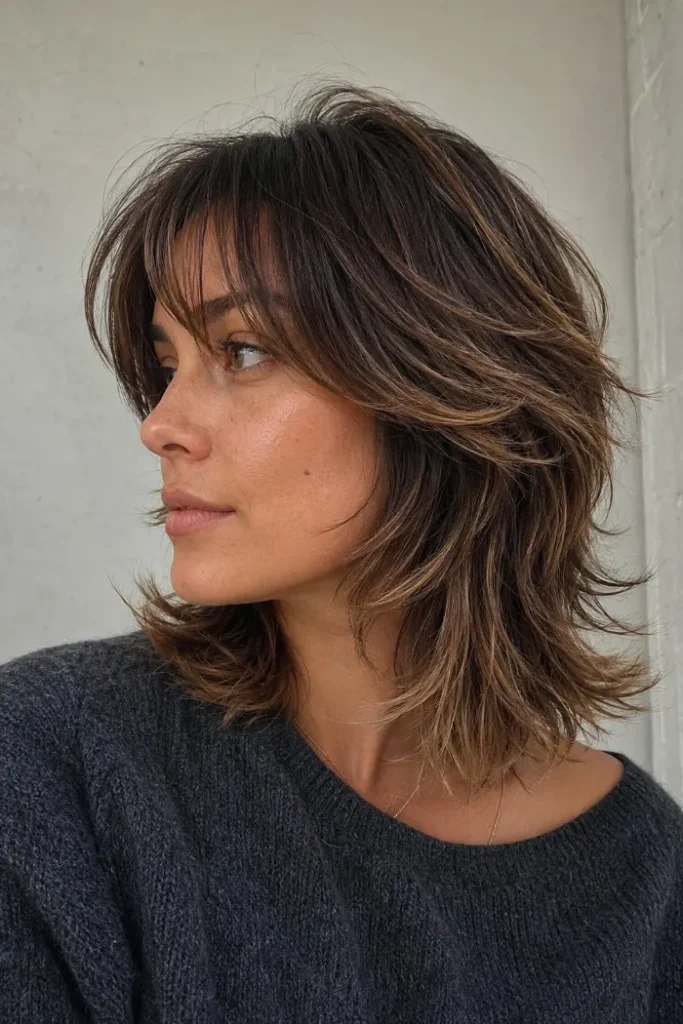
This layered shag carries plenty of visible density through the crown and upper sides, but the ends have been feathered enough to swing away from the neck. Long, sweeping face-framing layers create movement around the cheek and jaw. Fine lighter ribbons through the brunette lengths also emphasize the separation between each curved layer and flipped end.
Ask your stylist to remove bulk internally through the densest areas while preserving the surface layers so the cut does not turn frizzy or hollow. Keep the perimeter feathered and mobile rather than blunt. If you wear highlights, placing lighter pieces along a few face-framing and outer layers can make the movement more visible.
18. Tousled Short Shag With Air-Dried Texture
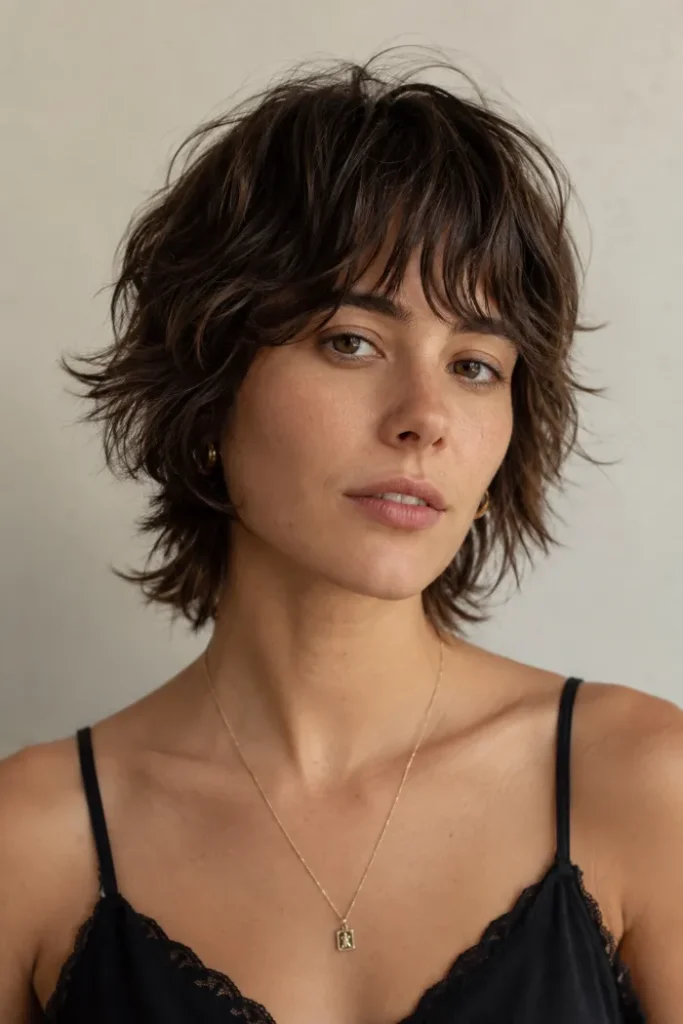
This tousled shag is full of loose bends, flicked ends, and uneven separation that makes the texture look naturally lived in. The brow-length fringe blends into softly curved side pieces, while the nape stays a little longer and feathered. The crown has lift, but nothing appears overly set or sculpted, which keeps the finish casual.
Ask your stylist to cut the layers according to how your hair naturally bends and falls, especially if you want to air-dry most days. Keep enough length through the ends for movement instead of over-thinning them. Scrunch a light mousse or texture cream into damp hair, then avoid brushing once it starts drying.
19. Wavy Ear-Length Shag With Side-Swept Fringe
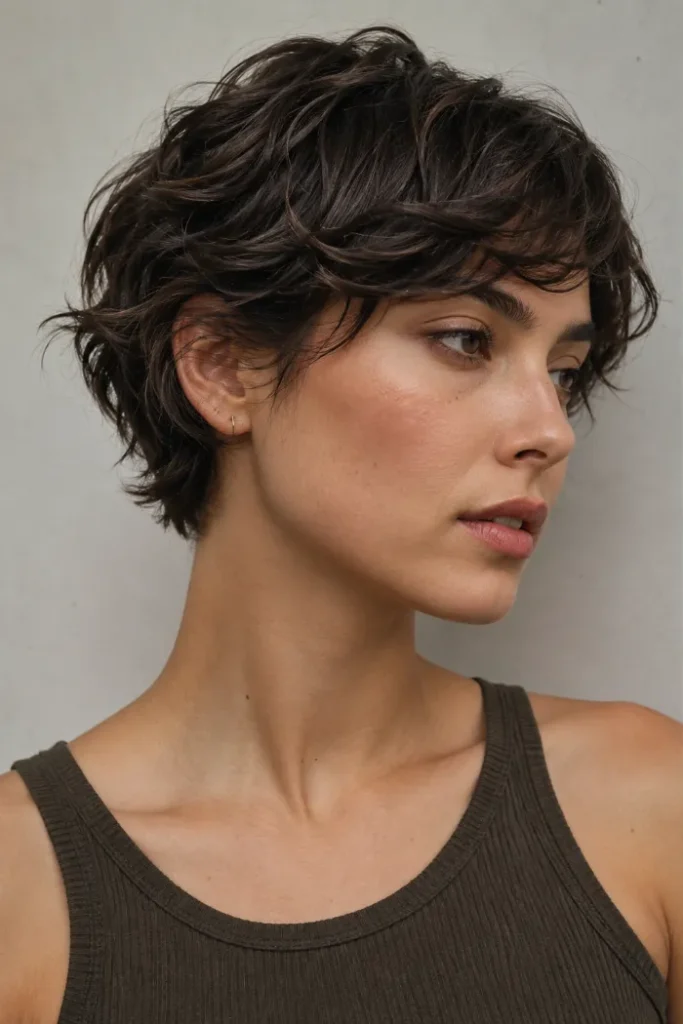
This short shag sits close around the ears and nape, with soft waves creating most of the visible texture through the top and sides. The longer fringe sweeps across the forehead and blends into curved pieces near the temple. Because the ends are lightly tapered, the waves stay defined without making the compact silhouette feel bulky.
Ask your stylist for enough length around the top and fringe to let your natural wave form before tapering the lower outline. Keep the side-swept front longer than a standard pixie fringe so it can bend naturally. A small amount of curl cream and gentle diffusing can enhance the shape without flattening the crown.
Short Layered Shag Haircut FAQs
Do short layered shag haircuts work on fine hair?
They can, but I’d avoid removing too much weight. Fine hair usually looks fuller when the perimeter stays fairly substantial and the shorter layers are concentrated around the crown and face. Ask for subtle internal movement rather than lots of aggressive thinning, then use lightweight root products instead of heavy creams.
How often does a short shag need trimming?
It depends on how precise you want the silhouette to stay. Shorter pixie-shags and strongly tapered napes will show growth faster than longer, messier shags. If you like the haircut looking intentional around the fringe and neckline, plan on checking the shape roughly every six to eight weeks and adjust from there.
What should I ask for if I do not want my shag to look too mullet-like?
Ask your stylist to keep the transition from the crown into the nape gradual and leave a little more fullness around the sides. A strong mullet effect usually comes from a bigger contrast between short top and side sections and a noticeably longer back. Softer connections will keep the silhouette closer to a layered bob or classic shag.
Can a short layered shag be air-dried?
Yes, especially if the cut is shaped around your natural wave or curl pattern. Tell your stylist that air-drying is part of your routine before they start cutting. At home, apply a small amount of mousse, curl cream, or texture product to damp hair, arrange the fringe, scrunch the lengths, and let the layers settle naturally.
Choosing the Short Shag That Fits You
I’d start by choosing the detail you keep noticing in these photos. Maybe it is a wispy curtain fringe, a fuller curly crown, cheekbone layers, or that longer wolf-cut nape. Then match that idea to what your own hair naturally wants to do. Fine hair may need more perimeter weight, thick hair may need internal debulking, and waves or curls need enough length to form properly.
Also be realistic about how much styling you actually enjoy. A deliberately tousled shag can be wonderfully low-fuss when it works with your natural texture, while a smooth Bardot fringe or flipped bob shape may ask for a little more brush work. Bring your favorite photo to the salon and point out the exact fringe, layer placement, and nape shape you want to borrow.