What to Wear If You Are Short (The Petite Styling Guide That Actually Works)
If you are short, getting dressed can sometimes feel like every “cute” piece comes with a secret tailoring bill. Trousers puddle, jackets hit too low, midi skirts suddenly become maxis, and one oversized sweater can make your whole outfit disappear. Rude, honestly.
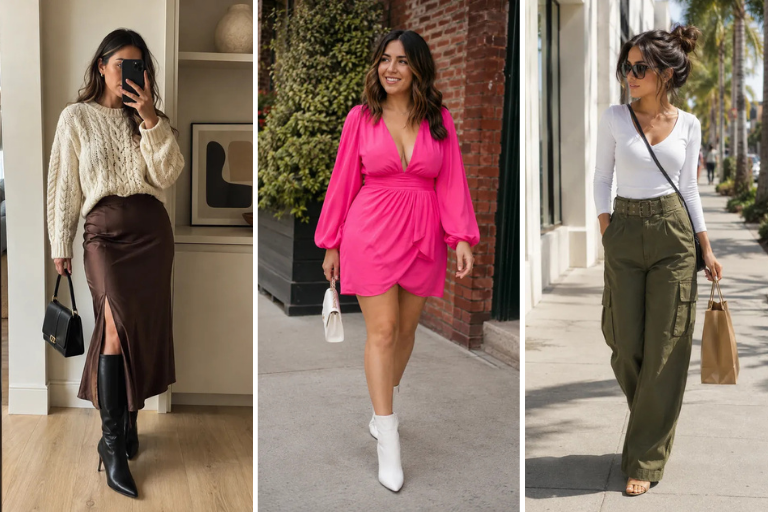
But the answer is not to live in tiny hemlines and heels forever. What to wear if you are short comes down to proportion more than any strict petite fashion rule. You want your clothes to show where your waist is, keep the eye moving instead of stopping in awkward places, and fit your actual frame instead of the imaginary one the brand drafted for.
Once you start thinking in proportions, you can wear cargo pants, wide-leg trousers, sweater dresses, midi skirts, bold color, and yes, even relaxed silhouettes. The trick is knowing what part of the outfit should create length and what part can have fun.
Start by Giving Your Legs a Little More Visual Real Estate
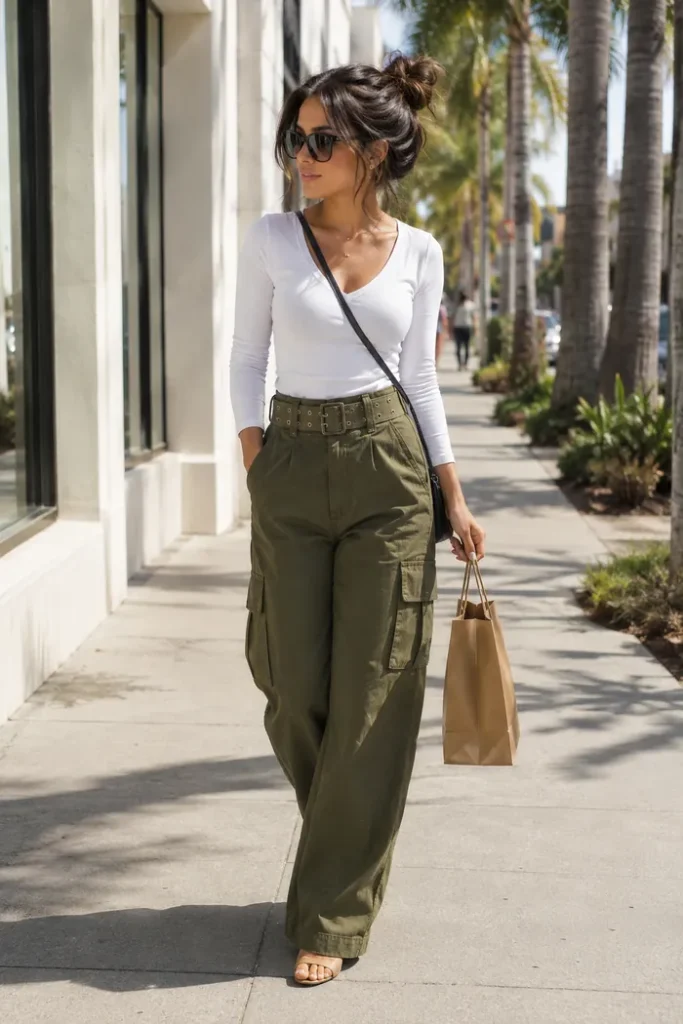
A shorter frame does not automatically need the highest waistband you can physically button. It needs a waistband that places your waist in a flattering spot and leaves the lower half looking long. For some women that is a true high rise. If you also have a short torso, a clean mid rise may give you better balance.
This olive cargo look gets the proportion right because the fitted white top is tucked in, the waistband is clearly visible, and the trousers fall in one long line almost to the floor. Even with roomy cargo pockets, the outfit still feels lengthened because the volume starts below a defined waist. The slim crossbody strap and minimal sandals keep everything from feeling heavy.
Think one-third on top and roughly two-thirds on the bottom instead of splitting your body visually right through the middle. You do not need a measuring tape in front of the mirror, babe. Just ask yourself whether the outfit makes your legs look like the longer section.
When in Doubt, Build One Long Color Line
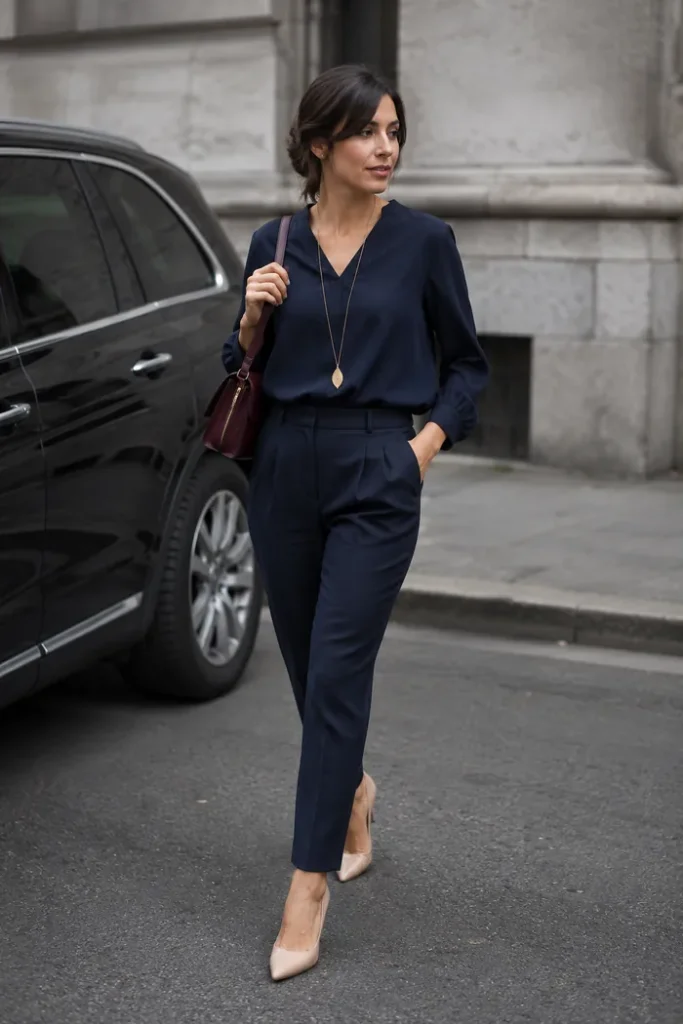
Monochrome and tonal dressing are ridiculously useful on a petite frame because the eye does not keep stopping at high-contrast color breaks. A navy blouse tucked into navy tailored trousers creates one clean column, while the pointed nude pumps extend the line instead of cutting it off at the ankle.
Notice that “one color” does not have to mean boring. The soft blouse, sharper trouser crease, burgundy shoulder bag, and long pendant all add dimension without chopping the outfit into separate pieces. If head-to-toe black is not your thing, try navy, chocolate, cream, olive, camel, or any family of shades you actually love wearing.
Balance Relaxed Pieces With Something That Shows Your Shape
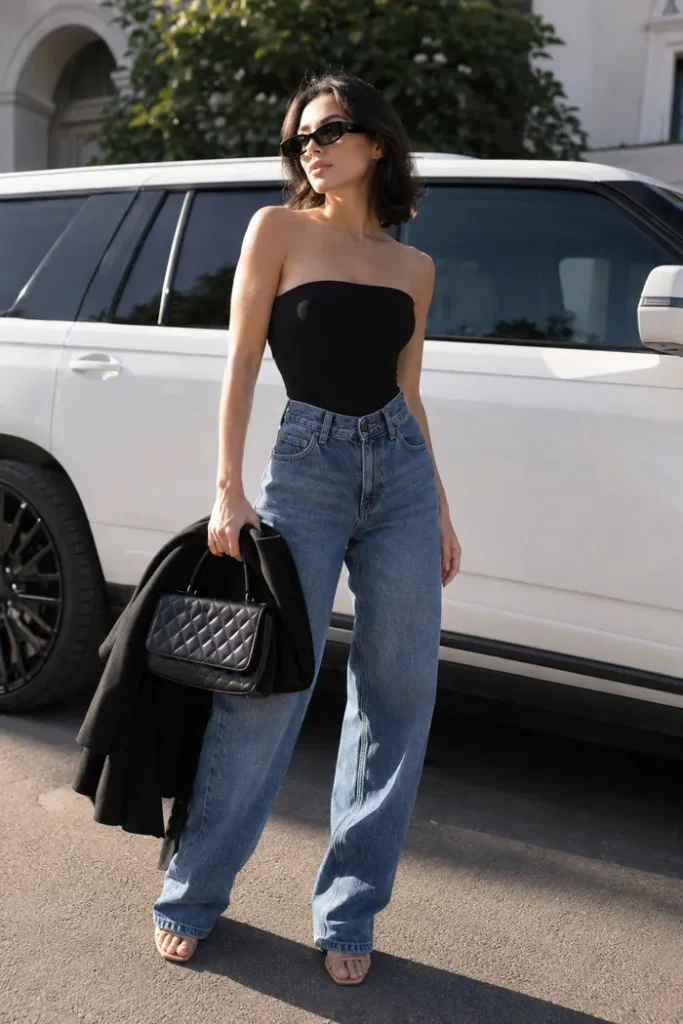
Oversized is not banned from the petite wardrobe. The problem starts when every piece is oversized at the same time and your actual proportions vanish under fabric.
Here, the relaxed blue jeans work because the strapless black bodysuit is fitted and ends cleanly at the high waistband. The upper half stays sleek, the lower half gets the slouchy volume, and the result feels intentional rather than swallowed. The simple heeled sandals also keep the hem from bunching too much at the foot.
This is one of the easiest formulas to steal when you are short: fitted top with relaxed bottoms, or relaxed top with a cleaner, more shaped bottom. Give the eye at least one clear place to find your figure.
Use Hemlines and Jackets to Put the Proportions Where You Want Them
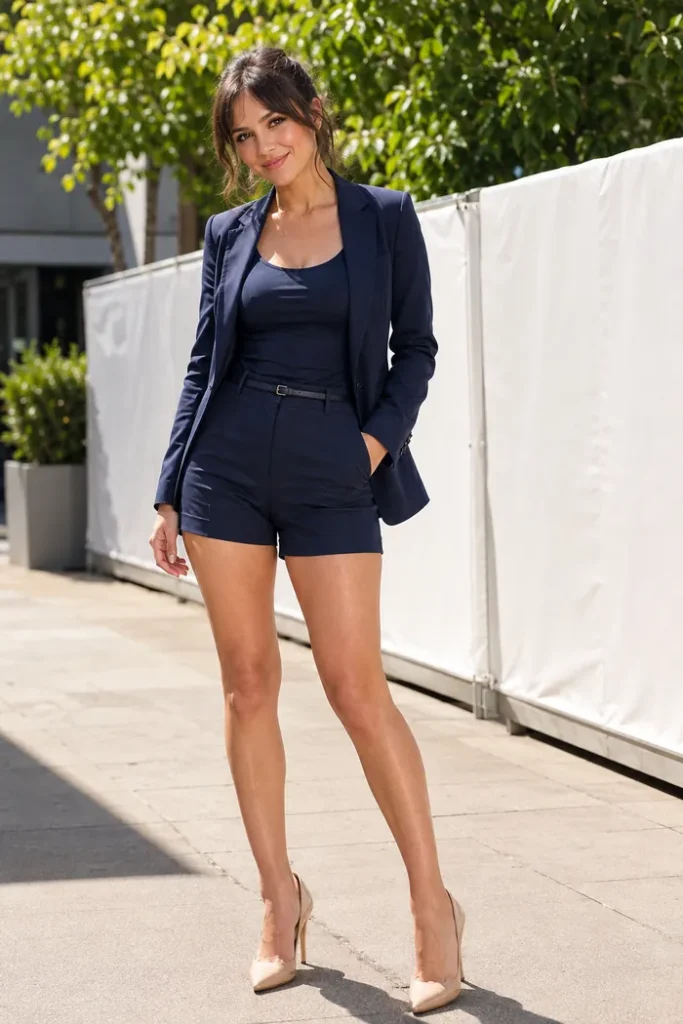
Showing more leg is the most obvious way to make the lower half read longer, but the outfit still needs structure. The matching navy tank, tailored shorts, and blazer create a polished column on top, while the short hem leaves the legs completely uninterrupted. Nude pointed pumps finish the job without adding another strong horizontal line.
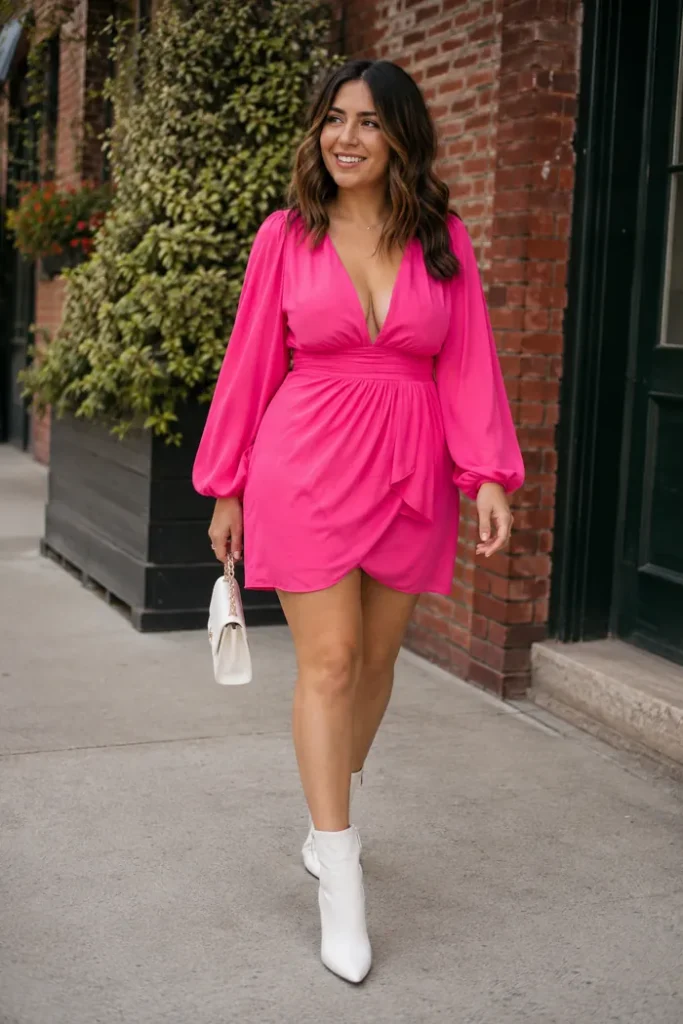
A mini dress can do the same thing in a totally different mood. This hot pink wrap style defines the waist, opens the neckline, and keeps the hem high enough that the legs stay the star of the silhouette. The white ankle boots are a noticeable contrast, but because there is so much leg showing above them, the outfit still feels long rather than chopped up.
If you prefer flats, sneakers, or loafers, the same proportion trick still works. The goal is not “wear heels.” The goal is choosing a hemline and shoe combination that does not accidentally consume half your leg.
If an Outfit Has Volume, Give It One Strong Anchor
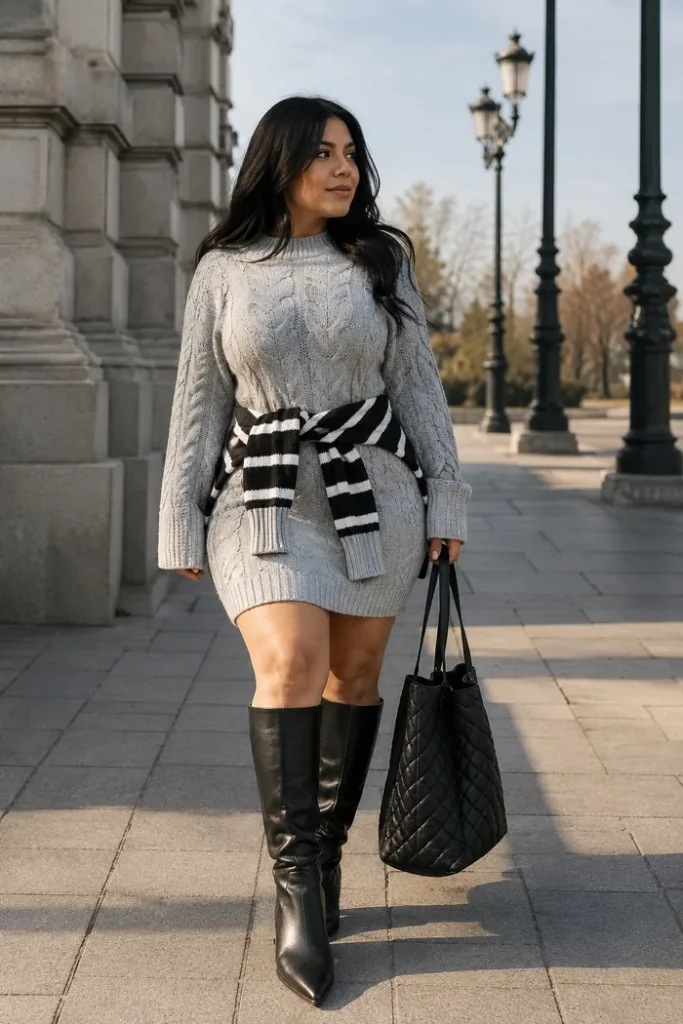
A chunky sweater dress can absolutely work when you are short. What helps here is the striped sweater tied around the waist, which gives the oversized knit an obvious middle instead of letting it hang as one big rectangle. The mini length and sleek knee-high boots create long vertical sections underneath, so the cozy texture does not overpower the frame.
You can use the same idea with a belt, a half tuck, a cropped layer, or simply a jacket that ends near your waist. You are not trying to squeeze yourself into shape. You are giving the outfit a little architecture.
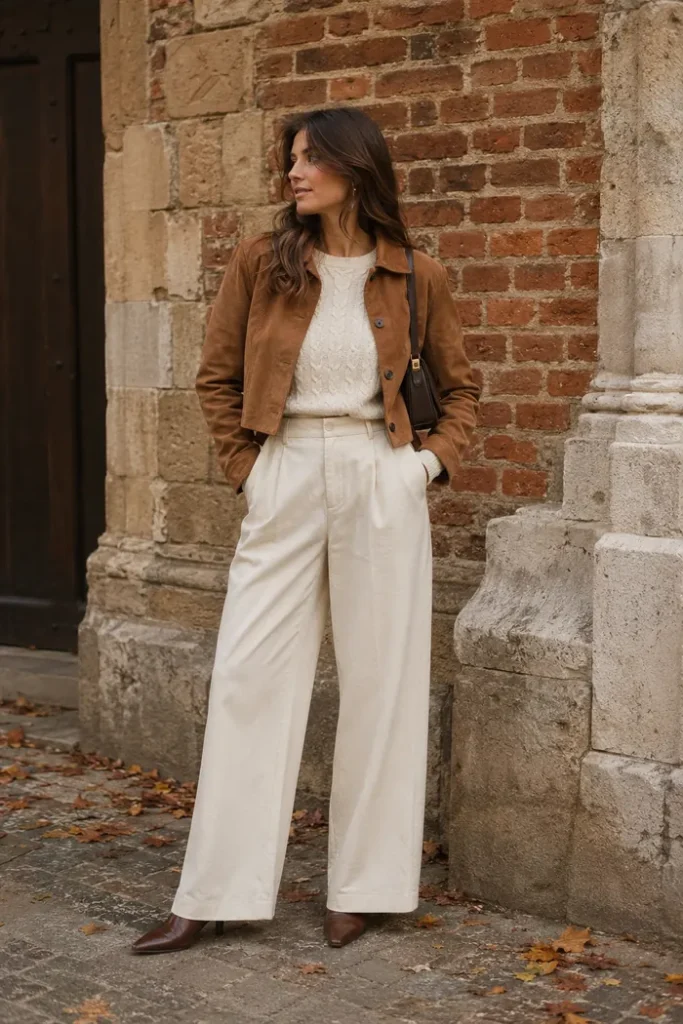
This caramel cropped jacket does that beautifully. It ends close to the high waistband of the ivory trousers, so the leg line starts early and keeps going all the way down. The cream knit underneath stays in the same soft color family as the trousers, while the brown pointed shoes echo the jacket. It is classic, warm, and very petite-friendly without looking like it was assembled from a rulebook.
Tonal Dressing Makes Longer Skirts Feel Lighter
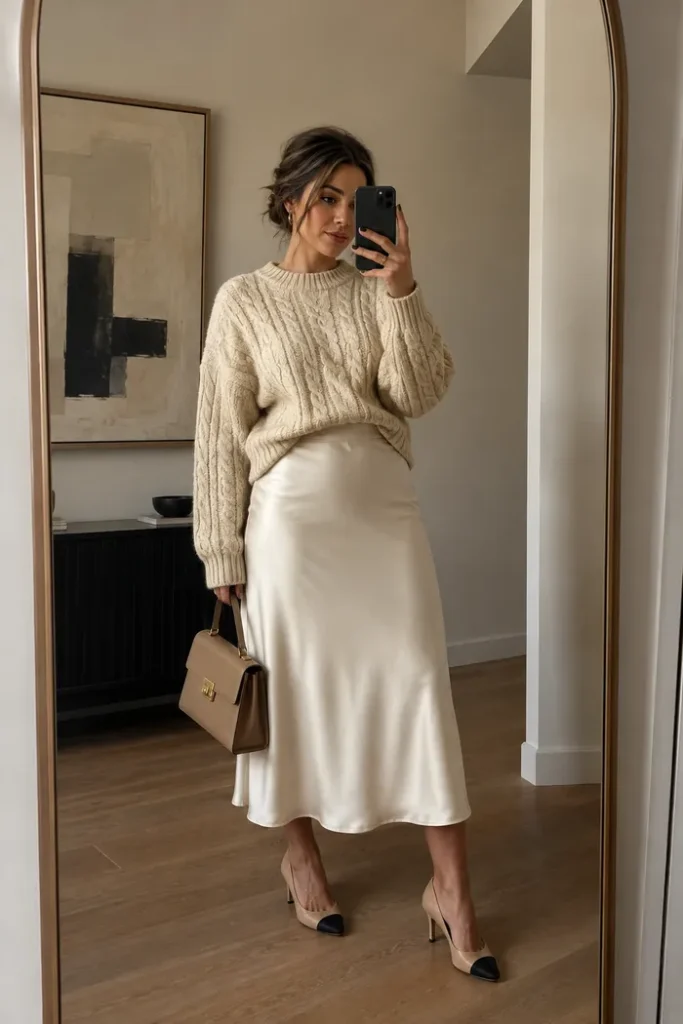
Midi skirts get blamed for shortening petite women, but the length itself is not the villain. The bigger question is how many visual stops the outfit creates.
In this cream sweater and ivory satin skirt combination, the colors flow into each other instead of creating a hard break at the waist. The sweater is tucked enough to keep the waist visible, the satin falls close to the body without bulky layers, and the pointed cap-toe heels keep the finish refined. The result is soft and elegant, not heavy.
If your midi hits at an awkward spot on your calf, tailoring is worth it. A few centimeters can make a surprising difference. Petite dressing is often less about buying a completely different wardrobe and more about refusing to settle for a hem that was clearly made for somebody else.
Yes, You Can Wear Wide-Leg Trousers
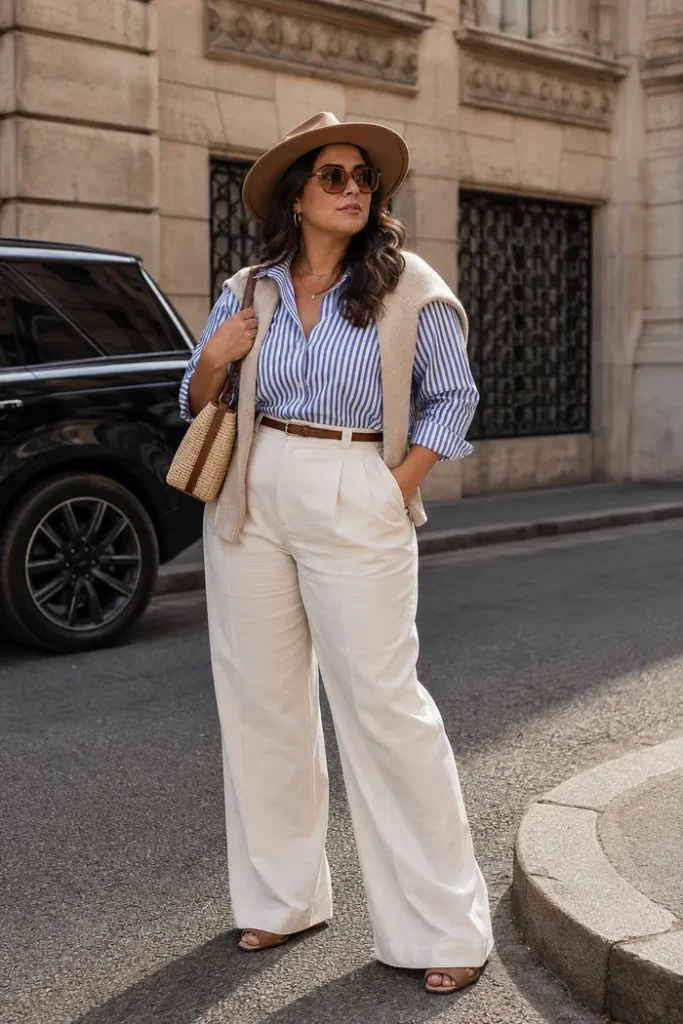
There is no reason to exile wide-leg trousers just because you are short. In fact, a well-fitted pair can create one of the cleanest vertical lines in your closet. The key is that they need to fit at the waist, fall smoothly through the hip, and reach a deliberate length.
This blue striped shirt is tucked into high-waisted white trousers, with a slim brown belt marking the waist and the trouser legs falling almost to the ground. The soft sweater over the shoulders adds interest up top without stealing length from the bottom half. Even the hat helps pull the eye upward. Cute little styling sorcery, really.
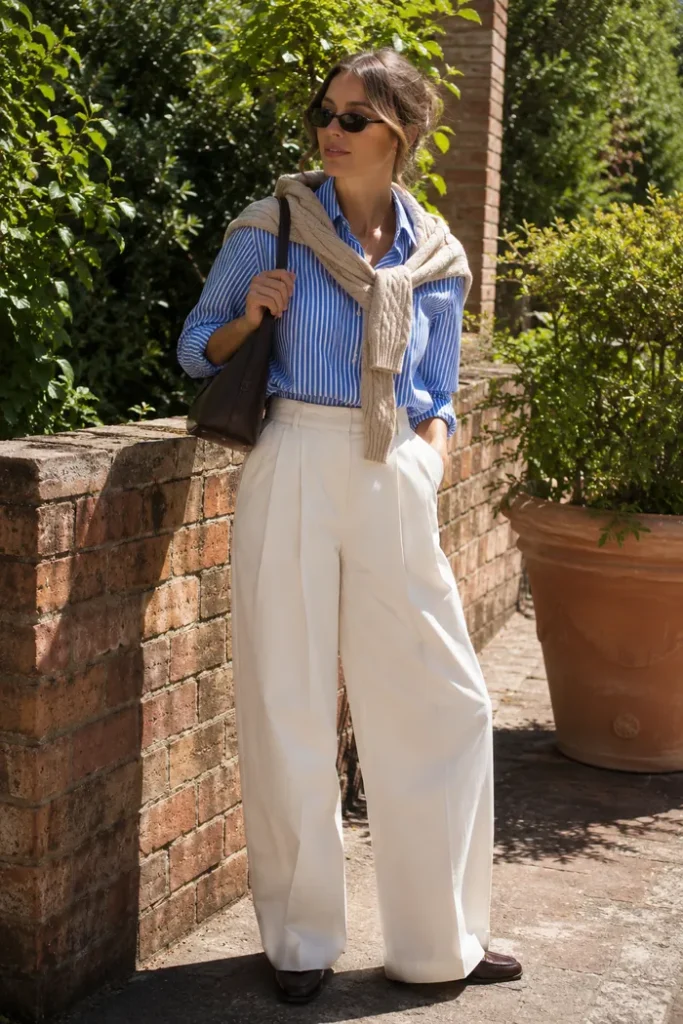
The second striped-shirt look proves the same formula without the extra accessories. A tucked shirt, very high waist, full-length white trousers, and shoes that mostly disappear under the hem create a long, uninterrupted base. The sweater draped around the shoulders keeps the outfit relaxed, but it sits high enough that it does not drag the proportions downward.
The one thing I would never compromise on with wide-leg pants is the hem. Too long and they puddle into visual clutter. Too short and the leg suddenly looks cut off. Get the length right and they can be one of the most flattering pieces in a petite wardrobe.
And Yes, Midi Skirts With Boots Can Work Too
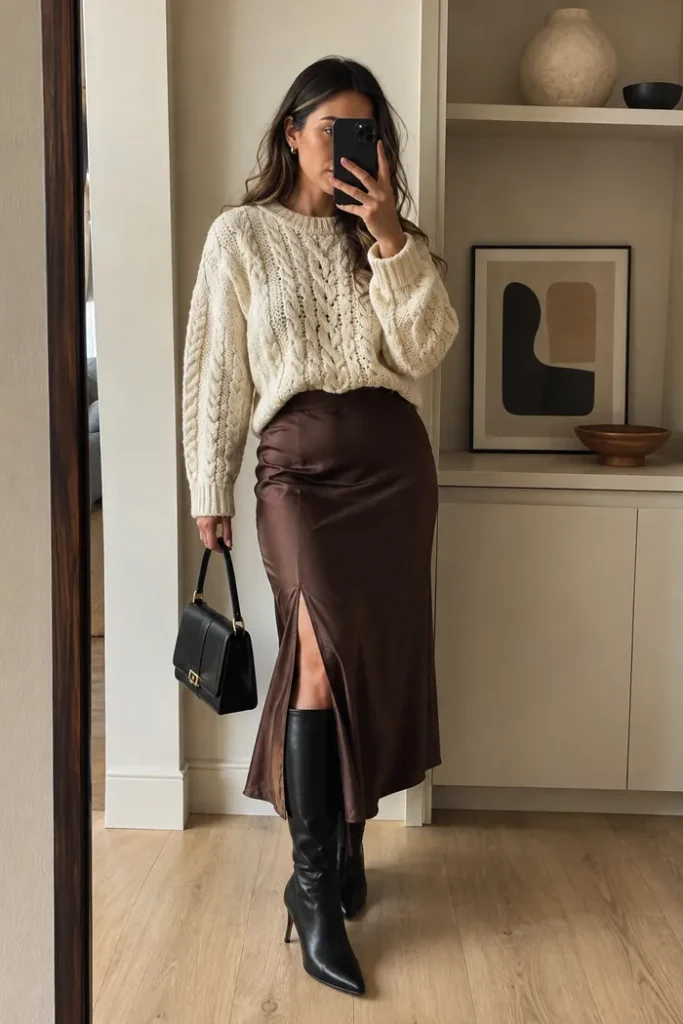
This is where petite style rules get way too dramatic. A midi skirt plus knee-high boots is not automatically “too much” for a short frame. You just want the pieces to connect instead of creating a bunch of chopped-up sections.
The cream cable-knit sweater is tucked into a smooth chocolate satin skirt, so the waist stays visible. The front slit reveals movement and keeps the skirt from feeling like one solid block, while the black pointed boots create a sleek lower line. A smaller structured handbag finishes the outfit without competing with the silhouette.
If you love skirts and boots, wear them. Just pay attention to where the skirt ends, where the boot begins, and whether the gap or overlap looks intentional. That tiny bit of proportion awareness does more than banning an entire category of clothes ever will.
The Real Rule for Dressing When You Are Short Is Fit
You can memorize every petite styling trick on the internet, but a perfectly hemmed trouser will usually do more for you than any “must wear this, never wear that” rule. Sleeve length, jacket length, waistband placement, skirt hems, and shoulder fit matter because small proportion changes are simply more noticeable on a shorter frame.
So when you are wondering what to wear if you are short, start with three questions. Can I see where my waist is? Does the eye have a clean line to follow? Does this piece end at a spot that looks intentional on me? If the answer is yes, you are already most of the way there.
And please do not let “petite rules” talk you out of the clothes you actually love. Wide legs, bold pink, big knits, satin midis, cargo pockets, boots, all of it can work. Your height is not the restriction. Bad proportions are. Fix those, and the fun stuff gets to stay.