20 Haircuts for Fine Wavy Hair Over 60 That Add Shape Without Stealing Fullness
Finding haircuts for fine wavy hair over 60 is a little different from simply looking for a pretty short cut. You want enough layering to encourage your natural bend, but not so much that the ends suddenly look wispy. I also think the best cuts leave you some styling flexibility, because not every morning needs to involve a round brush and twenty minutes in front of the mirror.
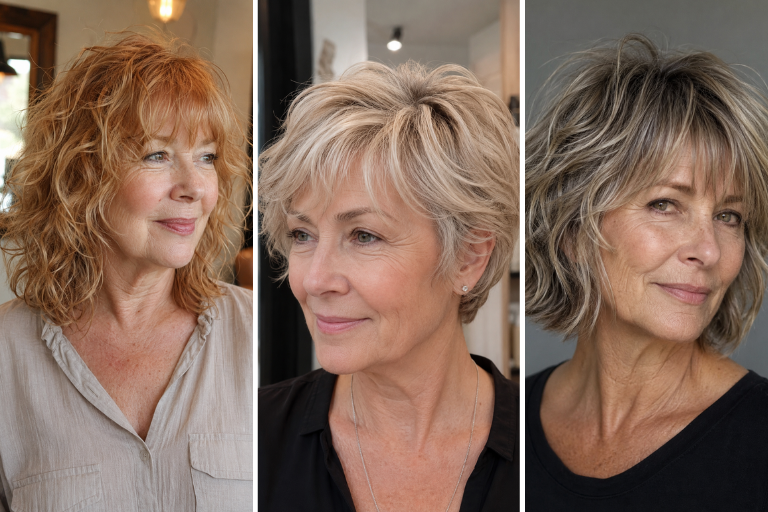
Length makes a surprisingly big difference here. A jaw-length bob can make fine hair appear denser through the perimeter, while a collarbone cut gives waves more room to form. Shags, bixies, and pixies can be wonderful too, as long as the stylist keeps enough weight in the right places instead of thinning everything indiscriminately.
Fringe is another detail worth thinking through before you commit. Wispy bangs can soften a layered cut without borrowing too much hair from the front, while longer curtain or side-swept pieces are easier to grow out and blend into the rest of the haircut. If your wave pattern changes from day to day, those longer options can also be much more forgiving.
I pulled together a mix of short, medium, and shoulder-skimming ideas below so you can compare the actual shapes. Pay attention to where the volume sits, how solid the ends look, and how much styling each cut seems to need. Those details matter much more than choosing a haircut just because it has a trendy name.
Haircuts for Fine Wavy Hair Over 60 to Consider
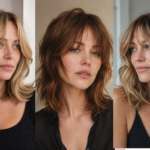
1. Airy Midi Shag With Wispy Fringe
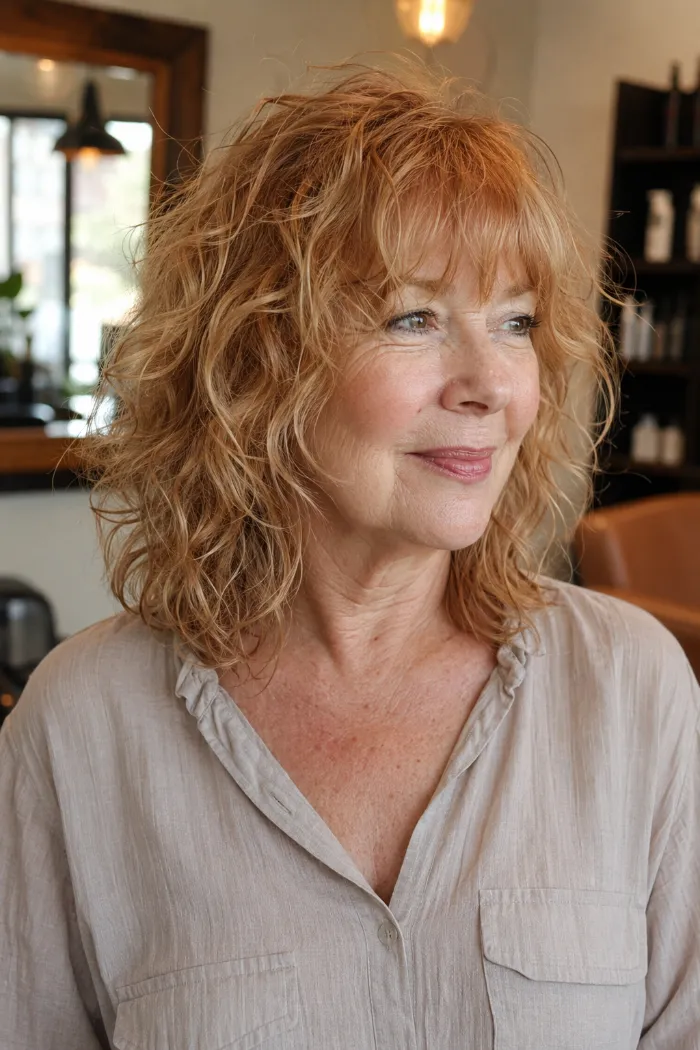
This coppery midi shag has loose, irregular waves and plenty of movement from the crown through the shoulder-skimming ends. The wispy fringe is light enough to separate naturally across the forehead, while shorter face-framing pieces blend into fuller layers at the sides. I like that the silhouette looks intentionally tousled rather than overly rounded or carefully curled.
Ask your stylist for a shag with the shortest layers concentrated around the crown and cheek area, while keeping more length and substance through the bottom. Have the fringe cut lightly rather than deeply, and avoid aggressive thinning at the ends. A small amount of mousse or airy curl foam can help the waves separate without making fine hair feel coated.
2. Blunt Wavy Lob With Hidden Interior Layers
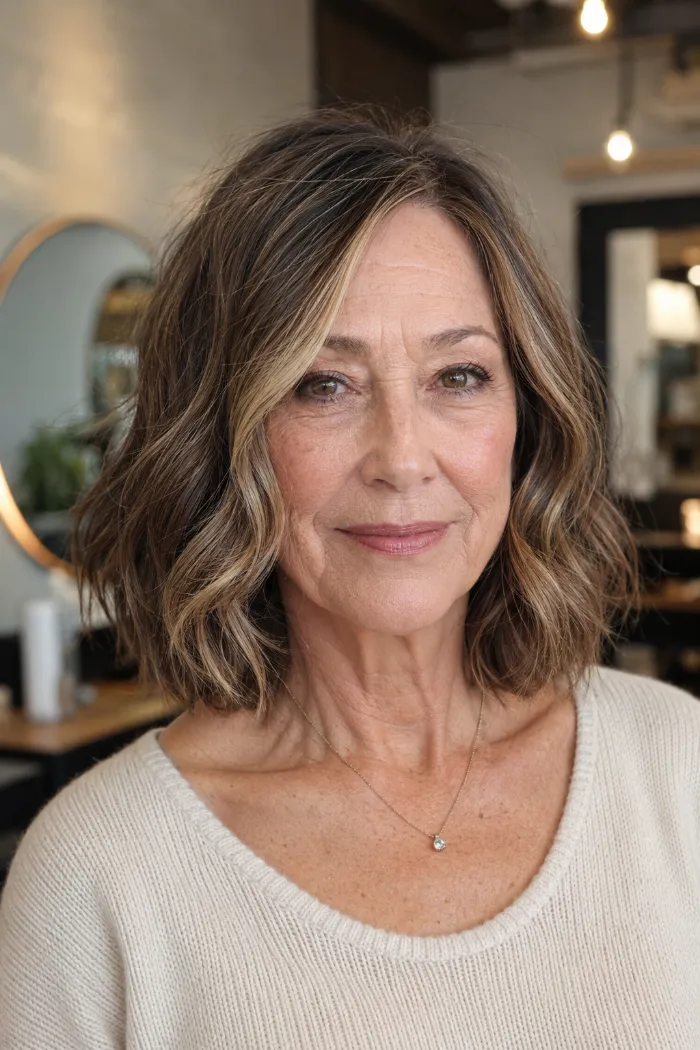
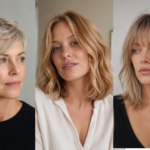
This lob sits just above the shoulders with a fairly solid-looking perimeter, which gives the ends a nice sense of density. Gentle bends through the mid-lengths keep it from feeling too blunt, and the lighter face-framing ribbons stand out against the deeper brunette base. There are no obvious short surface layers competing with the clean outline.
Ask your stylist to keep the baseline relatively blunt and use only subtle interior layering to release movement through the middle of the haircut. If you wear a center or slightly off-center part, keep the front long enough to tuck back easily. For styling, alternate the direction of a few loose bends rather than curling every section identically.
3. Feathered Wavy Bixie With Soft Crown Lift
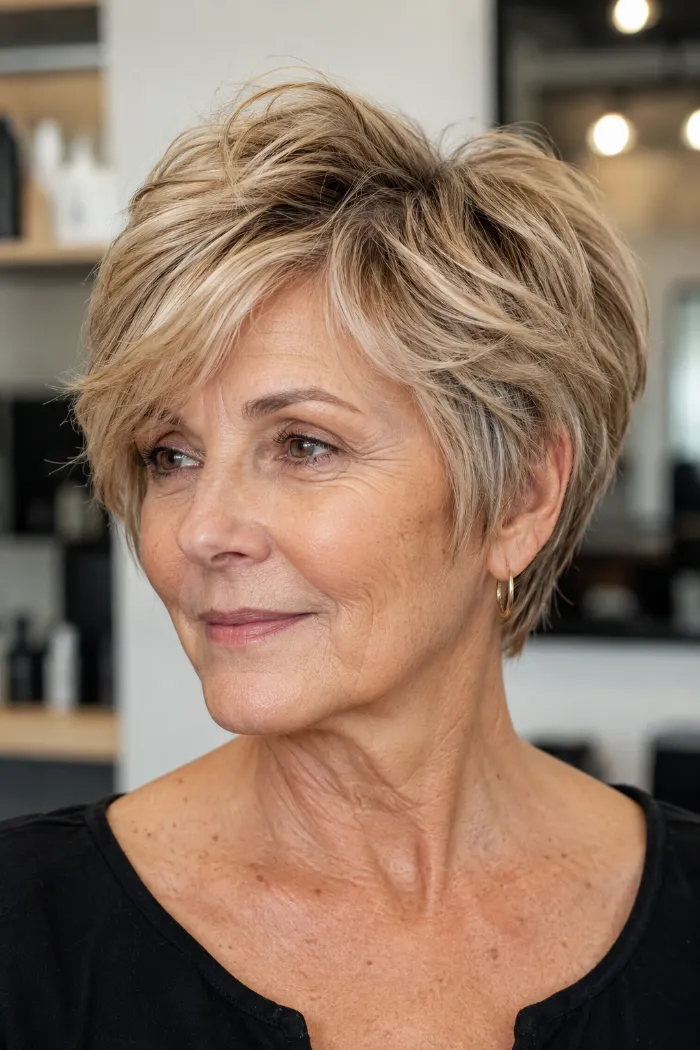
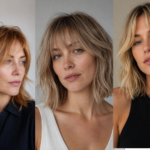
This short bixie has a close, neat shape around the ears and nape with noticeably more length through the crown and front. The side-swept fringe blends into feathered layers that sweep away from the face, while the top has enough lift to keep the silhouette airy. Fine highlights emphasize the separation between those longer pieces.
Ask your stylist for a softly tapered nape and ears with longer, connected layers through the top so you have something to lift and sweep. Keep the fringe long enough to move sideways rather than cutting it straight across. A small round brush or vent brush at the roots should be enough to encourage the crown height.
4. Fine-Hair Wolfy Shag Bob With Piecey Ends
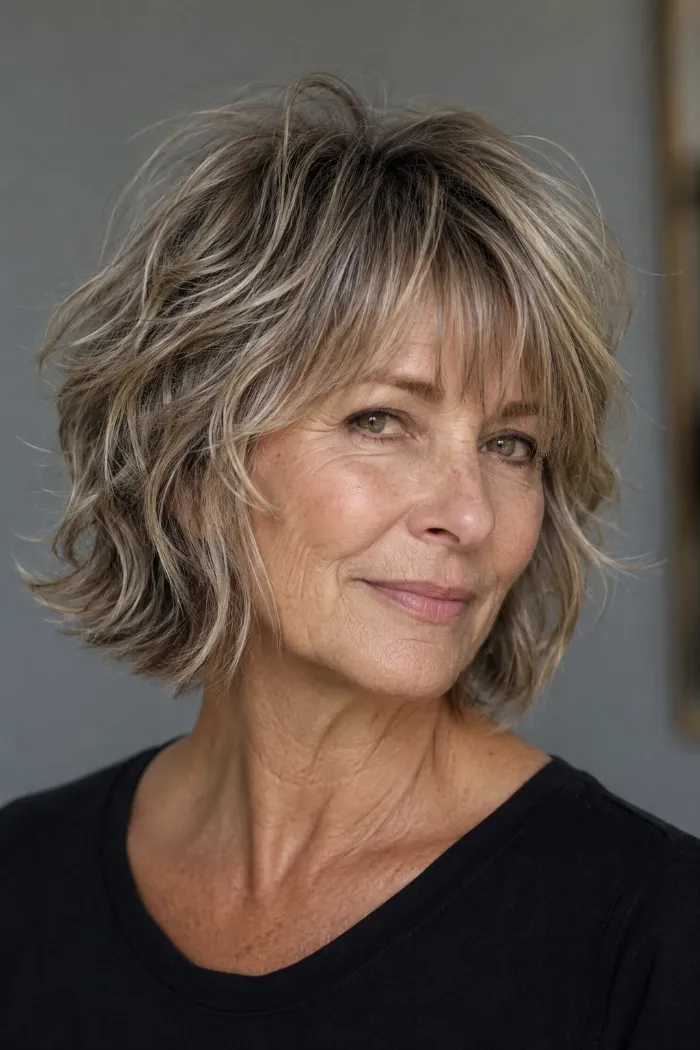
This shaggy bob lands around the base of the neck and has that slightly wolfy shape created by shorter crown layers and flicked, separated ends. The fringe falls in light pieces across the forehead instead of forming a heavy band. Natural-looking bends around the sides give the cut width and texture while the neckline stays loose and feathery.
Ask your stylist to build graduated shag layers without carving too much hair from the lower third. The ends should be piecey, not transparently thin, so request restrained point cutting if your density is limited. Let the fringe follow its natural fall, then use a light texture mist on the crown and ends instead of a heavy wax.
5. Fine Wavy Rounded Bob With Soft Razored Edges
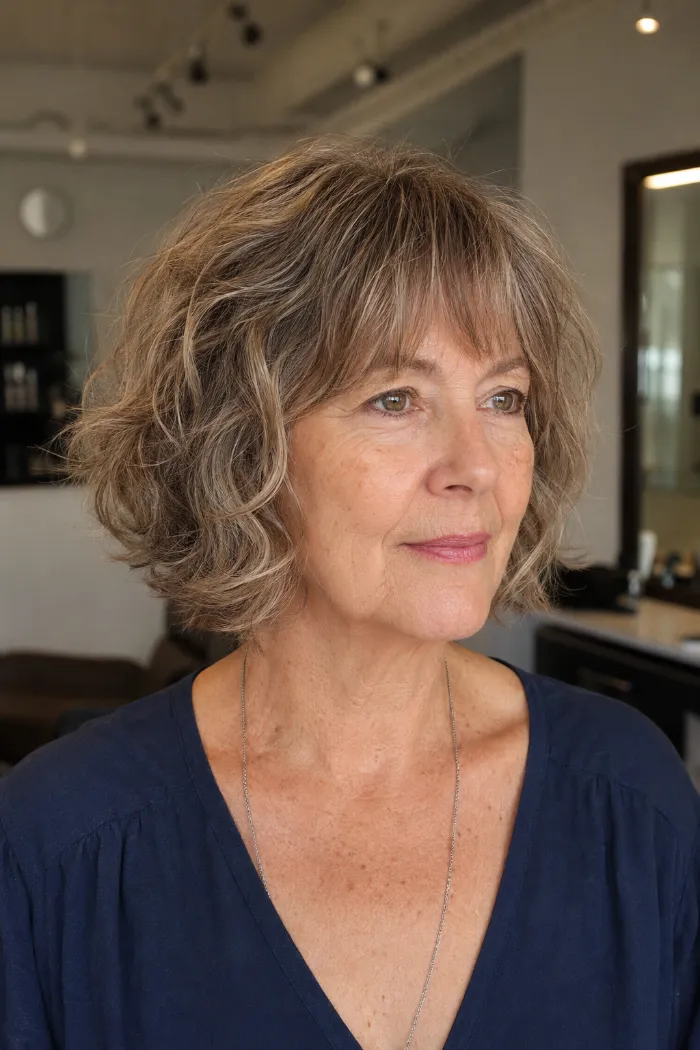
This neck-length bob has a rounded, softly expanded shape with airy movement around the sides rather than a sharp geometric line. The fringe is light and slightly separated, and the outer layers bend away from the cheeks before flicking gently at the ends. The warm brunette and gray-beige tones also make the textured sections easy to see.
Ask your stylist for a rounded bob with gentle surface layering and a perimeter that still feels substantial when you pinch the ends together. If a razor is used, ask for it to stay mainly on the outermost pieces rather than removing bulk everywhere. A diffuser on low airflow can help preserve those irregular bends without puffing them apart.
6. Jaw-Length Wavy French Bob With Micro Curtain Fringe
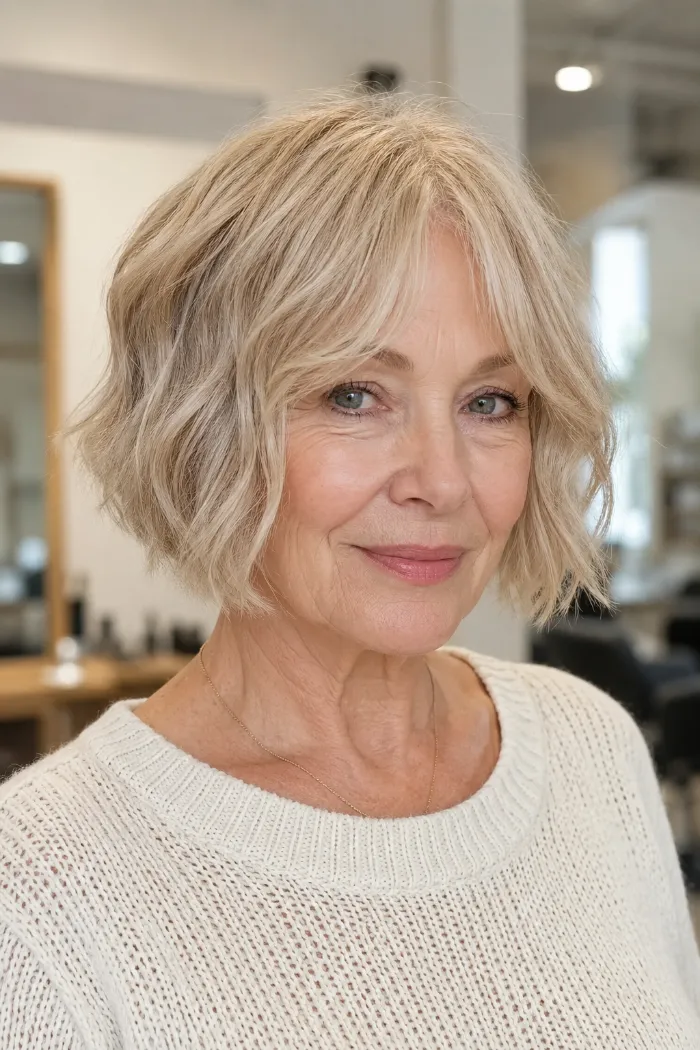
This pale blonde bob ends around the jaw with a softly irregular perimeter that lets the waves bend outward in places. The short curtain-like fringe opens through the center and melts into longer cheek pieces, so the front never looks heavy. I especially like the balance between the compact length and the loose, almost undone texture through the sides.
Ask your stylist for a jaw-length outline with minimal graduation and just enough layering to prevent the waves from forming one solid triangle. Keep the center of the fringe light and slightly shorter, with longer edges that connect into the sides. Scrunch in a small amount of lightweight foam and let the ends decide which direction they want to bend.
7. Medium Wavy Butterfly Cut With Fine Layers
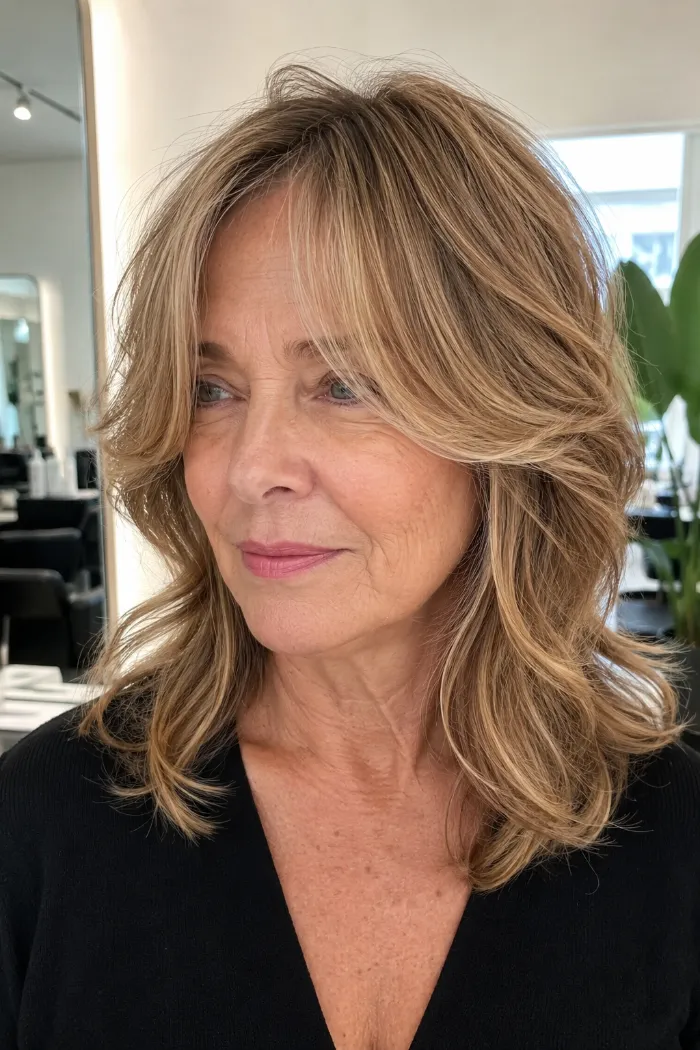
This medium-length butterfly cut keeps plenty of length below the shoulders while adding sweeping layers around the face and through the lower sides. The shortest front sections curve away near the cheekbones, and longer layers turn outward closer to the shoulders. That creates the tiered, fluttery effect without making the bottom look dramatically thinned out.
Ask your stylist for face-framing layers that begin around the cheekbone or mouth, then blend gradually into the longer perimeter instead of stacking lots of short layers through the back. If your hair loses fullness easily, keep the back relatively restrained. A large round brush on the front pieces can emphasize that outward butterfly sweep.
8. Modern Pageboy Bob With a Soft Wavy Bend
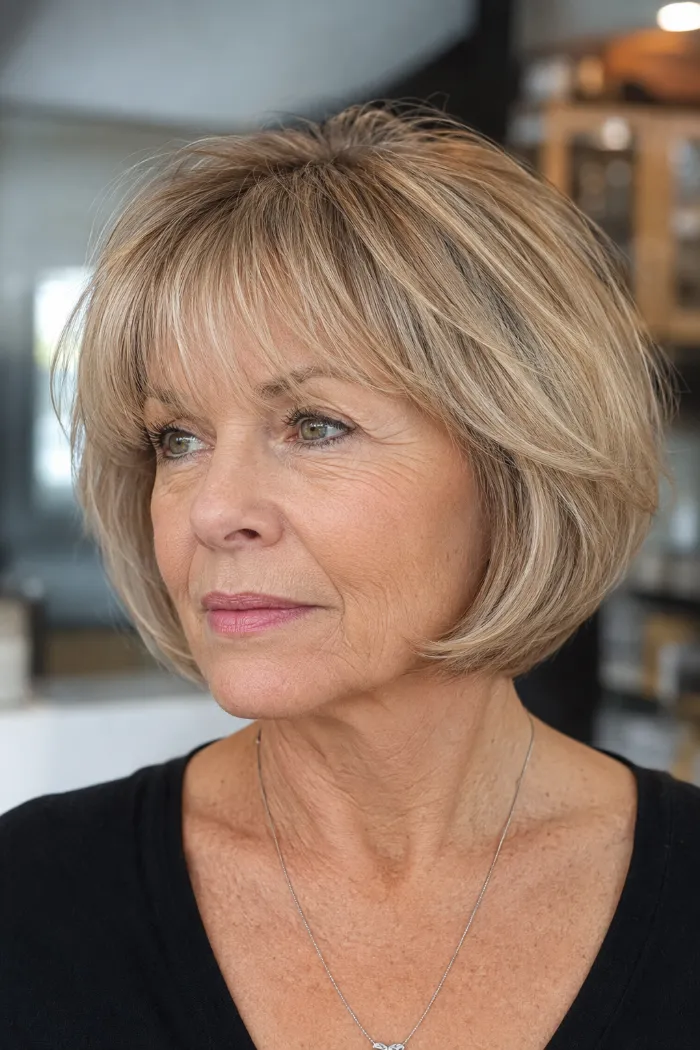
This modern pageboy has a smooth, rounded silhouette that cups in toward the jaw and neck. The fringe is fuller than many of the other examples, but it blends gently into the side sections rather than sitting as a separate blunt strip. Subtle bending through the lengths keeps the classic rounded shape from looking overly rigid or helmet-like.
Ask your stylist for a softly graduated bob with enough weight left along the lower edge to create that curved-under finish. The fringe can be kept slightly longer toward the sides so it connects naturally. If you have a gentle natural wave, smooth only the roots and fringe, then use a brush to bend the perimeter rather than straightening everything flat.
9. Neck-Length Choppy Bob With Light Curtain Bangs
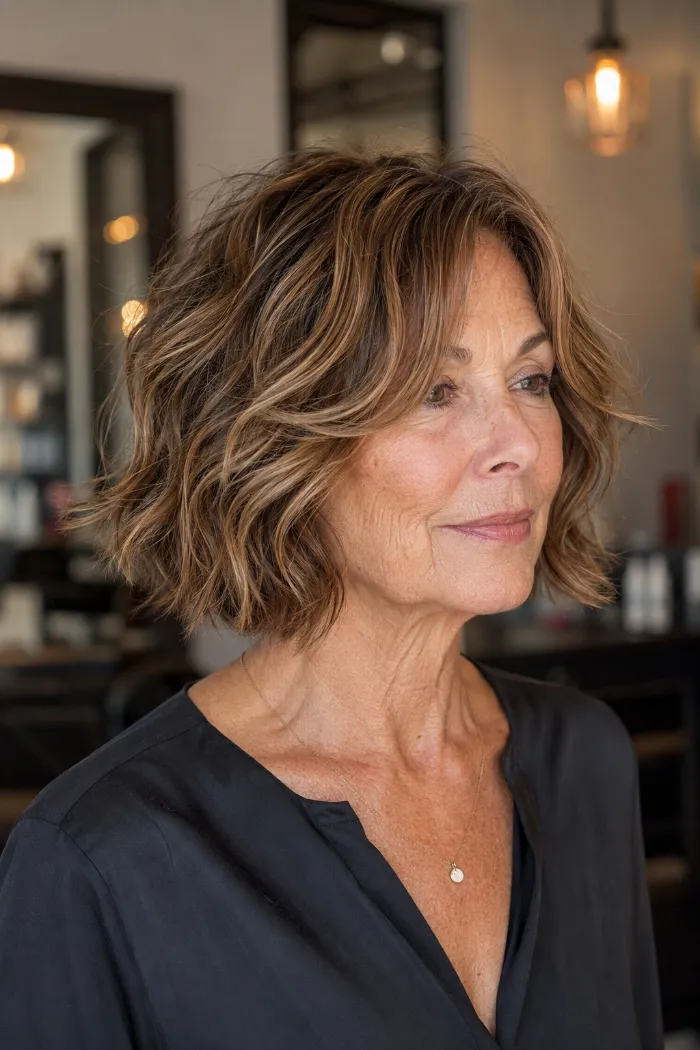
This choppy bob sits around the neck with broken-up waves and a textured lower edge rather than a perfectly straight baseline. Long curtain pieces sweep away from the forehead and blend into cheek-length layers, while caramel ribbons highlight the bends throughout the darker base. The overall shape has volume through the sides without becoming overly round.
Ask your stylist for a neck-length bob with shallow point cutting through the perimeter and only enough layering to encourage your existing wave. Keep the curtain fringe long enough to tuck or sweep aside on flatter hair days. If you’re adding highlights, placing a few brighter pieces near the front can accent the movement without requiring an all-over color change.
10. Rounded Wavy Pixie Bob With Soft Temple Pieces
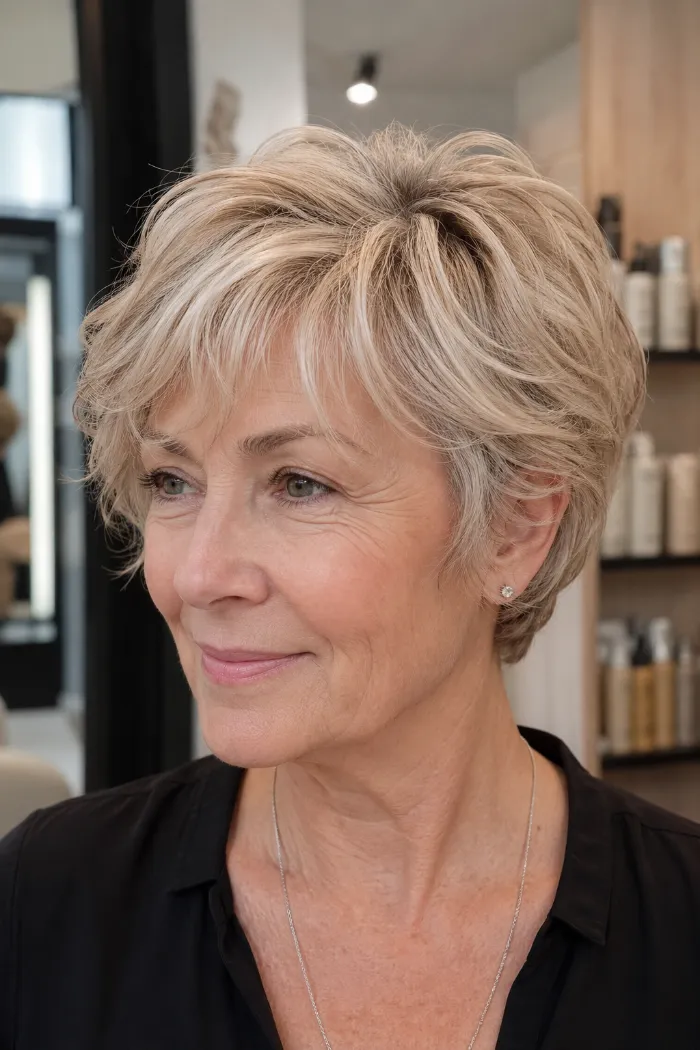
This pixie-bob keeps the nape compact but leaves noticeably more length over the crown and around the front. The blonde layers sweep back from the face in wide, airy sections, while little pieces at the temples soften the transition into the shorter sides. The lifted crown makes the overall silhouette fuller without relying on a hard, sculpted finish.
Ask your stylist for a tapered pixie-bob with length retained through the top and front, especially if your hair collapses when cut too short. Leave slim temple pieces rather than cutting a severe line around the ears. For everyday styling, lift the roots while blow-drying and direct the longer top layers diagonally back with your fingers.
11. Short Shaggy Pixie With Feathered Bangs
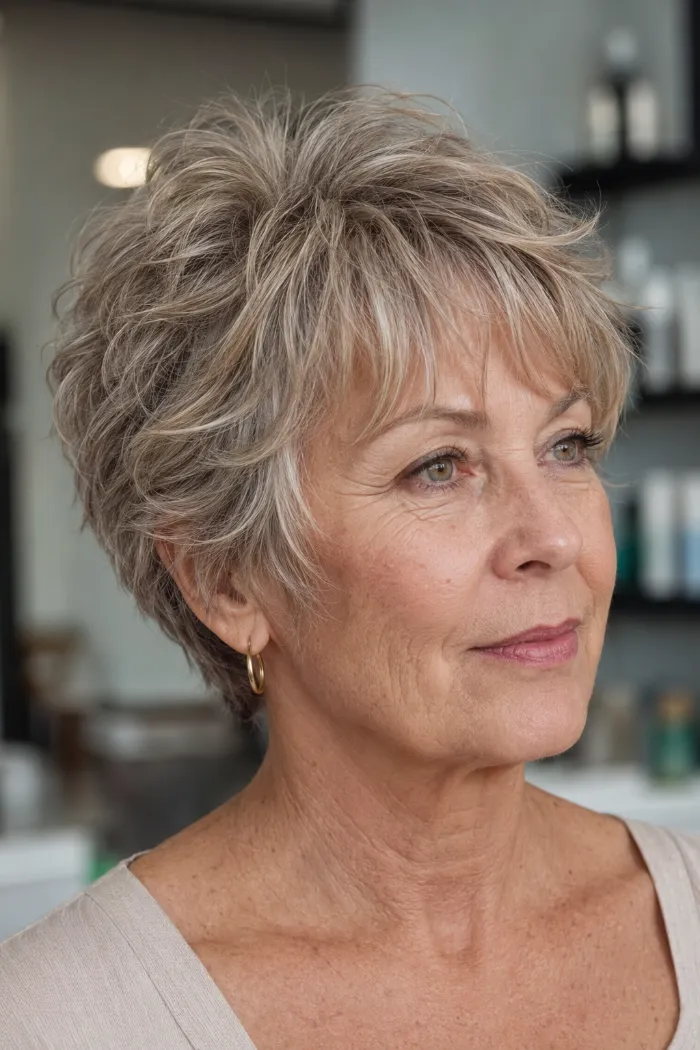
This short pixie has lots of feathered separation through the crown, sides, and fringe, but the shape still feels connected rather than spiky. The top is long enough to create visible lift and a slightly tousled texture, while the nape and area around the ears stay much neater. The wispy fringe breaks up naturally across the forehead.
Ask your stylist for short graduation underneath with longer, movable layers sitting over it through the crown. Keep the bangs soft but avoid over-texturizing every strand, since fine hair still needs enough substance to hold the shape. A pea-sized amount of lightweight styling cream worked through dry ends can define the feathering without flattening the roots.
12. Short Wavy Bob With Tapered Nape and Side Bangs
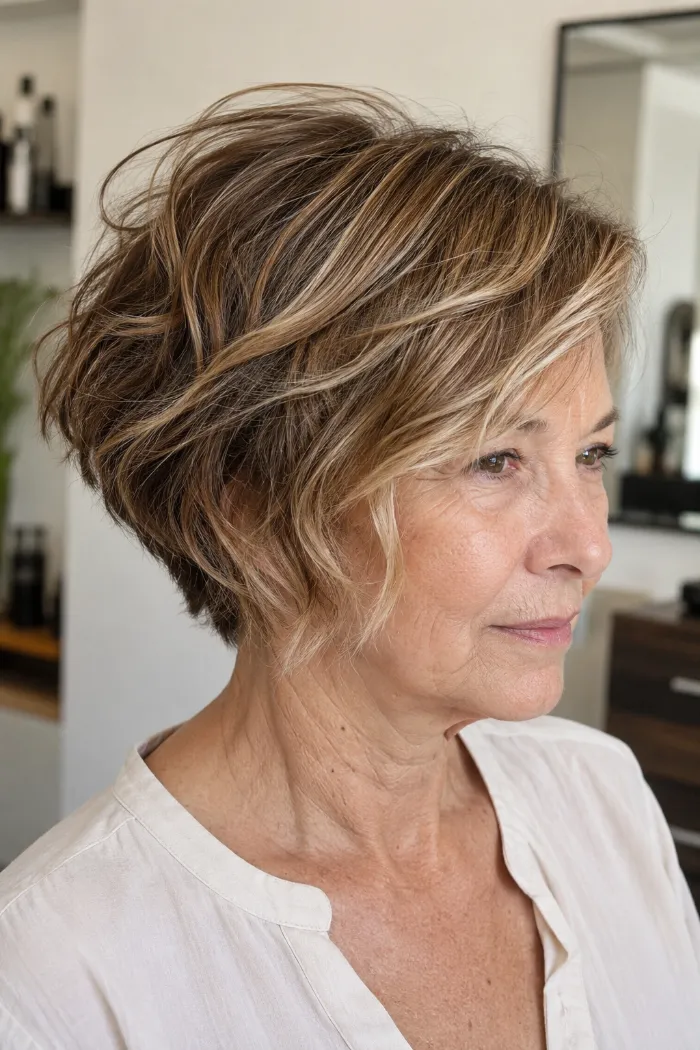
This short bob is closely tapered at the nape, then builds into a fuller, lifted shape through the back and crown. Longer highlighted sections sweep diagonally across the forehead and toward the cheek, which gives the front a softer finish than a traditional stacked bob. The contrasting lighter ribbons make the curved layering through the top especially noticeable.
Ask your stylist for a snug nape with gradual stacking rather than a dramatically high graduation line. Leave the front considerably longer so the side fringe can sweep across without looking disconnected. If you want the same dimensional effect, discuss narrow highlights through the top and front instead of lightening every section from root to end.
13. Shoulder-Length Soft Shag With Bottleneck Bangs
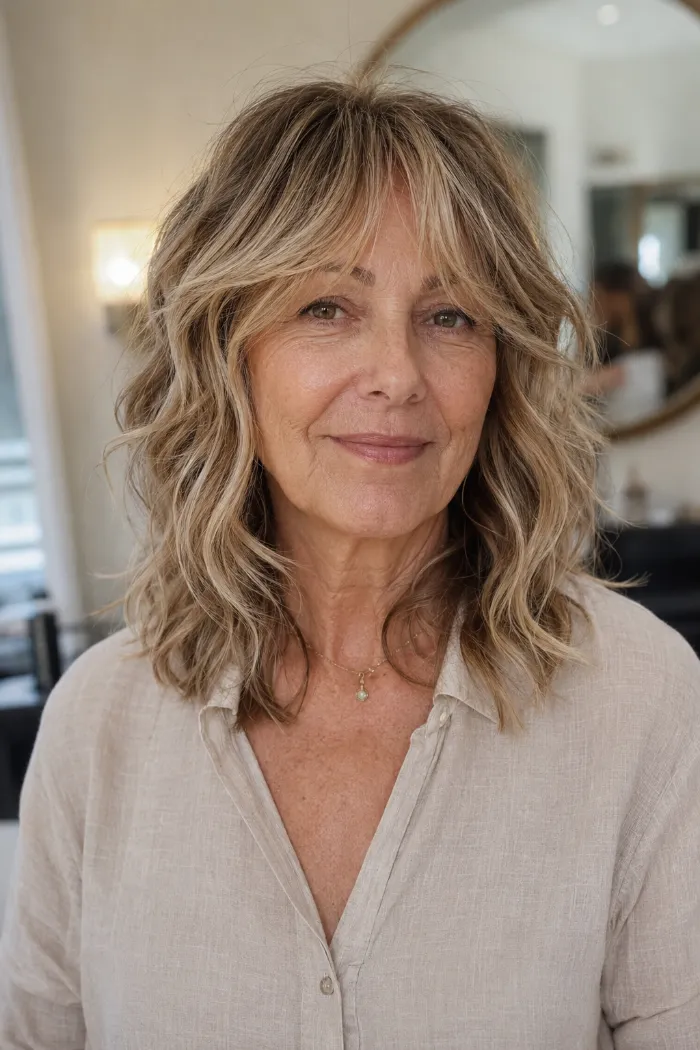
This shoulder-length shag has relaxed waves, long broken layers, and a bottleneck-style fringe that is shorter through the center and opens into longer pieces at the sides. The face frame starts high enough to create movement around the cheekbones, while the lower lengths remain visibly substantial. Blonde ribbons running through the layers make that separation stand out.
Ask your stylist for a light shag structure rather than an aggressively layered one, with the shortest face pieces around cheek level and plenty of hair left at the shoulder line. Have the bangs cut to work both parted and slightly forward. A diffuser or air-dry cream can encourage the waves while preserving the looser, unfussy finish.
14. Soft Graduated Wavy Lob With Cheekbone Layers
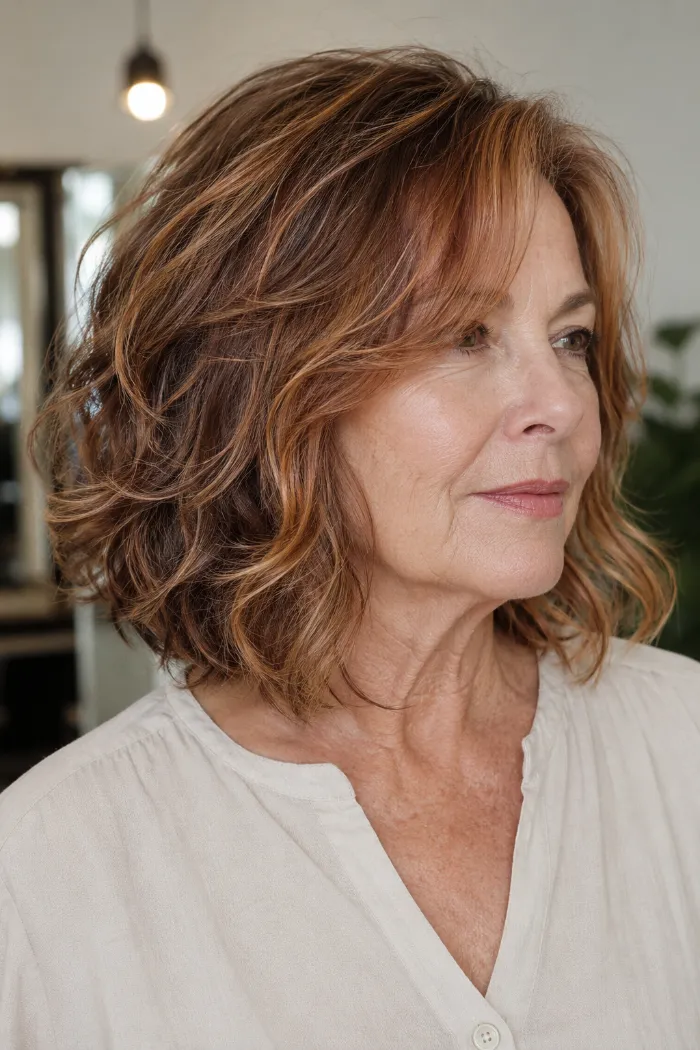
This warm auburn lob has a softly rounded shape with loose waves and sweeping face-framing pieces beginning around the cheek area. The front remains long enough to blend easily into the rest of the haircut, while the lower edge looks full rather than shredded. Copper and caramel tones catch the curved sections and give the layers extra visual dimension.
Ask your stylist for subtle graduation through the back and sides while keeping the front perimeter long and strong. Cheekbone-level face framing can be cut on a gentle diagonal instead of creating many separate short layers. If you color your hair, a gloss between appointments can refresh warm tones and add shine without changing the haircut itself.
15. Soft Wavy Collarbone Lob With Airy Face Layers
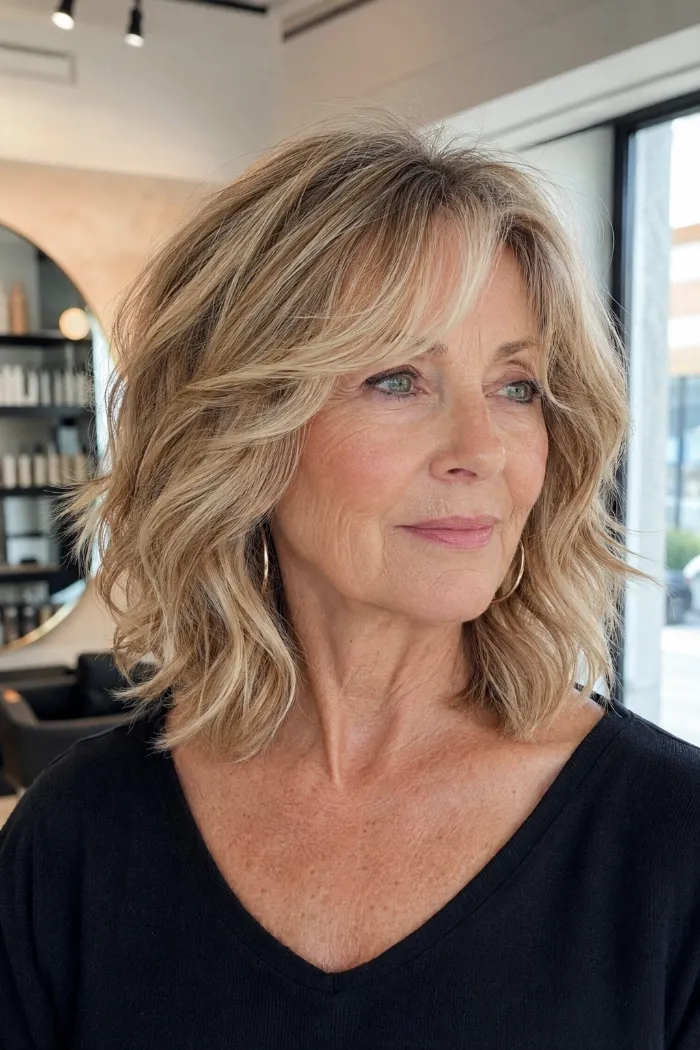
This collarbone lob combines a fairly substantial overall length with airy layers around the face. The longest waves brush the shoulders, while shorter blonde pieces sweep away around the cheek and jaw. Because the layers are concentrated mostly toward the front and lower lengths, the haircut still has a noticeably full outline instead of looking overly wispy.
Ask your stylist to preserve a strong collarbone-length perimeter and focus the majority of the layering around the face. Start those pieces long enough to curve away naturally instead of springing up unexpectedly when your wave dries. For a similar finish, bend only selected sections with a large iron and leave some of your natural texture untouched.
16. Stacked Wavy Bob With a Lifted Back
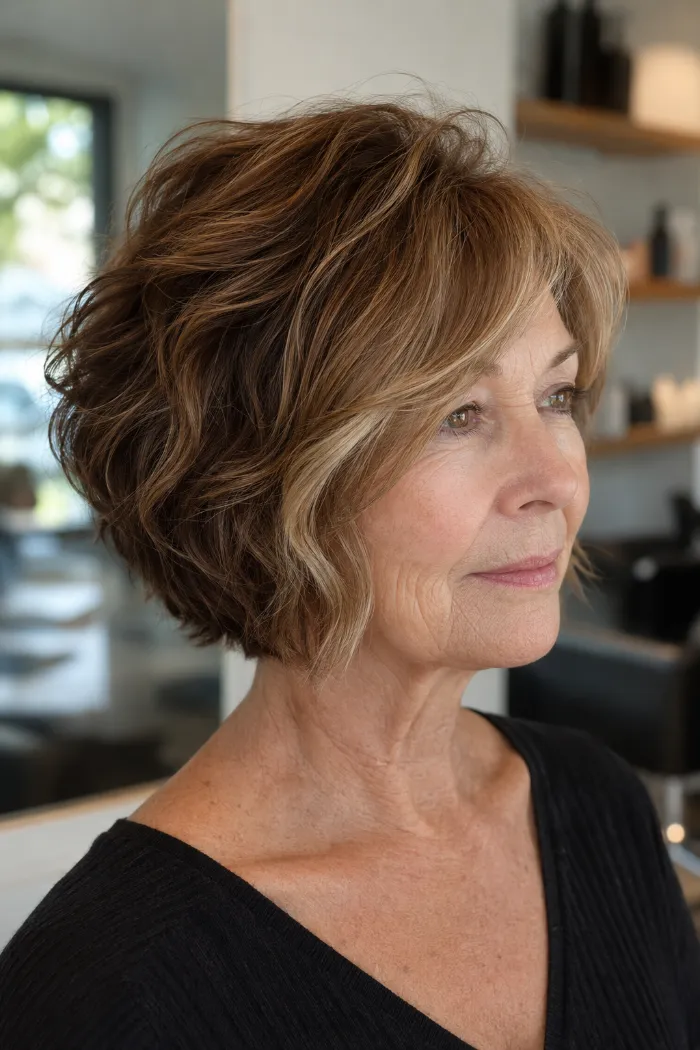
This stacked bob is shortest near the nape and builds into a noticeably fuller back, with longer wavy sections sweeping forward around the face. The graduation creates the lifted silhouette, while caramel highlights trace the movement through the top and sides. I like that the front stays soft and elongated, which keeps the cut from feeling overly structured.
Ask your stylist for low-to-medium graduation through the back rather than taking the stack too high, particularly if you want to protect density at the crown. Keep longer layers over the graduation so your natural wave has room to bend. Root-lifting spray placed mainly at the back can enhance the shape without weighing down the longer front pieces.
17. Textured Pixie Crop With Longer Wavy Fringe
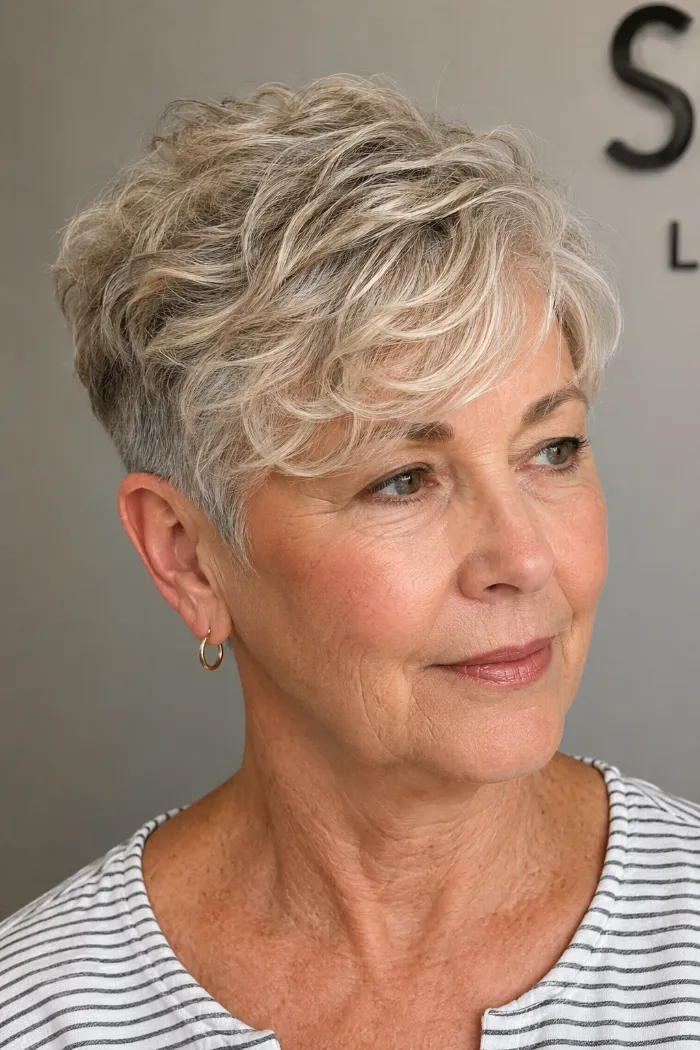
This silver pixie is cropped very closely around the sides and lower back, with a dramatic contrast in length through the curly top and fringe. The longer hair falls forward in loose, separated waves, creating texture across the forehead while the sides stay clean. The pale highlights on top also exaggerate the definition of each curved section.
Ask your stylist for a close tapered underlayer with enough length left through the top to form actual bends rather than short spikes. Keep the fringe longest near the front so it can sweep or curl to the side. Fine wavy hair usually needs only a small amount of foam or light paste to define this kind of texture.
18. Wavy Collarbone Cut With Long Swoop Fringe
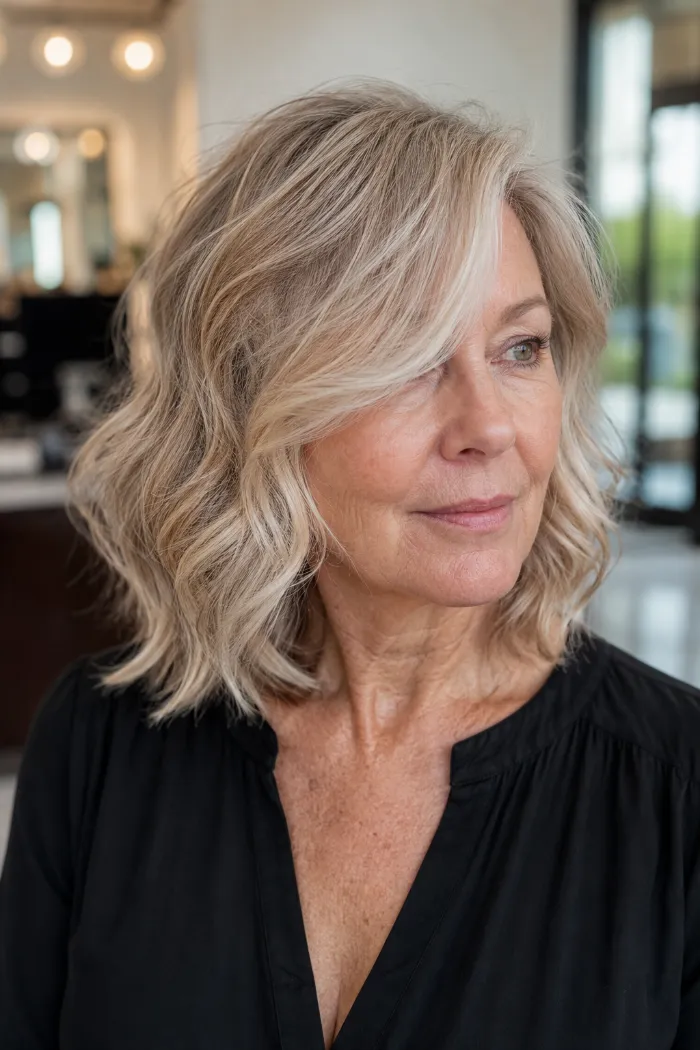
This collarbone cut keeps the layers long and relaxed, letting the soft waves sit mostly through the lower half. The standout detail is the deep, sweeping front section that crosses the forehead and blends into the cheek-length face frame. The creamy blonde color is slightly brighter through that front piece, making the swoop look even more pronounced.
Ask your stylist for long layering with a substantial perimeter and one extended fringe section that can sweep from a side part. Make sure the fringe is long enough to tuck back when you don’t want it across your face. A large round brush directed diagonally across the forehead will create the bend without turning it into a tight curl.
19. Wavy Italian Bob With Rounded Ends
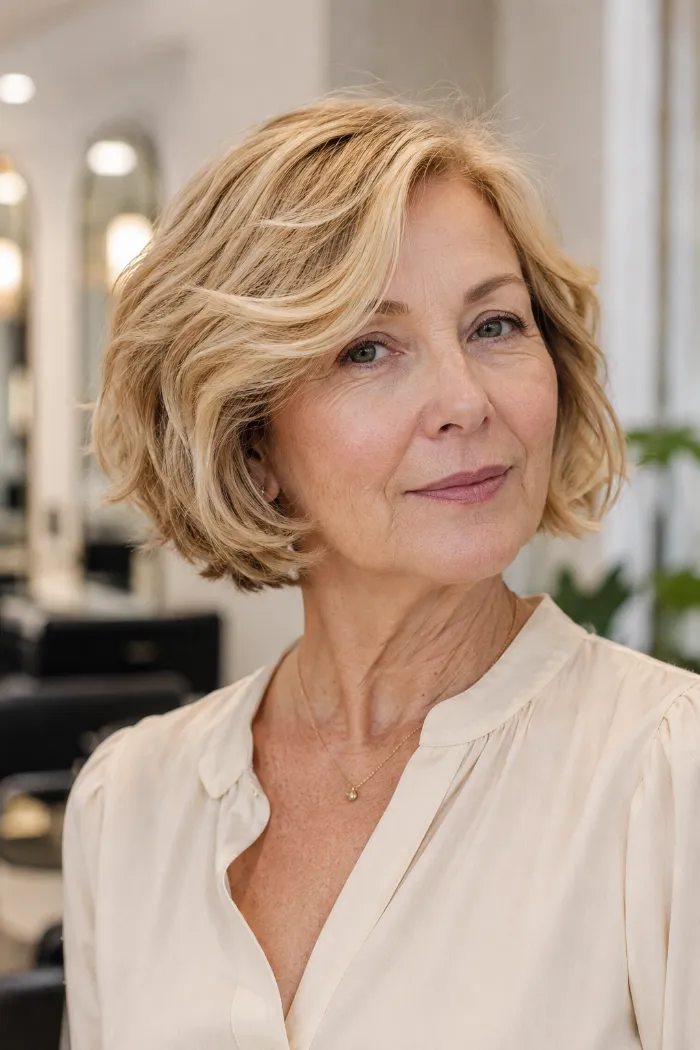
This golden blonde Italian-style bob sits around the jaw and has a plush, rounded perimeter with gentle bends instead of sharply defined curls. Longer front sections sweep away from the face, while the lower edge turns softly inward and outward in different places. The relatively substantial ends are what give this haircut its fuller, polished-looking silhouette.
Ask your stylist for a jaw-skimming bob with a strong baseline, minimal thinning, and only discreet layering where your waves need help moving. Leave the front a touch longer if you enjoy sweeping it back. When styling, use a round brush mostly on the ends and front rather than pulling the entire haircut completely straight.
20. Wavy Layered Bob With See-Through Bangs

This layered bob falls between the jaw and neck with loose, tousled waves that keep the shape from looking too round. The see-through bangs are intentionally airy, showing small gaps across the forehead, and they connect into longer textured pieces at the temples. The lower layers have movement, but there is still visible weight around the perimeter.
Ask your stylist for a lightly layered bob with a narrow, shallow fringe section so too much hair isn’t pulled forward into the bangs. Keep those bangs soft enough to separate naturally, with longer corners for blending. Instead of brushing every wave out, scrunch the lengths while drying and touch up only the sections that need more definition.
FAQs About Haircuts for Fine Wavy Hair Over 60
Should fine wavy hair be layered?
Usually, yes, but the amount matters. A few well-placed layers can help waves form and keep the haircut from sitting heavily around the bottom. Too many short layers or too much thinning can make fine ends look sparse, so I would prioritize targeted face framing, crown movement, or subtle interior layers rather than layering every section equally.
Is a bob or lob better for fine wavy hair?
A bob is useful when you want a compact shape and a visibly strong perimeter, while a lob gives waves more length to develop and usually offers more styling options. The better choice comes down to where your hair naturally bends and how much fullness you have through the ends. Bringing reference photos of both lengths to your appointment can help.
Are bangs a good idea with fine wavy hair?
They can be, especially if you choose a fringe that doesn’t require a huge section of hair. Wispy, curtain, bottleneck, and longer side-swept bangs all work well with many of these cuts because they can blend into the surrounding layers. Ask your stylist to account for how much your fringe bends or shrinks once it dries naturally.
How can I style fine waves without making them flat?
Start with less product than you think you need and concentrate it away from the roots unless it is specifically designed for volume. Lightweight mousse, foam, or a fine mist can give waves some hold without saturating them. Diffuse with low airflow, avoid repeatedly brushing once the wave has formed, and add heavier finishing products only to individual dry ends if needed.
Choosing the Right Cut for Your Waves
If your main priority is making the ends look as full as possible, I’d start with the blunt lob, Italian bob, French bob, or pageboy shapes. If you naturally get plenty of bend but need help encouraging it, the softer shags and layered collarbone cuts give that texture more freedom. Short pixies and bixies make sense when you’re comfortable maintaining the neckline and reshaping the cut more regularly.
Most of all, choose the detail you actually want to live with, whether that’s airy bangs, a strong bob perimeter, a lifted crown, or longer face-framing layers. Then be realistic about your density and how much styling you enjoy doing. A great haircut should work with the wave you already have, not leave you fighting it every morning.