Haircuts for Thin Short Hair for Older Women That Create Fuller-Looking Shape
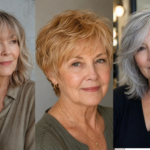
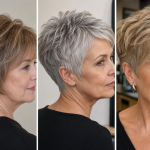
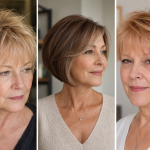
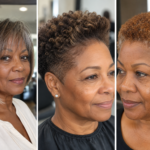
If you’re looking at haircuts for thin short hair for older women, the biggest goal usually isn’t simply going shorter. It’s finding a cut that gives fine hair a little more presence without leaving you with layers that feel wispy, flat, or difficult to style. The right shape can make a surprisingly big difference, especially around the crown, sides, and perimeter.
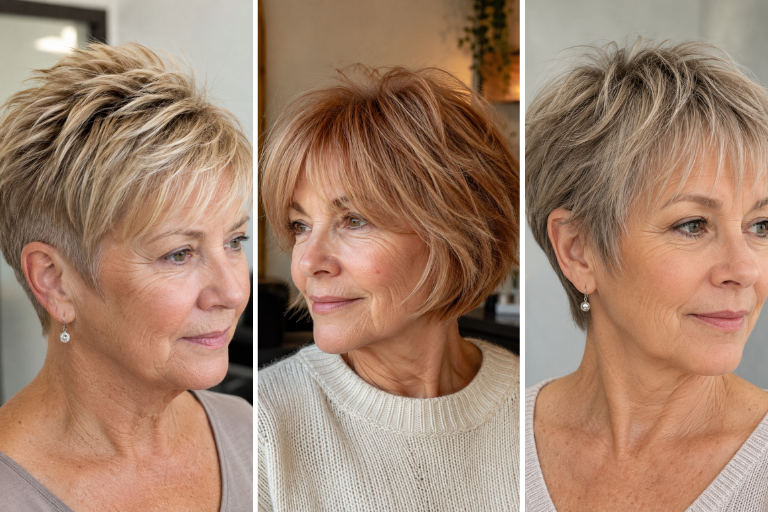
I’m a big fan of choosing the silhouette first. A softly rounded bob can preserve density through the ends, while a pixie or bixie can use shorter crown layers to create lift. Bangs matter too. Light fringe can soften the front beautifully, but keeping enough weight behind it is important when your hair is naturally fine.
You’ll also want to be realistic about styling commitment. Some of these cuts look great with a quick blow-dry and round brush, while the more textured pixies benefit from a little paste, mousse, or root lift. Color can help visually as well, especially when subtle highlights create dimension rather than one flat block of color.
Below, I’ve included everything from polished jaw-length bobs to airy crops and fuller pixies. Pay attention to where each cut keeps weight and where it removes it. That detail is often much more useful at the salon than simply asking for “more volume.”
20 Short Haircuts That Give Thin Hair Better Shape
1. Airy French Bob With See-Through Bangs
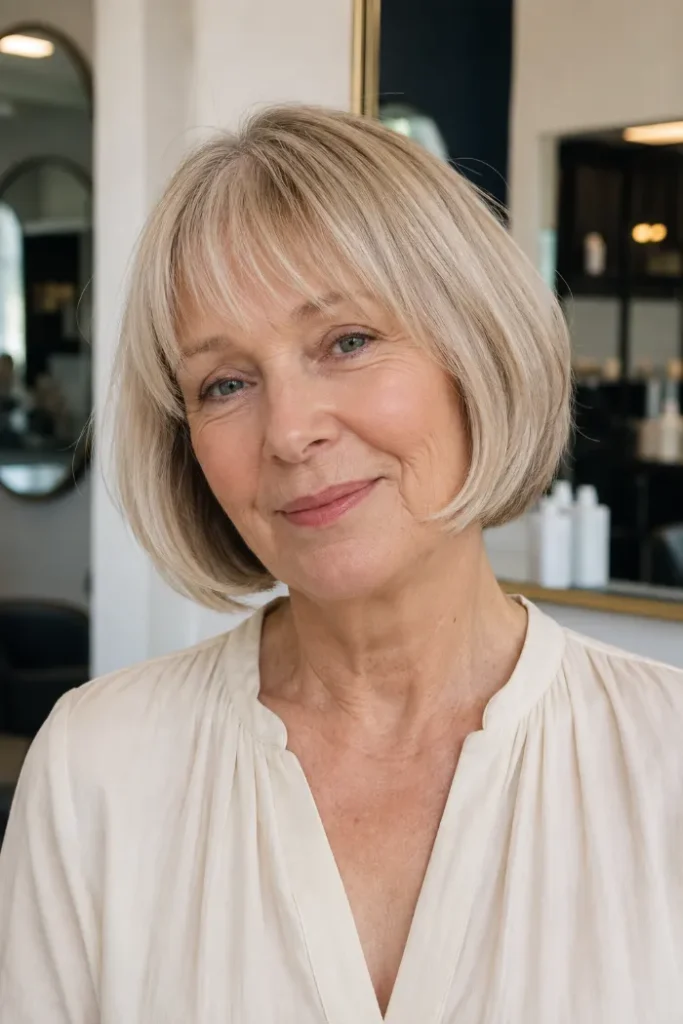
This soft French bob sits around jaw level with a gently rounded outline that keeps the ends looking substantial. The light, see-through fringe breaks up the front without stealing too much density from the rest of the haircut. I also like the subtle bend through the sides because it creates softness and width instead of letting fine hair hang completely flat.
Ask your stylist for a jaw-length perimeter with only minimal internal layering, then keep the fringe fine and lightly separated rather than cutting a dense section. At home, use a small round brush to turn the ends slightly under and dry the bangs forward with very little product so they stay airy.
2. Chin-Length Bob With Micro Layers
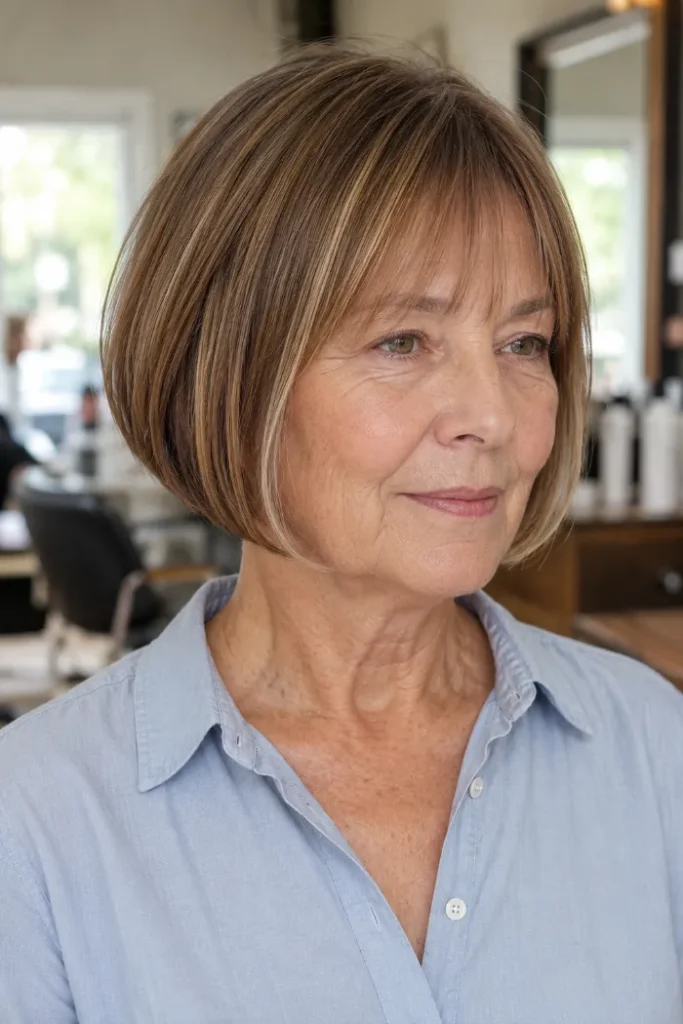
This chin-length bob has a clean, compact shape with tiny layers worked into the surface rather than obvious choppy pieces. That approach keeps plenty of visual weight at the bottom while allowing the hair to curve neatly around the head. The delicate fringe and fine dimensional highlights add movement without making the cut look overly layered.
Ask your stylist to maintain a fairly solid chin-length baseline and use very shallow layers for mobility through the top and sides. If your hair loses volume easily, avoid aggressive texturizing at the ends. A lightweight volumizing spray at the roots and a smooth blow-dry should be enough for this shape.
3. Clean Ear-Length Bob With a Side Part
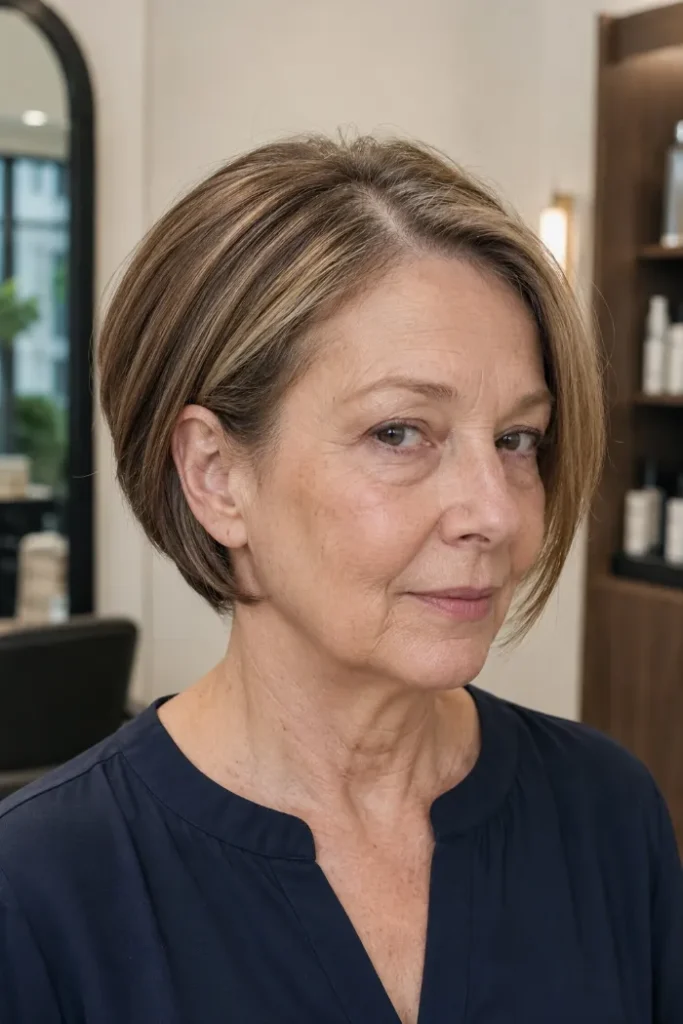
This is a beautifully simple short bob with the back tucked close and a longer front section sweeping from a side part. The compact shape keeps the hair looking polished and dense, while that longer front panel gives the cut softness around the face. There’s very little visible layering, which is often a smart choice when every bit of thickness counts.
Ask your stylist for a short, slightly graduated bob that sits close around the ear and nape while leaving the front noticeably longer. Keep the ends clean instead of heavily razored. If you want lift at the part, dry the roots briefly in the opposite direction before sweeping them back into place.
4. Cropped Pixie Bob With Longer Front Panels
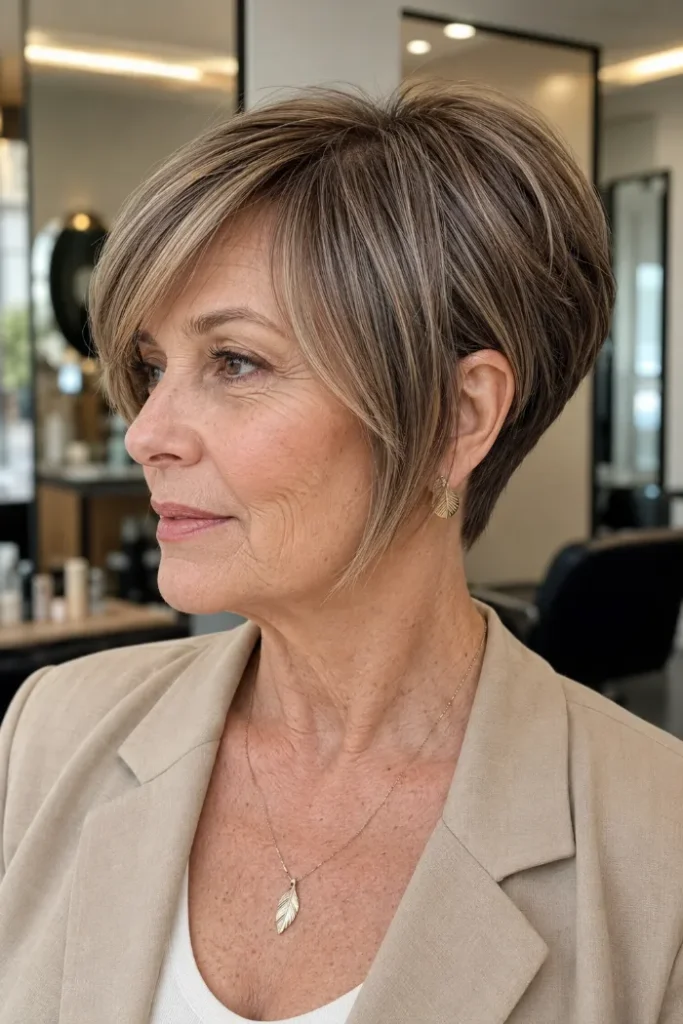
This pixie-bob combination is cropped neatly through the back while leaving significantly more length around the front and temple. The fuller crown gives fine hair a rounded silhouette, and the long diagonal fringe creates softness without requiring a traditional bang. I like how the shorter nape makes the volume on top look even more pronounced.
Ask your stylist to graduate the back closely into a fuller crown and preserve longer pieces from the temple forward. Those front panels should stay substantial rather than thinned out. For styling, direct the crown upward with a vent brush and use just a tiny amount of flexible cream through the longer front.
5. Jaw-Length Bob With Soft Beveled Ends
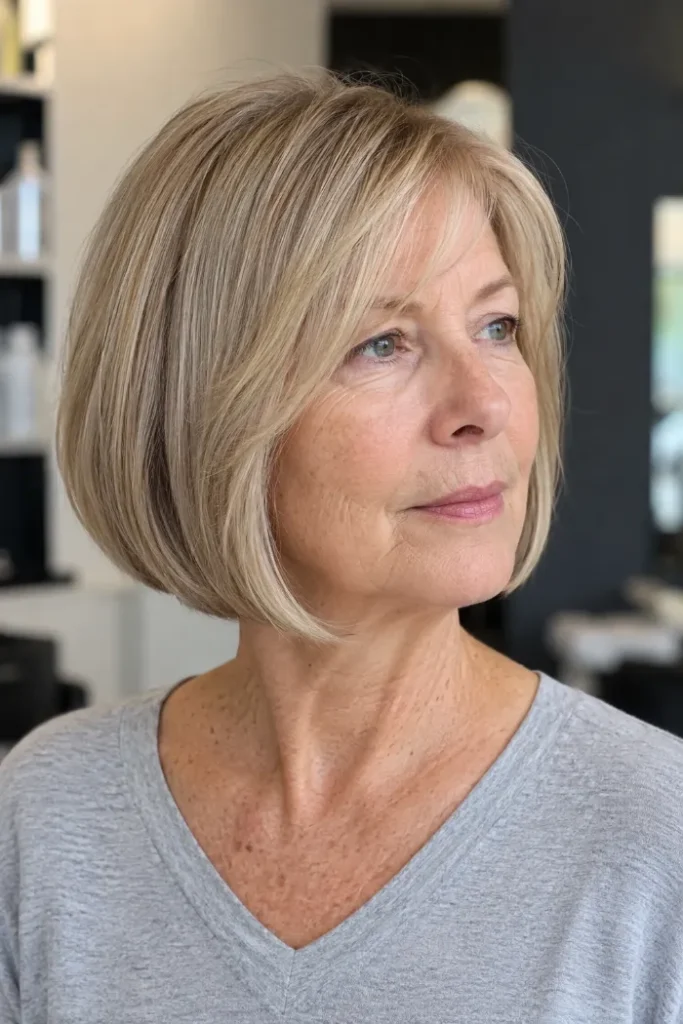
This jaw-length bob keeps the silhouette smooth and full, with ends that curve gently inward instead of sitting pin-straight. There’s a soft side fringe blending into the front, plus subtle tonal variation through the blonde that makes the shape appear more dimensional. The restrained layering is especially helpful because the lower edge still looks thick and intentional.
Ask your stylist for a weighty jaw-length bob with barely-there layering and enough length in front to curve past the cheek. Have the ends beveled rather than aggressively thinned. A medium round brush can create this soft bend, but keep the brush movement gentle so you don’t flatten the roots.
6. Mini Shag Bob With Curtain Fringe
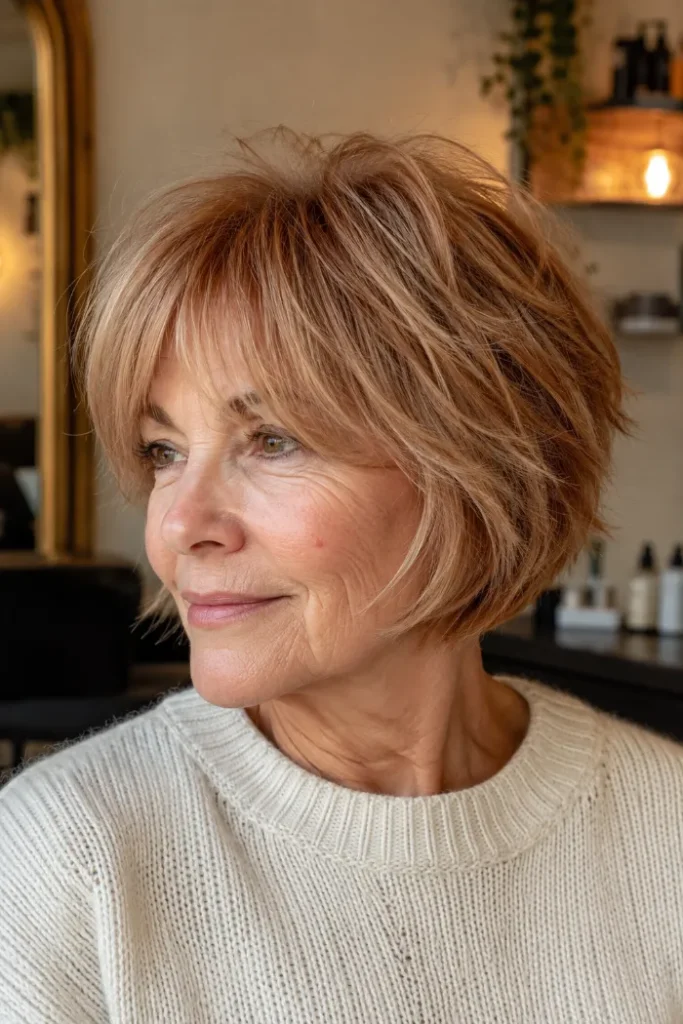
This little shaggy bob has much more visible movement than the smoother styles above. Shorter layers lift through the crown while longer, flipped pieces sit around the jaw. The curtain-style fringe opens softly around the eyes, and the tousled finish creates the impression of extra texture and density instead of emphasizing fine strands individually.
Ask your stylist for short crown layers that blend into longer jaw-level pieces, but tell them you still want enough weight left around the perimeter. Keep the curtain fringe long enough to sweep away from the face. A small amount of mousse scrunched in before blow-drying can help encourage that airy separation.
7. Modern Soft Mullet Pixie
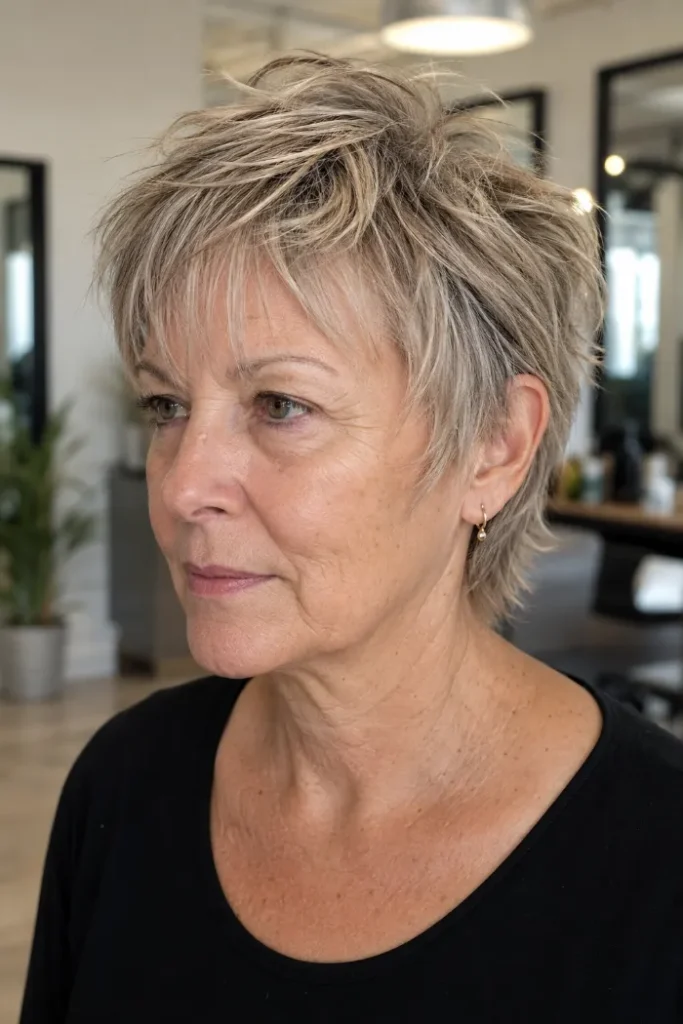
This short cut has a piecey pixie shape on top with slightly longer wisps extending through the nape, giving it a very soft mullet influence. The crown is heavily textured for height, while the fine fringe stays light across the forehead. It’s a good example of using deliberate separation to make thin hair look lively rather than sparse.
Ask your stylist to keep the sides tidy around the ears, build short textured layers through the crown, and leave a little extra length at the nape. The key is controlled texture rather than excessive thinning. Work a pea-size amount of matte paste through dry hair with your fingertips to separate individual pieces.
8. Piecey Pixie With Short Curtain Bangs
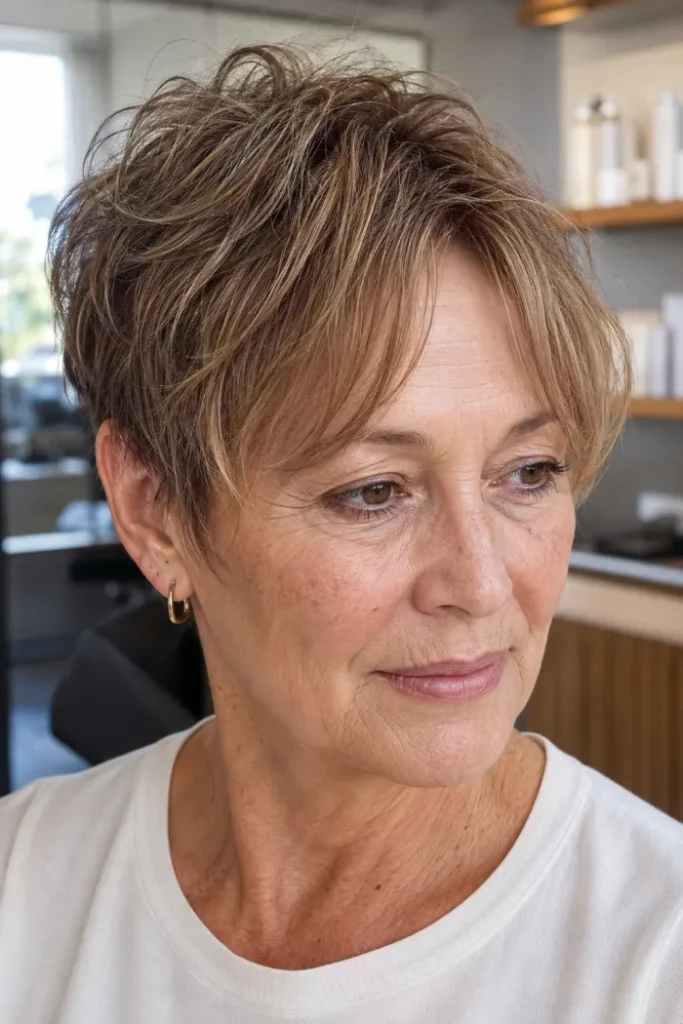
This pixie keeps more length through the top, allowing the hair to be styled in loose, piecey sections rather than lying close to the scalp. Short curtain bangs split softly through the center, and the sides taper neatly around the ears. The dimensional brunette-and-blonde color also emphasizes each lifted layer and makes the overall shape look fuller.
Ask your stylist for tapered sides with a longer, layered top and a fringe that can divide naturally near the center. Avoid taking too much weight out of the crown. To recreate the finish, blow-dry the top with your fingers for lift, then pinch a few sections together with a lightweight styling cream.
9. Rounded Bixie With Soft Face-Framing Pieces
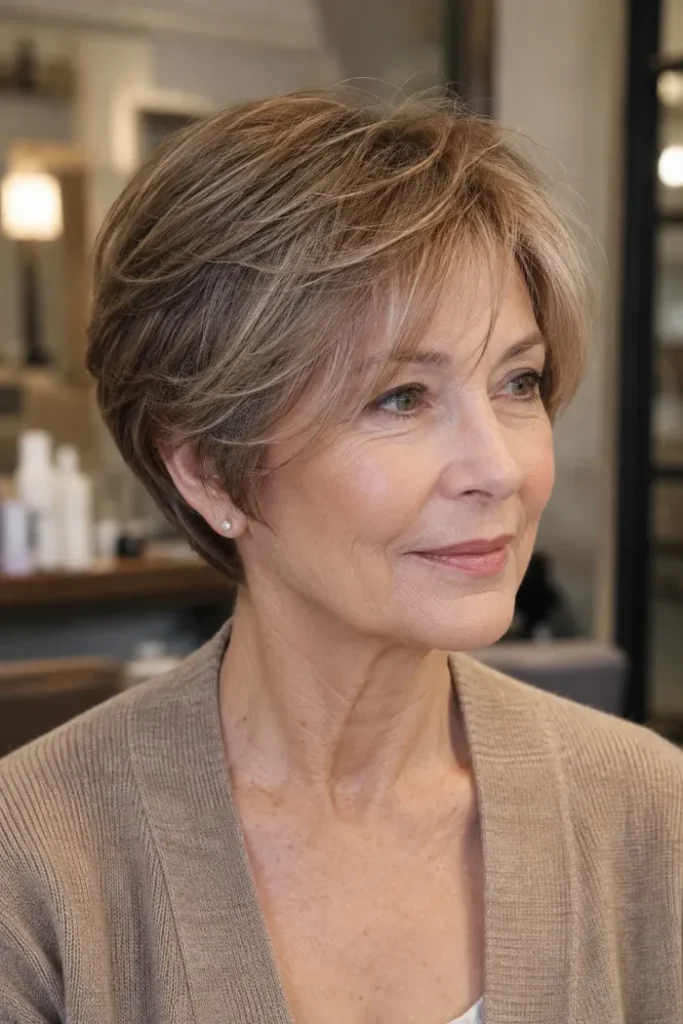
This bixie lands between a bob and pixie, with a rounded back and longer feathered sections around the face. The layers sweep smoothly rather than looking choppy, which gives the haircut a polished, airy fullness. I especially like the side-swept front because it adds movement across the forehead without requiring a heavy bang section.
Ask your stylist for gentle graduation at the back with enough length retained through the crown to create that rounded shape. Leave the cheekbone-level pieces soft and connected to the fringe. A light root mousse and blow-drying with a small round brush will help lift the layers without making them stiff.
10. Short Bob With Bottleneck Bangs
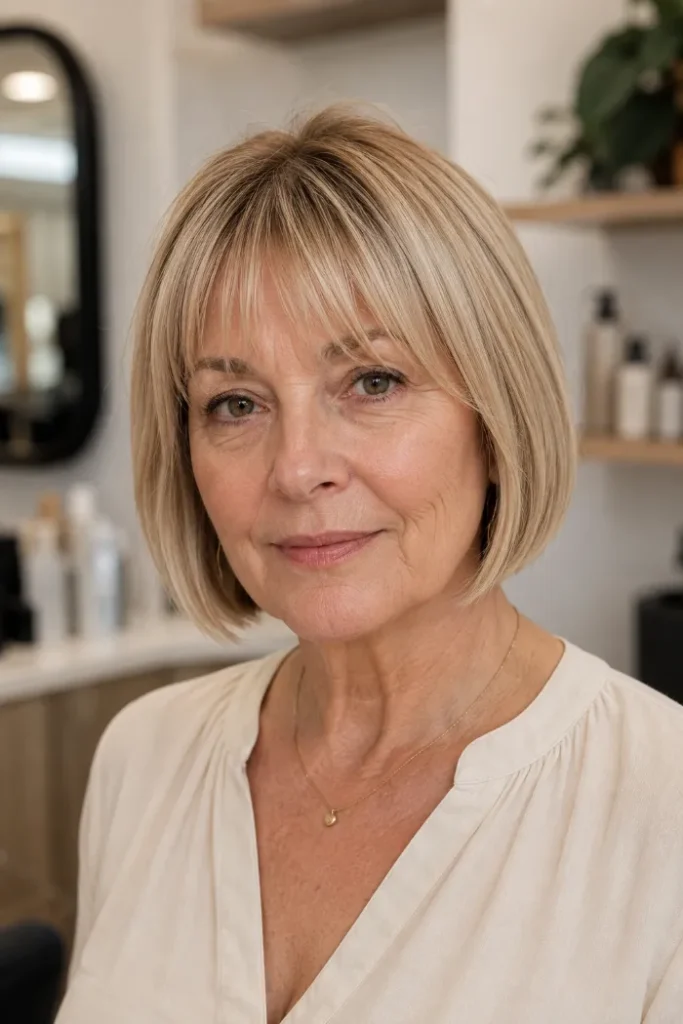
This short blonde bob has a smooth rounded perimeter with bangs that are shorter through the center and slightly longer toward the sides. That bottleneck shape gives the fringe a lighter appearance while helping it blend into the bob. Because the body of the cut stays fairly solid, the hair still reads as full through the jaw.
Ask your stylist for a compact bob with a strong perimeter and bottleneck bangs that gradually lengthen toward the temples. Be conservative with thinning shears, especially along the baseline. If the fringe separates during the day, mist it lightly with water and blow-dry it forward before allowing the ends to fall apart naturally.
11. Short Choppy Bob With Fine Feathered Bangs
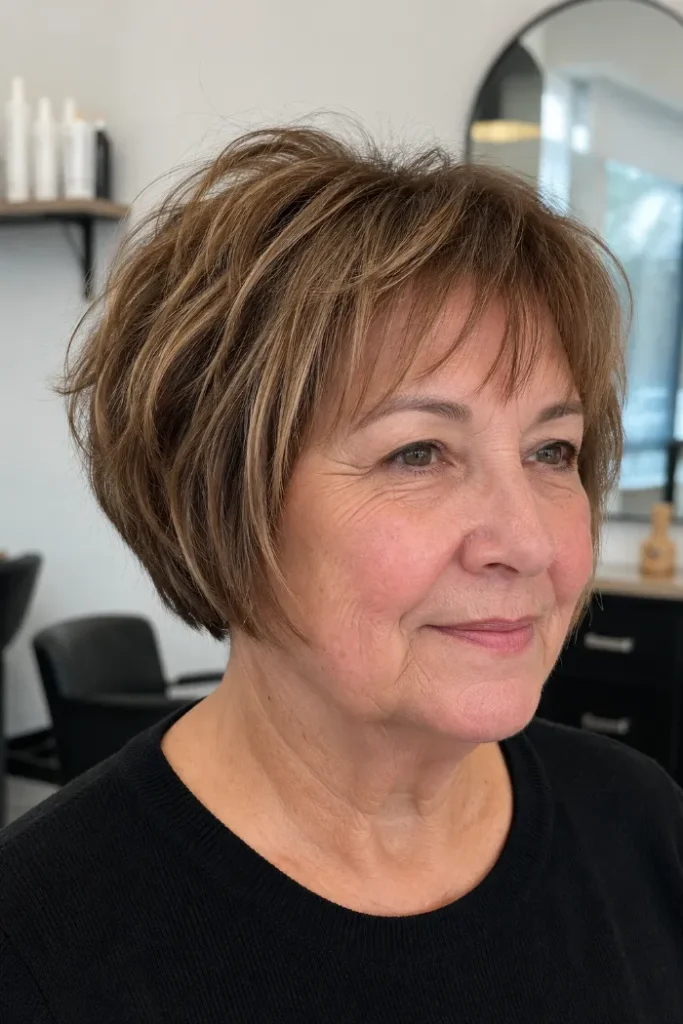
This bob has a fuller, rounded body with choppier surface layers creating movement through the crown and sides. The bangs are fine and feathered rather than blunt, and several longer pieces frame the cheeks. The combination works because the interior has texture while the overall silhouette still keeps enough width to make thin hair look substantial.
Ask your stylist to layer mostly through the upper portion of the haircut while protecting the density underneath. The bangs can be softly point-cut, but they shouldn’t be over-thinned. When styling, lift the crown with a round brush and use a dry texture spray only through the top rather than coating the entire head.
12. Short Layered Bob With a Lifted Crown
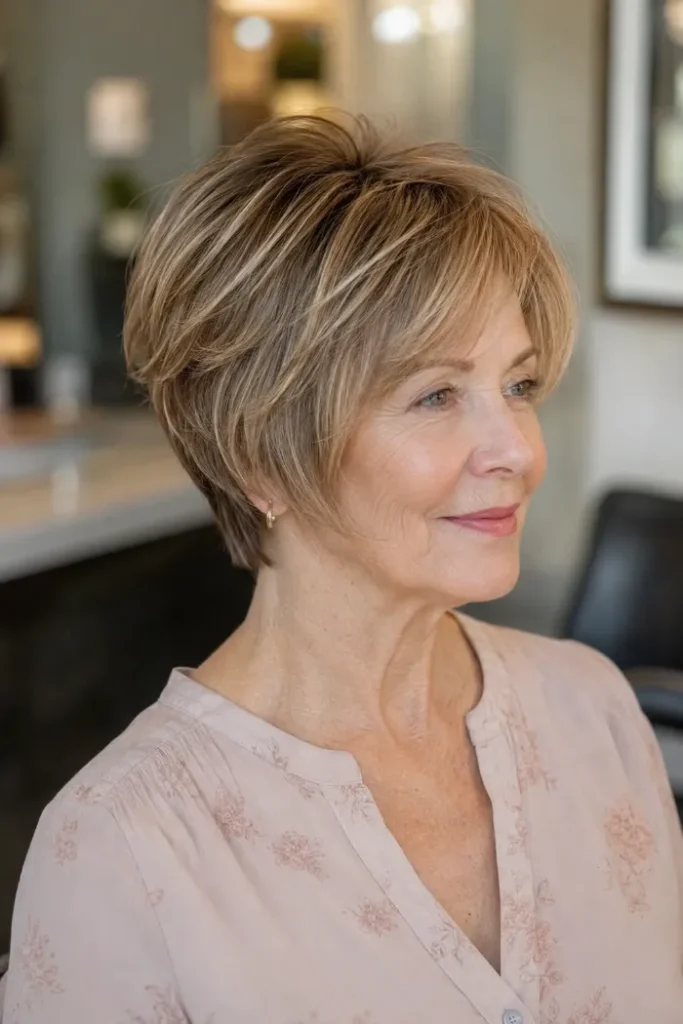
This short layered bob builds most of its volume high through the crown, then tapers closer toward the nape. The side fringe and face-framing layers remain soft and swept, so the haircut doesn’t feel overly structured. Fine highlights running through the top also catch the light and emphasize the lifted shape beautifully.
Ask your stylist for graduated layers at the back with slightly shorter sections through the crown to encourage natural lift. Keep enough length around the front to tuck or sweep back. Concentrate volumizing mousse at the roots, then blow-dry the crown upward before smoothing the outermost layer into place.
13. Short Razored-Look Bob Without Heavy Thinning
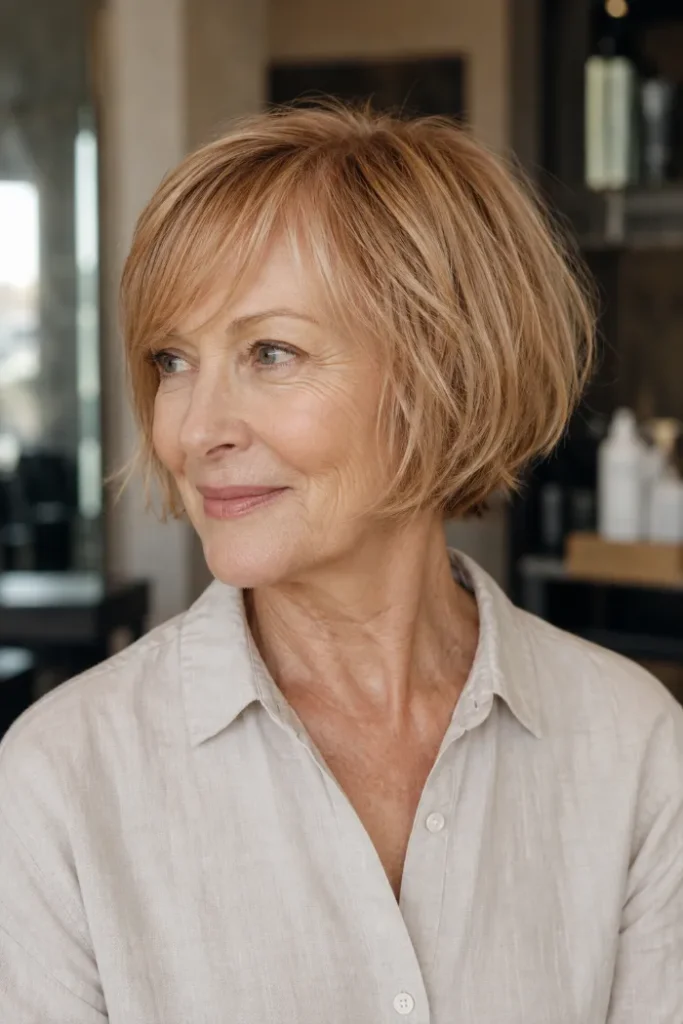
This warm-toned bob has a soft, razored appearance with wispy movement around the face and slightly tousled layers through the body. Even though the finish is feathered, the shape doesn’t look depleted at the ends. The layers create width around the cheek and jaw area, giving fine hair a breezier, more relaxed silhouette.
Ask your stylist for soft point-cut or razor-like movement while specifically preserving density at the perimeter. If your strands are extremely fine, scissors may be safer than aggressive razor work. Style with a lightweight blow-dry cream and use your fingers to flick a few ends outward instead of smoothing everything under.
14. Soft Italian-Inspired Short Bob
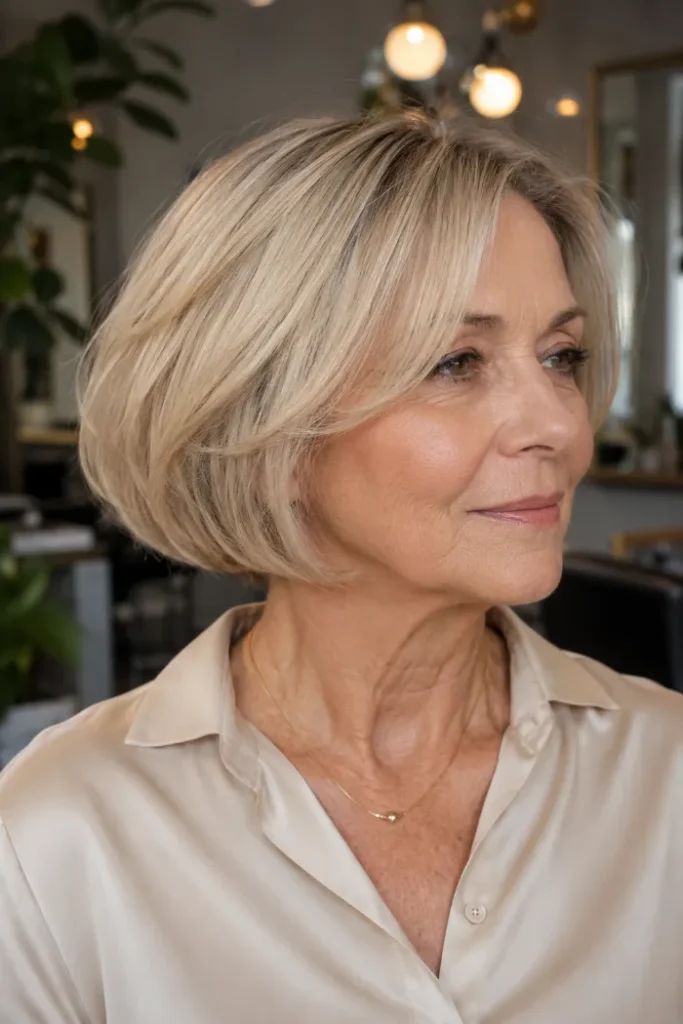
This blonde bob is fuller and more sweeping, with a rounded shape and longer front layers that curve away from the face. The center-to-soft-side part opens the front without using traditional bangs. What makes this especially flattering for thin hair is the substantial lower edge paired with just enough layering to create movement through the surface.
Ask your stylist for a short, rounded bob with a strong baseline and longer face-framing layers beginning around the cheekbones. Keep the internal layers subtle so the bottom doesn’t become transparent. For this fuller finish, use a large round brush and direct the front sections away from your face as they cool.
15. Soft Spiky Pixie With Feminine Fringe
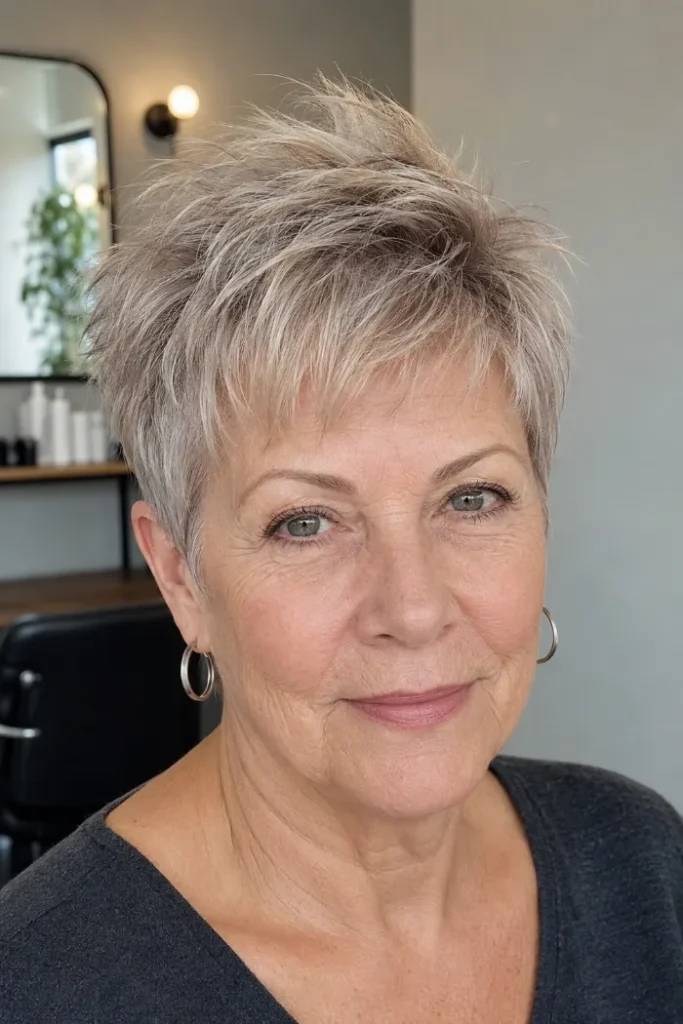
This cropped pixie is close around the sides and back but noticeably longer through the top, where soft spikes add height and texture. The fringe remains wispy and forward-facing, which keeps the style feminine and prevents the crown from feeling too severe. The cool blonde-and-gray blend also gives the separated layers extra definition.
Ask your stylist to taper the sides close while leaving enough length on top to stand up and move in different directions. Keep the fringe soft rather than cutting it bluntly. Rub a very small amount of matte paste between your fingertips, then lift individual sections at the roots instead of pressing product onto the scalp.
16. Soft Stacked Pixie Bob With Wispy Side Fringe
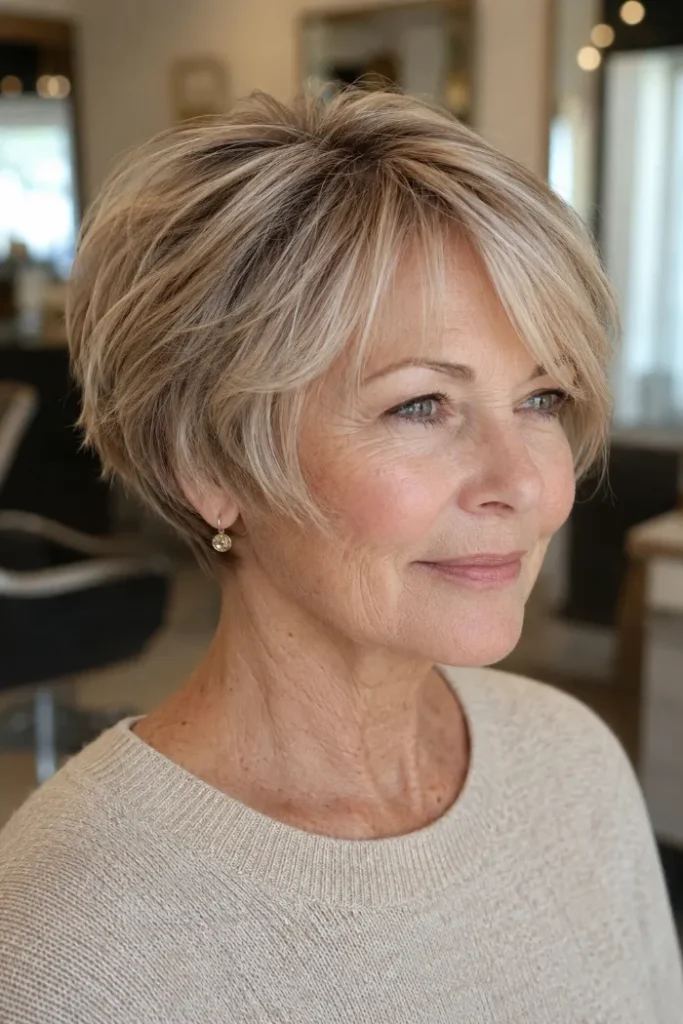
This pixie bob uses gentle stacking through the back to build a rounded profile, while longer layers sweep across the forehead and toward the cheekbones. The blonde highlights make the individual layers more visible without creating a striped effect. I like this shape for fine hair because most of the apparent volume comes from graduation rather than excessive teasing.
Ask your stylist for soft graduation through the occipital area with longer layers retained over the top. The side fringe should stay wispy but long enough to blend into the cheekbone area. Have the shape refreshed before the back becomes heavy, since the clean taper is what keeps the crown looking lifted.
17. Tapered Pixie With a Feathered Crown
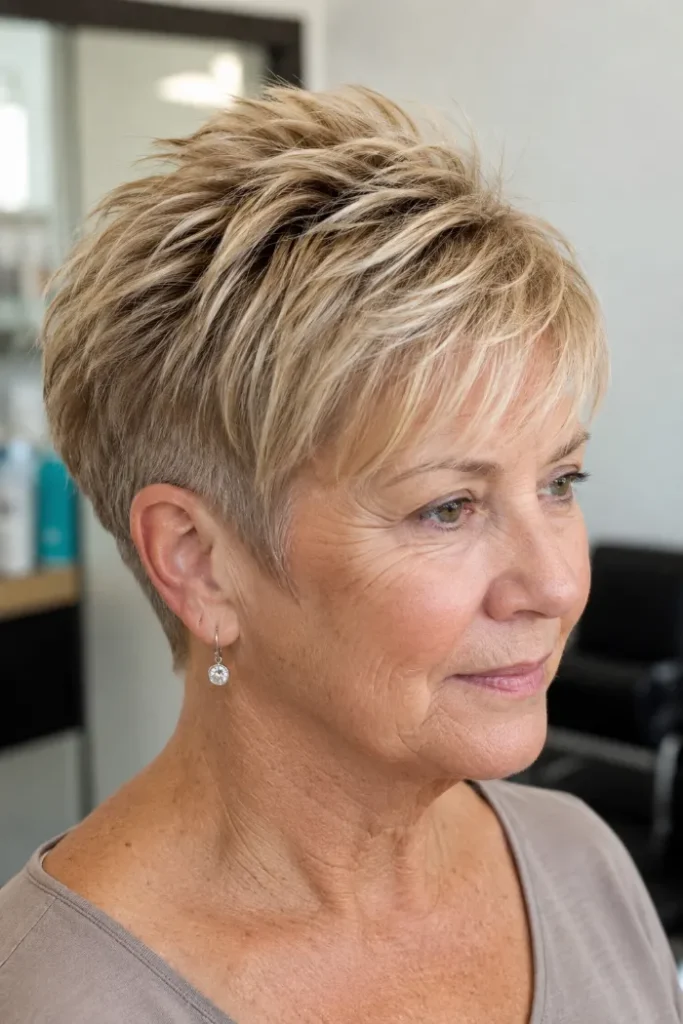
This tapered pixie sits snugly around the ear and nape while keeping noticeably more length through the crown. The upper layers are feathered forward and sideways, giving the surface movement without looking messy. The long side-swept fringe also creates a strong diagonal line that makes the short sides feel softer and more balanced.
Ask your stylist for a close taper around the sides and nape with longer crown layers that can overlap instead of sticking straight up. Leave the front long enough to sweep across the forehead. A root-lifting spray followed by finger-drying in several directions can keep this style from collapsing flat.
18. Textured Crop With Long Side Bangs
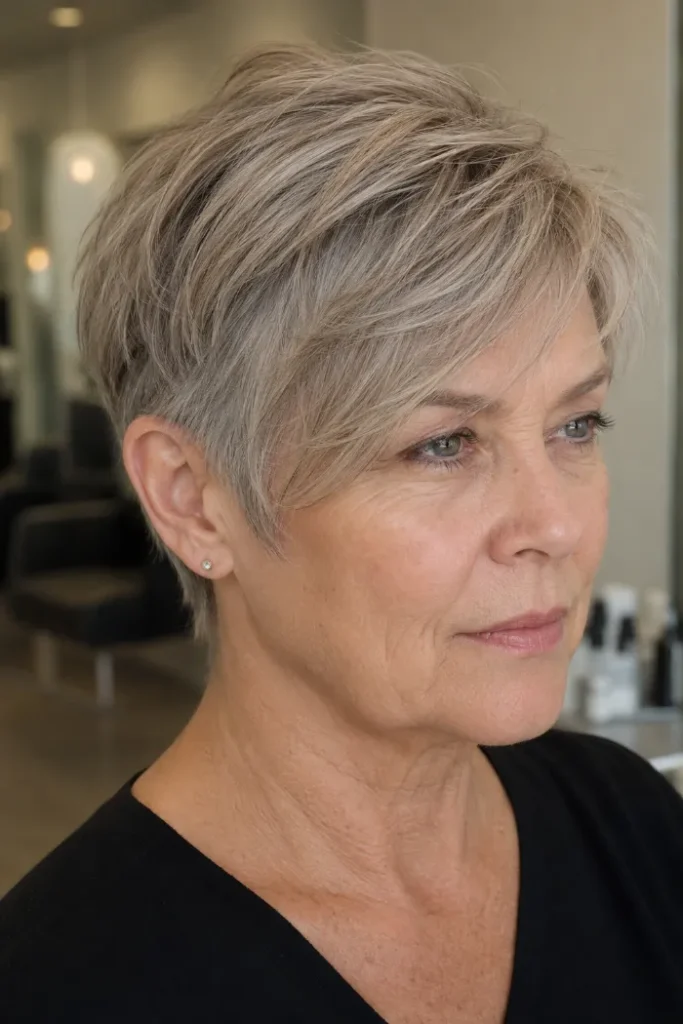
This crop combines short, tidy sides with a longer top and an elegant side fringe that sweeps toward the cheek. The crown has visible layering but still looks smooth rather than spiky. That contrast is useful for thin hair because the shorter sides make the length on top appear fuller while the fringe provides coverage and softness in front.
Ask your stylist to keep the sides neatly tapered and preserve significantly more length across the top and fringe. Have the layers blended with scissors so the finish stays soft. When drying, lift the top away from the scalp first, then sweep the bangs diagonally across with a flat or vent brush.
19. Tucked Pixie With a Full Crown
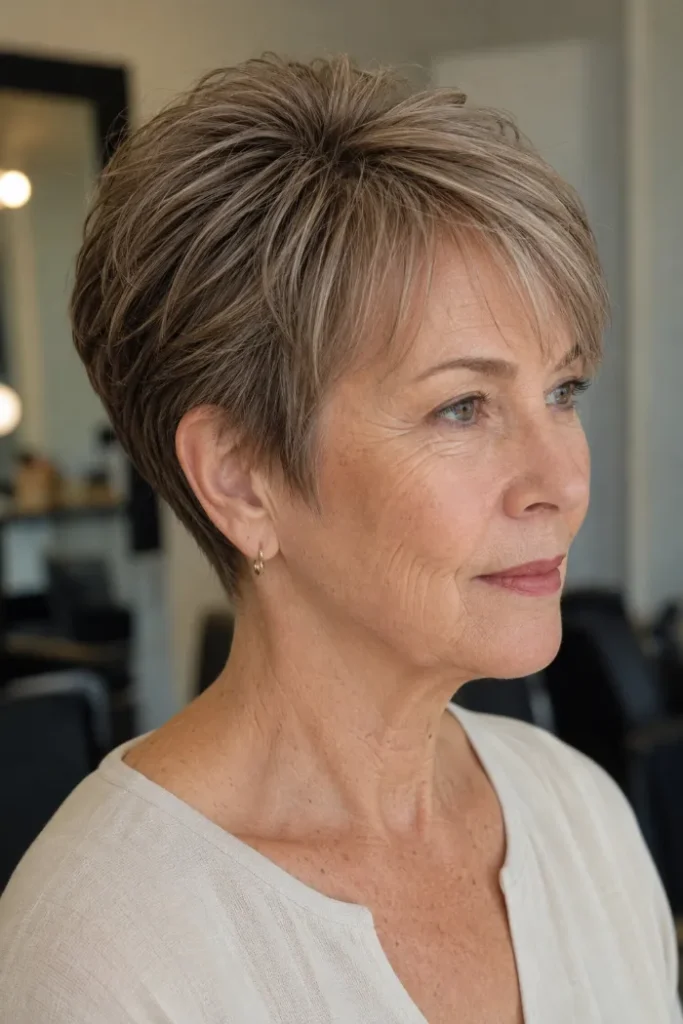
This pixie keeps the sides tucked close while building a soft, rounded dome of volume through the crown. The fringe is light and slightly separated, and the top layers are long enough to overlap rather than looking prickly. It’s a particularly useful shape when you want short hair but still prefer a fuller, more traditional silhouette.
Ask your stylist for a neat taper around the ears and nape with enough crown length to maintain roundness. Tell them not to over-texturize the top, since the overlapping layers are what create the fuller effect. A small round brush at the crown can add lift while keeping the surface smooth.
20. Wispy Pixie With a Soft Nape
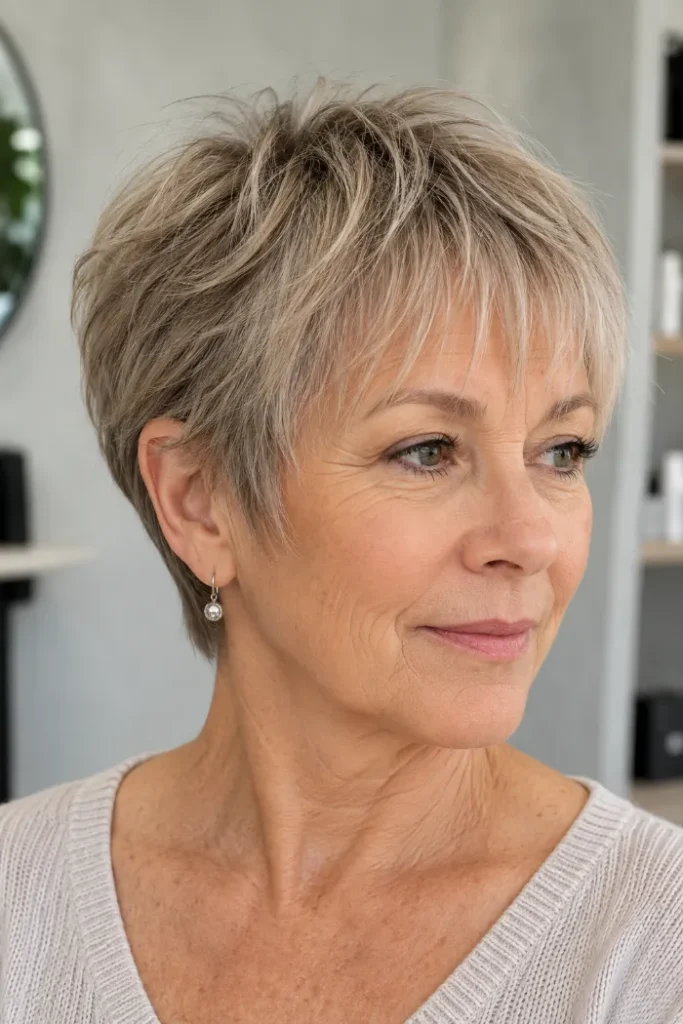
This final pixie has a beautifully light finish with wispy layers through the top, a fine fringe across the forehead, and a softly tapered neckline. The crown still has enough length to create lift, while the pieces around the ear stay delicate instead of forming a hard outline. The result feels relaxed, soft, and easy to wear.
Ask your stylist to create a gentle taper at the nape instead of a sharply clipped neckline, then leave a little extra length through the crown for movement. Keep the fringe lightly point-cut. For everyday styling, try a small amount of volumizing foam and finger-dry the top upward before directing the ends into place.
FAQs About Short Haircuts for Thin Hair
Is a pixie or bob better for older women with thin hair?
Both can work beautifully. A bob is useful when you want to preserve visual density along the perimeter, while a pixie can make fine hair look fuller by reducing the weight that pulls it flat. I’d choose based on where you naturally have the most density and how much daily styling you’re comfortable doing.
Should thin short hair be layered?
Usually yes, but the amount matters. Strategic layers at the crown can add lift, while too many layers through the ends may make fine hair look thinner. Ask your stylist to preserve weight wherever you want the hair to appear denser and use shorter layers only where you genuinely need movement or volume.
Do bangs make thin hair look thinner?
They can if too much hair is pulled forward to create them. Wispy, curtain, or side-swept bangs generally require a smaller section and can be very flattering. If density is limited around your hairline, a long side fringe is often easier because it blends back into the rest of the cut.
How often should a short haircut be trimmed?
Short tapered pixies usually lose their shape sooner than bobs, especially around the ears and nape. Many people like refreshing a pixie roughly every four to six weeks, while a bob may be comfortable closer to six to eight weeks. Your growth rate and preferred level of polish matter more than following one strict schedule.
Choosing the Right Short Cut for Your Hair
If your hair is very fine and naturally straight, I’d start with the cuts that keep a stronger perimeter, such as the French bob, chin-length bob, or Italian-inspired bob. If you still have decent density but struggle with flatness at the crown, one of the tapered pixies, bixies, or stacked shapes can give you much more lift without requiring a lot of length.
Most importantly, choose the detail you actually want to see in the mirror every day. Maybe that’s a soft fringe, a fuller crown, a clean jawline, or piecey texture. Then be realistic about whether you want to blow-dry, use styling product, and keep up with frequent trims. The best haircut is the one whose shape and maintenance both fit your real routine.