Medium Haircuts for Straight Fine Hair for Women Over 50
If you’re looking at medium haircuts for straight fine hair for women over 50, I think the sweet spot is a cut that gives you enough length to feel feminine and versatile without leaving the ends looking thin. Collarbone and shoulder-skimming lengths are especially useful because they can keep a strong perimeter while still giving you room for movement around the face.
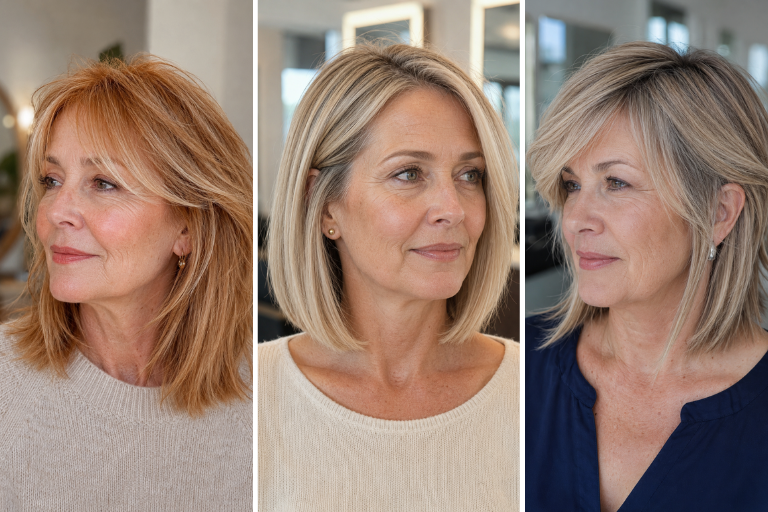
The biggest choice is really how much layering you want. Fine, straight hair usually benefits from keeping some weight through the bottom, so I’d be cautious about removing too much. A few cheekbone pieces, invisible layers, or a soft fringe can make the shape feel lighter without sacrificing that fuller-looking edge.
Bangs are another fun option here. Curtain fringe, wispy brow bangs, and longer side-swept pieces can all soften a medium cut, but they come with different styling commitments. If you want the easiest routine, longer face-framing pieces are generally more forgiving. If you enjoy a quick round-brush moment in the morning, a proper fringe gives you more personality.
I also paid attention to the details that make each of these cuts feel different, from beveled ends and rounded silhouettes to subtle graduation and brighter face-framing color. Save the ones that match both your hair texture and the amount of maintenance you actually want to do.
20 Medium Haircuts for Straight Fine Hair to Save for Your Next Appointment
1. Collarbone Blunt Lob with Soft Beveled Ends
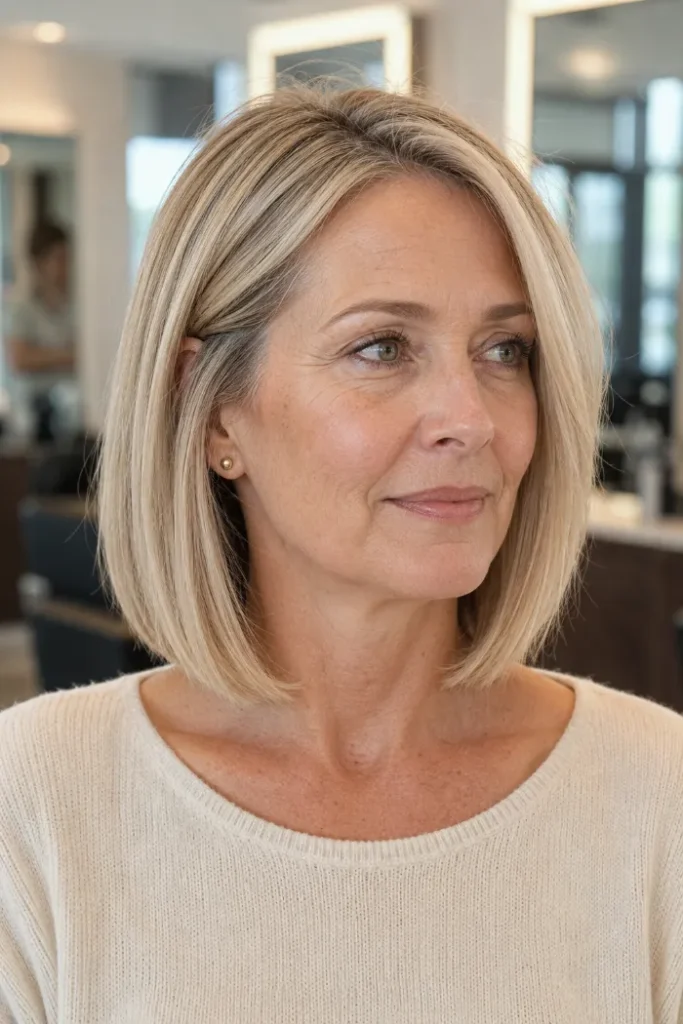
This polished blonde lob lands right around the collarbone with a clean, substantial perimeter. The ends aren’t poker-straight; they have a gentle inward bevel that gives the cut a rounded finish without making it look overly styled. Long pieces around the front blend smoothly into the length, while the darker root and fine blonde ribbons add visible dimension.
Ask your stylist for a mostly blunt collarbone perimeter with minimal internal layering, then have the ends lightly softened so they can turn under instead of forming a hard line. Keep the front pieces long enough to tuck behind your ears, and style with a medium round brush just at the final few inches.
2. Collarbone Cut with a Micro Face Frame
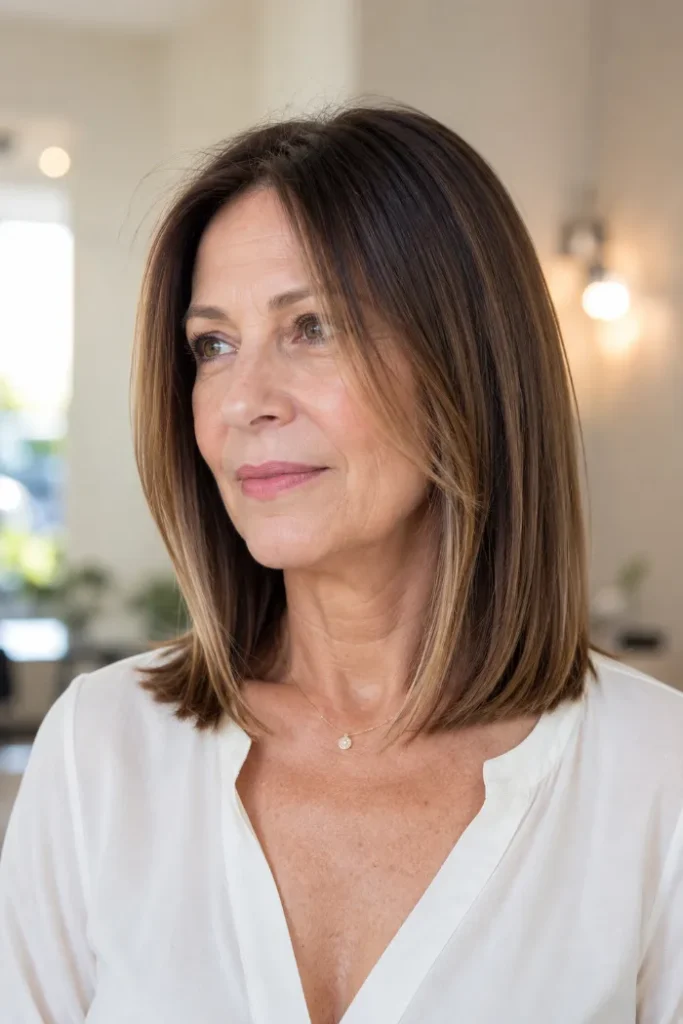
This brunette collarbone cut keeps most of its length in one strong line, which is a smart visual trick when you don’t want fine hair to look wispy. The change happens right at the front, where a few lighter, shorter pieces begin around the cheek and jaw. They create movement without turning the whole haircut into a heavily layered style.
Ask your stylist to preserve the density through the back and sides, then carve only a narrow face-framing section around the front. Have the shortest piece sit somewhere around cheekbone to jaw level and blend it into the perimeter gradually. A lightweight smoothing cream can keep the straight finish sleek without flattening the roots.
3. Collarbone Italian-Inspired Bob with a Lifted Crown
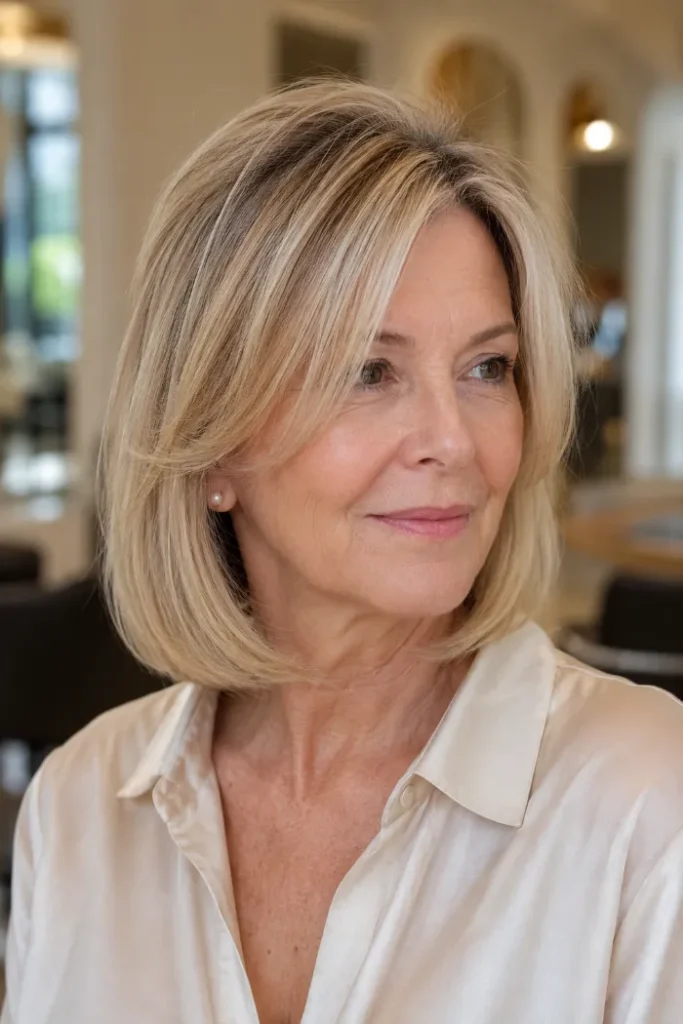
This softly rounded bob sits just above the shoulders and has noticeably more lift through the crown than a flat one-length lob. The blonde front sections sweep away from the face, while the ends curve inward to create a plush, polished silhouette. I like how the shape feels full without relying on lots of visibly chopped layers.
Ask your stylist for a rounded medium bob with subtle graduation or hidden layering through the crown, keeping the outer perimeter intact. The front should be long enough to sweep back from the cheekbones. At home, lift the roots with a large round brush, then bend the ends inward rather than curling the entire section.
4. Fine-Hair Shag Lob with Light Curtain Bangs
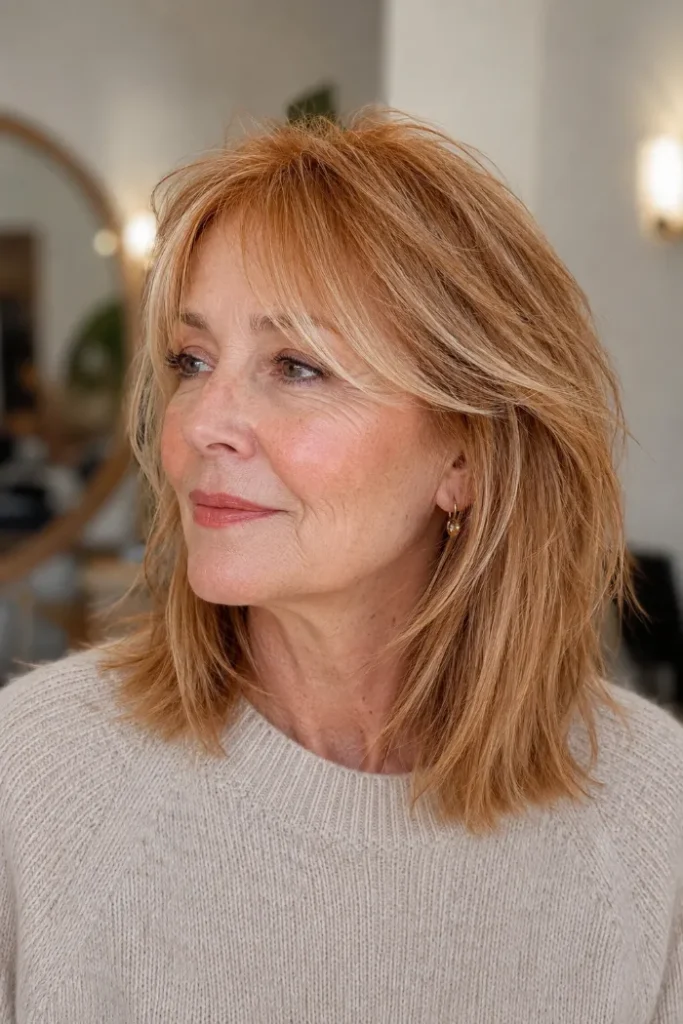
This coppery shoulder-length lob has a much airier texture than the blunt cuts in the roundup. Soft, staggered layers break up the outline, especially around the sides and ends, while the curtain bangs open through the center and sweep toward the cheekbones. The finish is slightly tousled, which gives straight hair a looser, less precise personality.
Ask your stylist for light shag-inspired layers rather than aggressive thinning, with the shortest face pieces connecting naturally into a soft curtain fringe. Keep enough weight at the bottom that the ends still look intentional. A small amount of texture spray through the mid-lengths can help separate the layers without making fine hair feel coated.
5. Layered Lob with Curtain Fringe
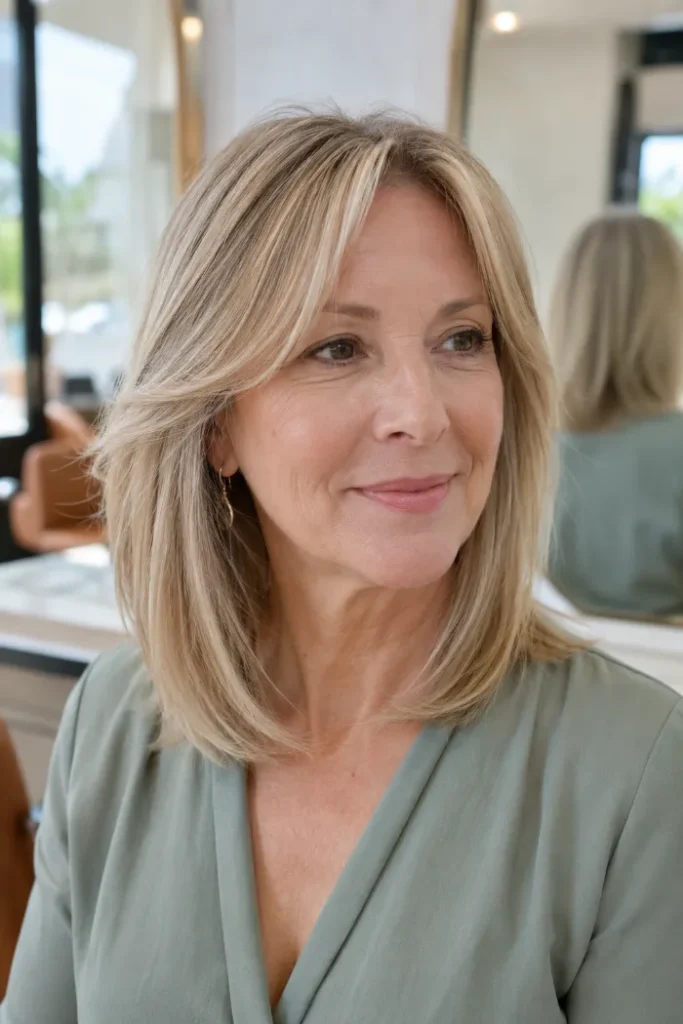
This blonde lob falls slightly past the shoulders with long, flowing layers that are most noticeable around the face. The curtain fringe starts near the center and curves outward at cheek level, creating a soft winged effect. Rather than looking choppy, the layering is blended and smooth, so the cut keeps a graceful, fairly full silhouette through the bottom.
Ask your stylist for long layers beginning below the cheekbones and a curtain fringe that can be worn either centered or slightly off-center. Avoid taking the shortest layers too high at the crown if you want to keep fullness. Blow-dry the fringe forward first, then split it and roll each side away from the face.
6. Long Bixie-Lob Hybrid with Tapered Side Layers
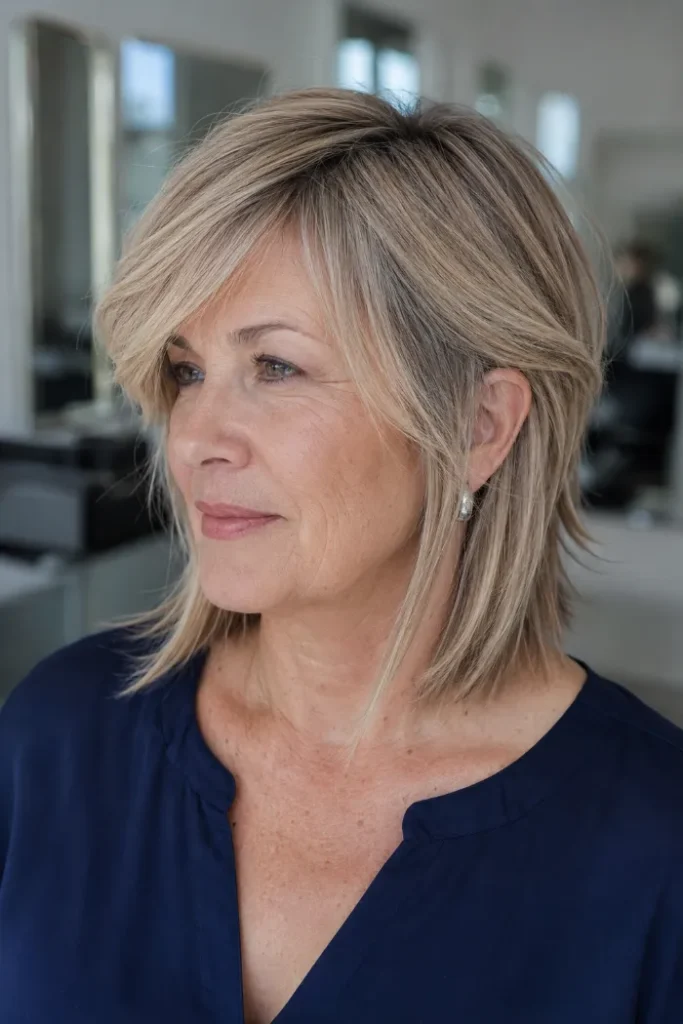
This cut sits in that interesting space between a grown-out bixie and a short lob. The back and side lengths are tapered and piecey rather than blunt, with longer sections around the face and a sweeping side fringe across the forehead. The lighter top layers sit over a darker base, making the movement and separation especially easy to see.
Ask your stylist to keep the front and lower side pieces long while tapering the interior more closely around the ear and back. Request a side-swept fringe that blends into the temple layers rather than sitting as a separate bang. This shape benefits from small, regular trims because the tapered sections can lose their definition as they grow.
7. Medium Butterfly-Lite Cut for Fine Straight Hair
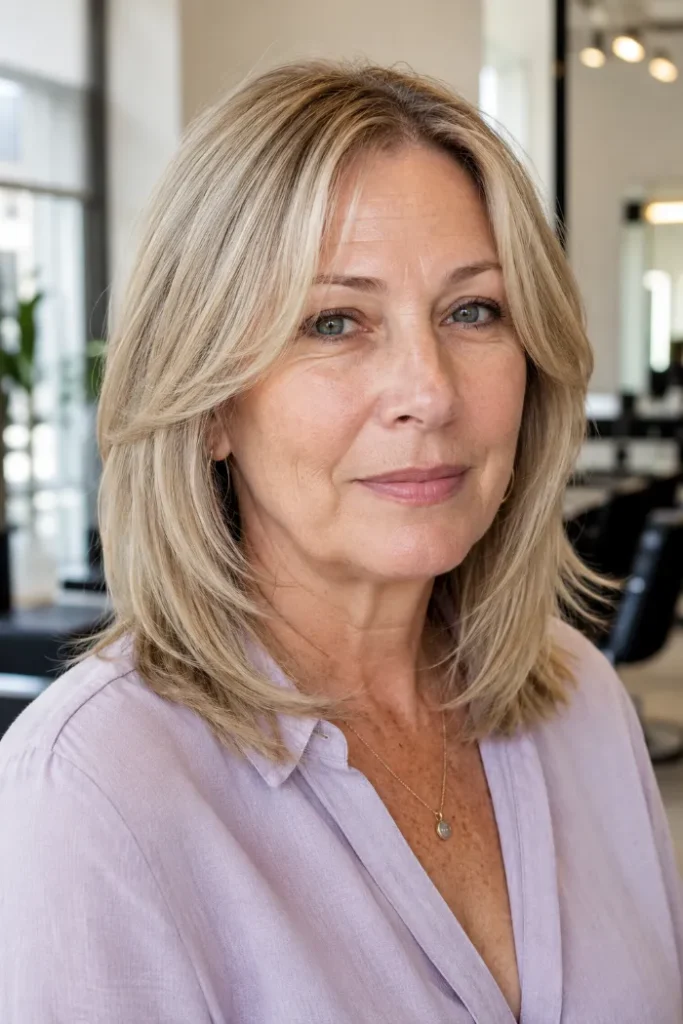
This is a restrained take on the butterfly cut, which is exactly why it works nicely at a medium length. The hair still reaches the shoulders, while shorter pieces around the cheekbones and jaw flip outward to create that signature layered sweep. The ends remain fairly full, so you get visible movement without the very tiered effect of a dramatic butterfly haircut.
Ask your stylist for butterfly-style face layers concentrated in the front half of the haircut, with the back kept longer and denser. Have the first layer begin around the cheekbones instead of near the crown. A round brush or large hot brush can create the outward flick, but keep the bend loose so the ends stay modern.
8. Medium Choppy Lob with Wispy Brow Bangs
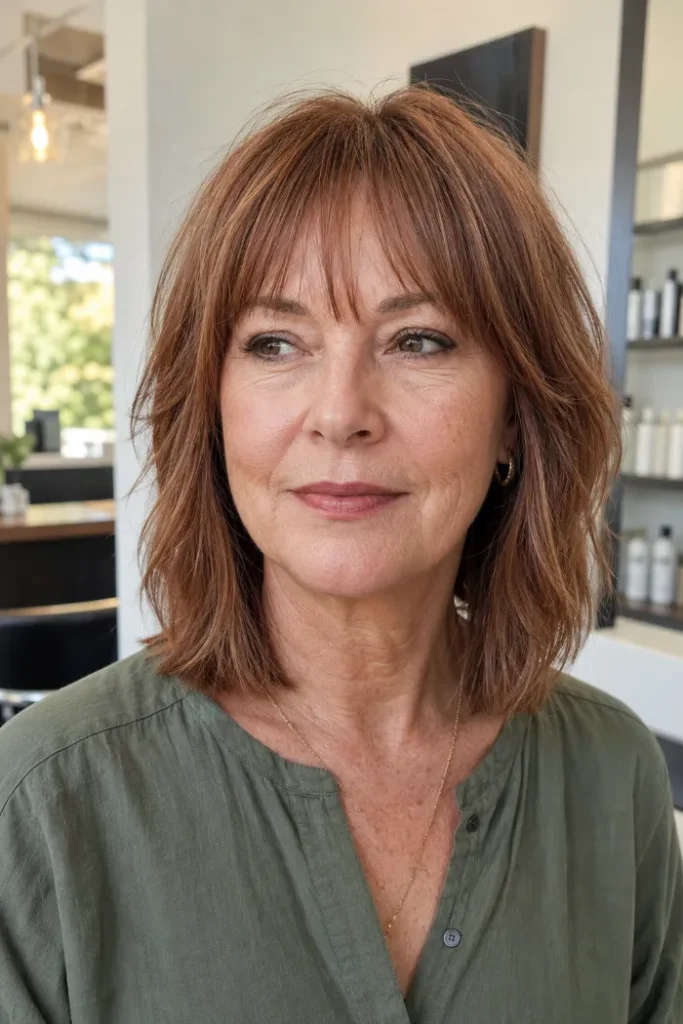
This warm auburn lob has intentionally broken-up ends and a softly tousled outline, so it feels much more relaxed than a classic one-length bob. The brow-skimming bangs are light enough to show a little forehead rather than forming a solid curtain. Face-framing pieces and unevenly textured ends give the straight hair a casual, slightly undone finish.
Ask your stylist for a shoulder-level lob with point-cut or softly textured ends, plus a wispy fringe that lands around the brows. Keep the bang section relatively shallow if you don’t want to borrow too much hair from the rest of the cut. Dry the fringe with your fingers first, then refine it lightly with a brush.
9. Medium French-Inspired Bob with Soft Full Fringe
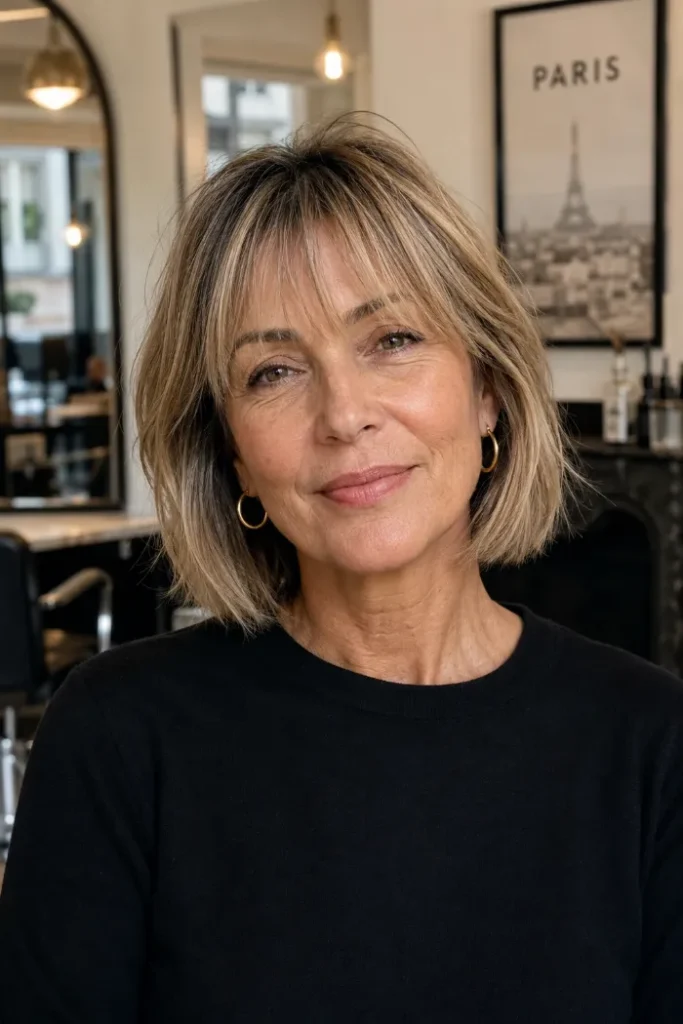
This softly textured bob sits around the jaw to upper neck area and pairs a compact shape with a fuller fringe. The bangs skim the brows and separate naturally rather than forming one heavy horizontal line. Slightly uneven ends and subtle movement around the sides keep the cut from looking too neat, while the darker root adds depth to the blonde.
Ask your stylist for a softly blunt bob with just enough point cutting at the perimeter to prevent a helmet-like edge. For the fringe, request a fuller section that remains airy at the ends and gently lengthens toward the temples. Plan on bang trims between full appointments if you want that brow-skimming placement to stay consistent.
10. Medium Glass Bob with Long Side Fringe
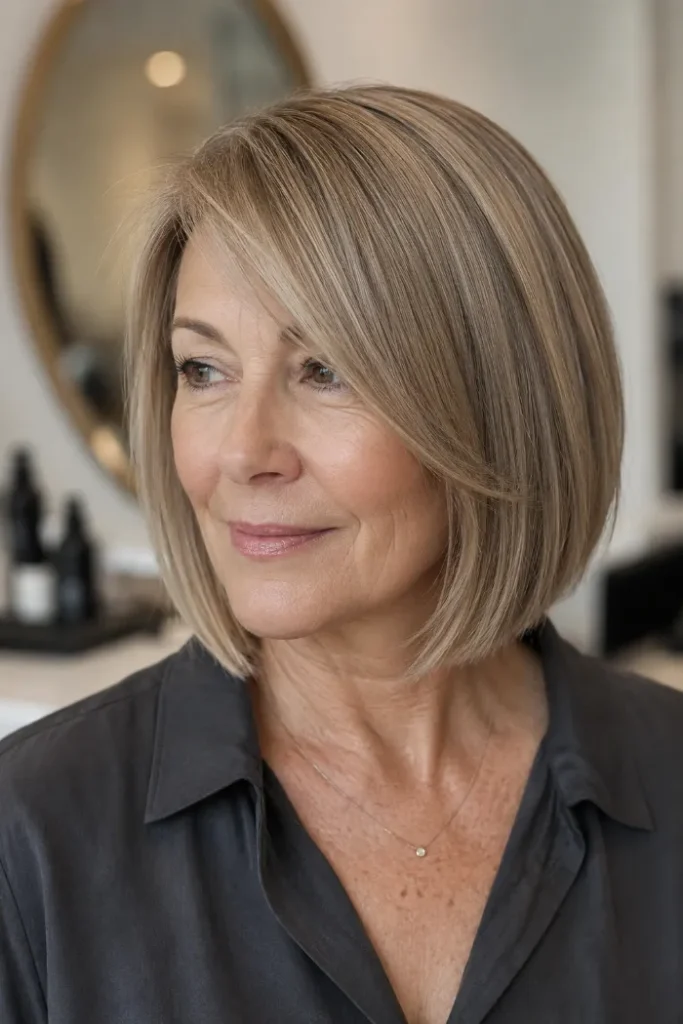
This smooth bob is all about its sleek surface and rounded outline. The length sits between jaw and shoulder, with the ends curving inward and very little visible disruption through the body of the haircut. A long side fringe sweeps diagonally across the forehead and blends into the front, while the cool beige-blonde tone keeps the finish looking especially polished.
Ask your stylist for a clean, minimally layered bob with enough subtle graduation underneath to encourage that rounded shape. Keep the side fringe long enough to tuck or sweep away when you want. For the glassy finish, use a heat protectant and direct the blow-dryer downward along the hair shaft before adding a small end bend.
11. Medium Razor-Soft Lob with Long Airy Fringe
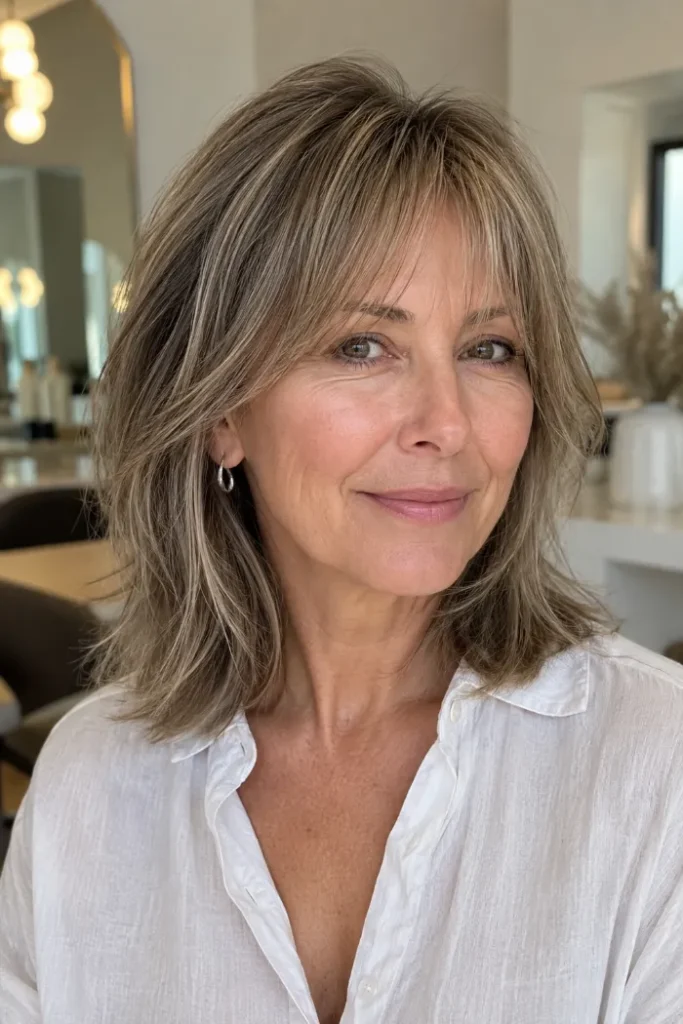
This ash-toned lob has a feathered, airy quality from crown to ends. The perimeter sits around the shoulders but is softened rather than blunt, and long side layers create little outward flicks along the bottom. The fringe is fine and separated through the center, then gets longer toward the cheekbones, which keeps the forehead visible and the overall shape light.
Ask your stylist for soft, elongated layers with a feathered perimeter rather than deep chunks of hair being removed. The fringe should stay long and sheer, with the outer corners blending into the cheek area. If your ends become wispy easily, ask for texture to be concentrated on the surface instead of aggressively thinning the lower lengths.
12. Medium Soft Pageboy with Modern Fringe
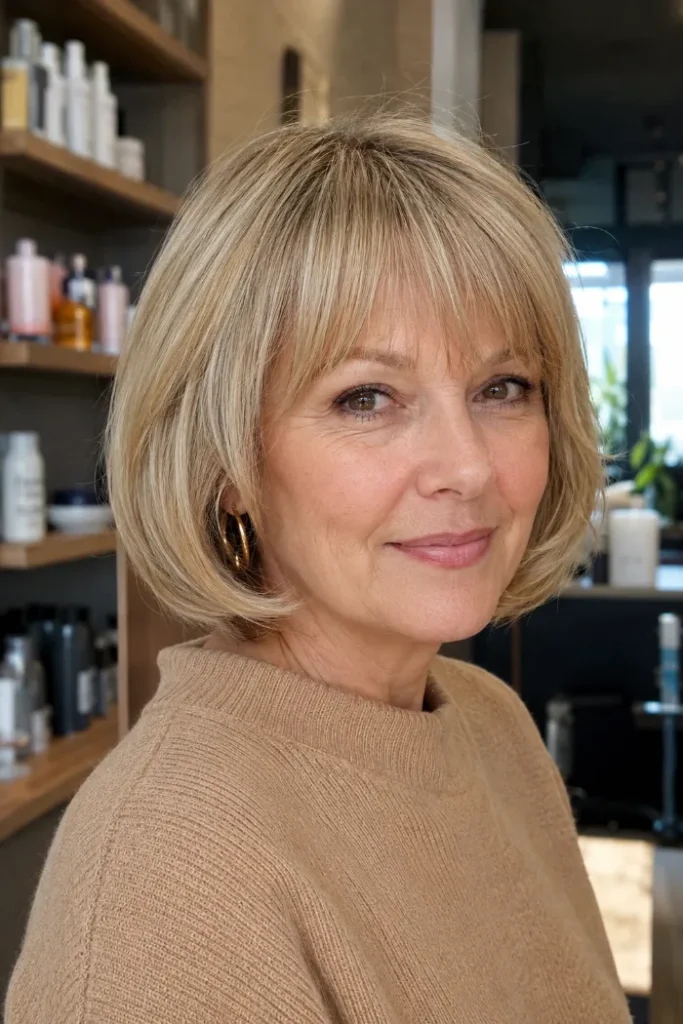
This blonde pageboy-inspired shape has a rounded silhouette that hugs in toward the jaw and neck. The ends are neatly curved under, while the fringe sits softly across the forehead with a lighter, more movable finish than a traditional pageboy bang. Most of the visual fullness stays close to the perimeter, giving the bob a compact, plush appearance.
Ask your stylist for a rounded bob with gentle internal graduation and a perimeter that can naturally tuck inward. Have the fringe cut soft at brow level, with slightly longer corners near the temples. If your straight hair tends to fall flat, concentrate volumizing mousse near the roots and use a round brush underneath the ends only.
13. Medium Step-Cut Lob with Cheekbone Layers
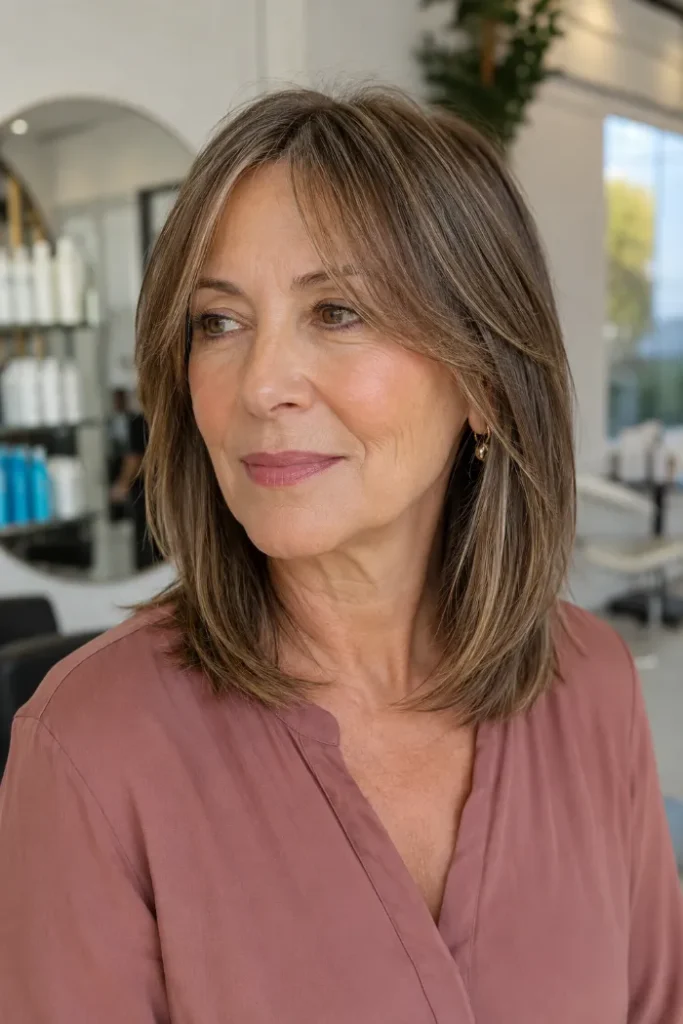
This brunette lob has clearly defined face-framing steps rather than one continuous front layer. The first shorter sections begin near the cheekbones, another level falls around the jaw, and the longest pieces meet the shoulder-length base. Fine caramel highlights follow those layers, which makes the movement more noticeable while the back of the haircut stays relatively smooth and controlled.
Ask your stylist for graduated face-framing steps that start at the cheekbone and connect down toward the collarbone without over-layering the back. Keeping those shorter pieces mostly around the front preserves more weight elsewhere. If you color your hair, a few strategically brighter ribbons around the face can emphasize the shape without requiring an all-over lightening service.
14. Shoulder-Length Cut with Side-Parted Swoop Bangs
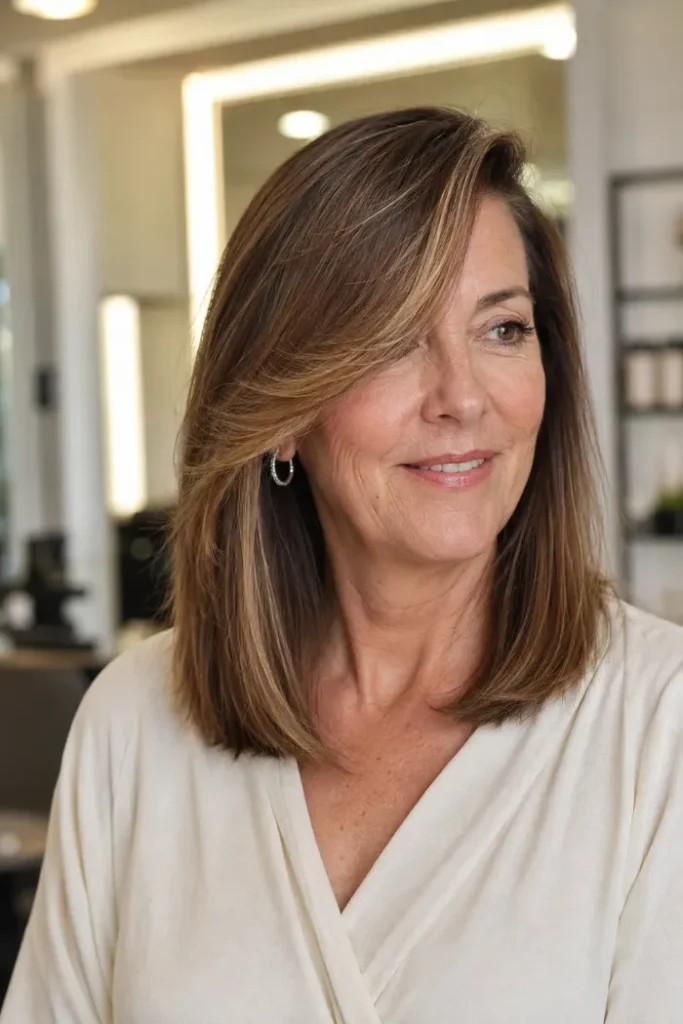
This straight shoulder-length cut keeps a simple, fairly solid base while putting most of the drama in the front. A deep side part sends a long sweeping section across the forehead, with the fringe curving into the cheek and side lengths. Warm caramel ribbons are concentrated through the front, so the swoop stands out against the deeper brunette base.
Ask your stylist for a shoulder-grazing perimeter with restrained layering and a long side bang that begins around cheekbone level at its shortest point. Tell them where you naturally part your hair before they cut the fringe. Styling is easiest if you blow the front section in the opposite direction first, then sweep it back into place.
15. Shoulder-Length Rounded Cut with Bottleneck Bangs
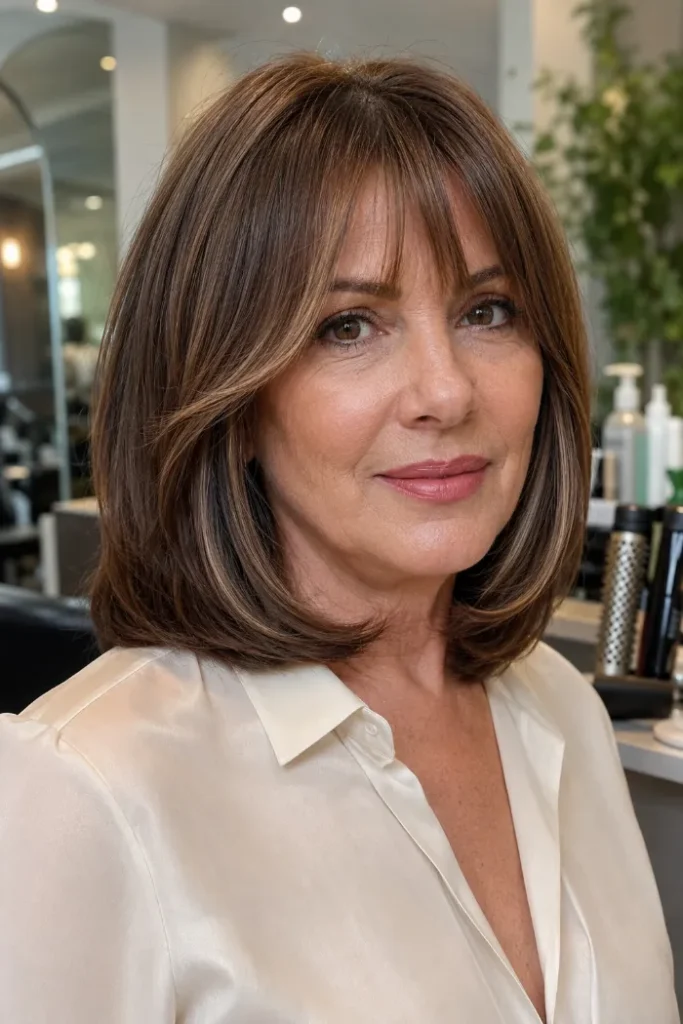
This rich brunette cut has a softly rounded shoulder-length silhouette with ends that curve under instead of hanging completely straight. The bottleneck-style bangs are shorter and more centered through the forehead, then gradually lengthen beside the eyes and cheeks. Subtle lighter ribbons through the front and sides pick up the curve of the haircut and give the dark base more dimension.
Ask your stylist for bottleneck bangs that are narrower and shorter through the center but lengthen smoothly toward the cheekbones. Keep the main haircut only lightly layered so the rounded bottom remains visible. A large round brush can shape both the fringe and perimeter, but focus the bend on the ends to avoid creating too much overall puffiness.
16. Shoulder-Skimming Lob with Invisible Layers
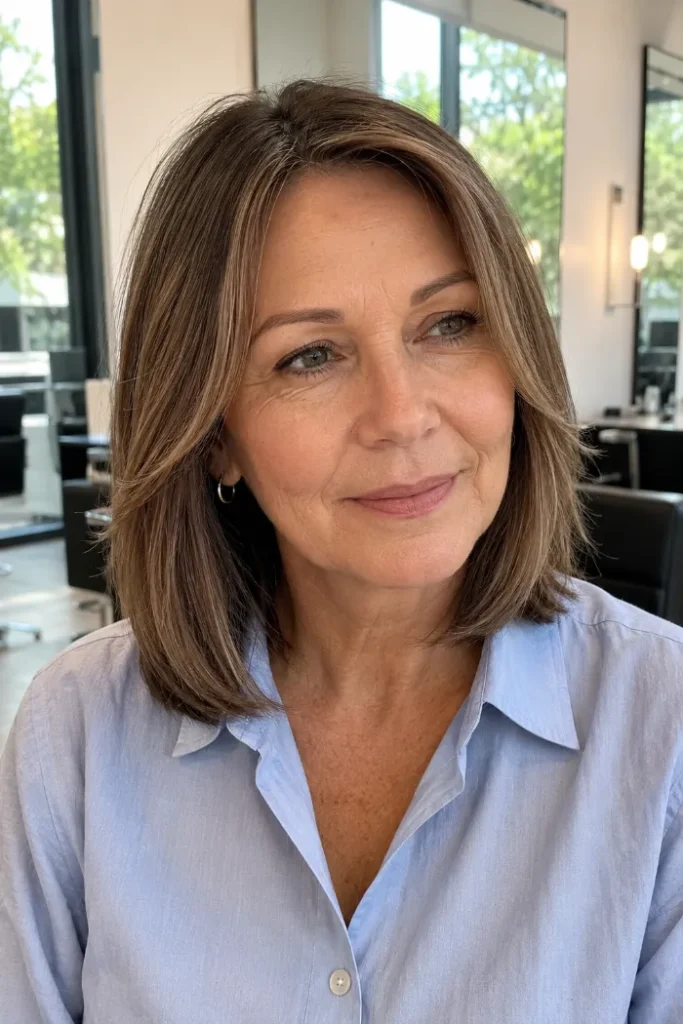
This brunette lob is a great example of layering that you notice more through movement than through obvious steps. The perimeter stays substantial at shoulder level, while hidden interior layers let the sides curve and shift without looking feathered. Long front pieces open away from the center part, and the softly highlighted face frame keeps the shape from feeling heavy.
Ask your stylist for invisible internal layers that remove a small amount of bulk and encourage movement without visibly thinning the perimeter. Keep the face frame long, starting around the jaw or lower cheek. This is one I’d choose if you want layers but still prefer your hair to look almost one-length when it’s styled straight.
17. Sleek Shoulder Lob with Blunt Curtain Ends
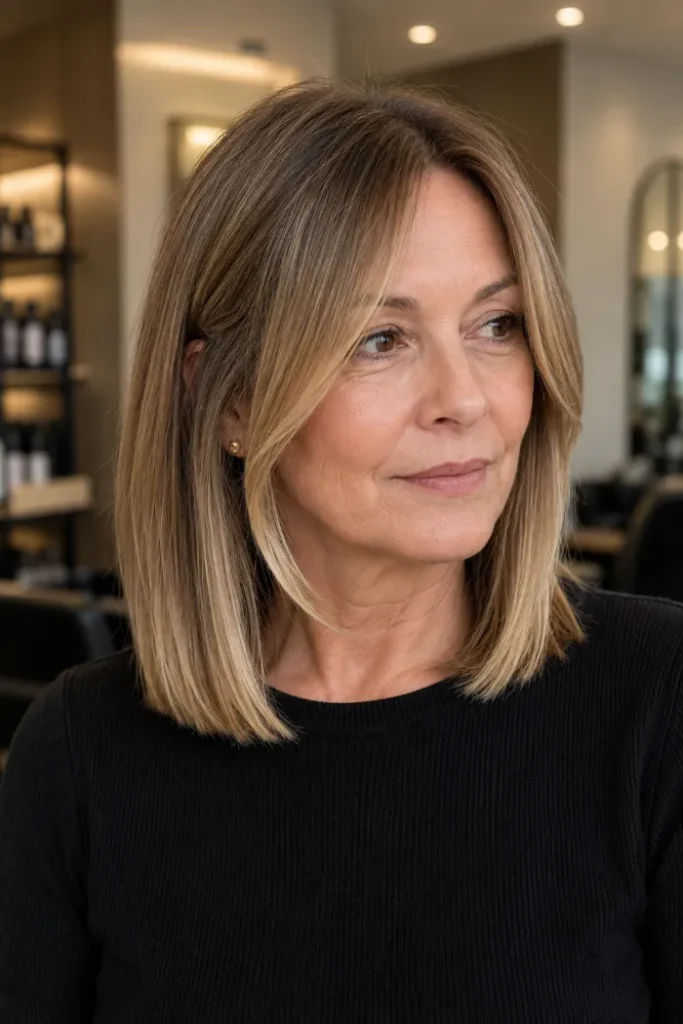
This sleek lob has a crisp, straight-looking perimeter at shoulder level, but the front is softened by long curtain pieces that separate from a center part. The cut avoids lots of visible layering, which lets the bottom edge look dense and graphic. Bright blonde framing through the front contrasts with the deeper root and gives the simple shape extra definition.
Ask your stylist for a blunt shoulder-length base with very limited layering, then add two longer curtain sections that begin around the cheekbones and blend toward the ends. If you like the highlighted effect, ask your colorist for brightness concentrated around the face while leaving some depth at the root. A smoothing serum is plenty for the finish.
18. Soft A-Line Medium Bob with Face-Framing Pieces
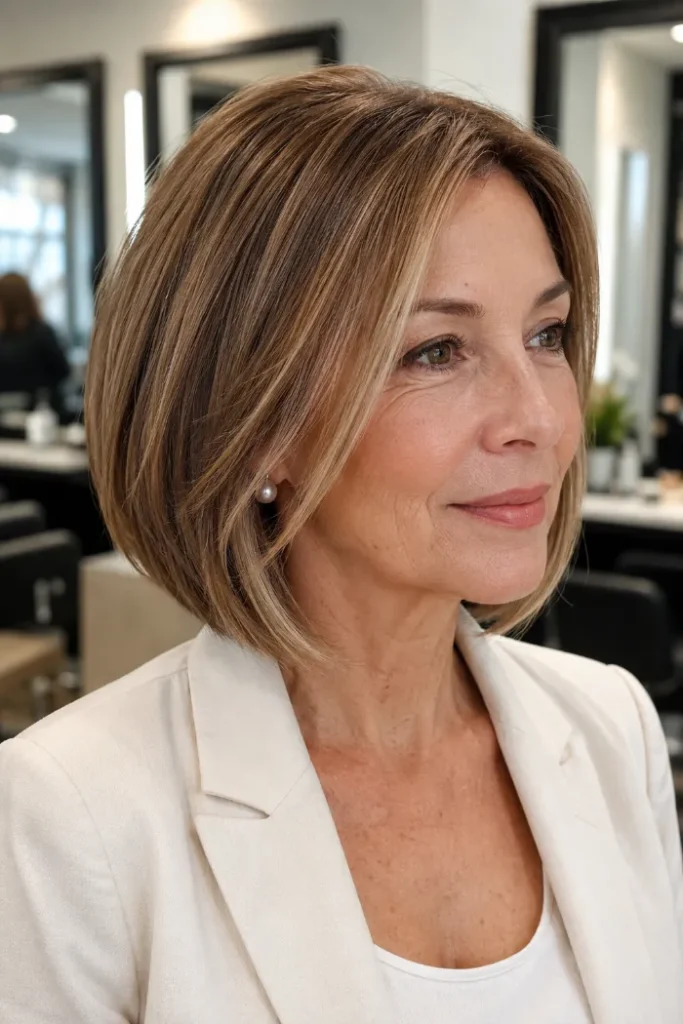
This softly angled bob is shorter toward the back and gradually lengthens toward the front, giving it an A-line shape without a severe stacked effect. The longer front pieces curve in around the jaw, while subtle lighter strands accent that angle. The smooth surface and controlled outline make the haircut look polished, but the soft graduation keeps it from appearing rigid.
Ask your stylist for a gentle A-line with only a modest difference between the back and front lengths. Keep the nape clean and softly graduated rather than heavily stacked, and leave the front corners long enough to frame the jaw. This shape tends to look best when the angle is refreshed before the back grows out and loses its line.
19. Straight Collarbone Cut with Clean Nape Graduation
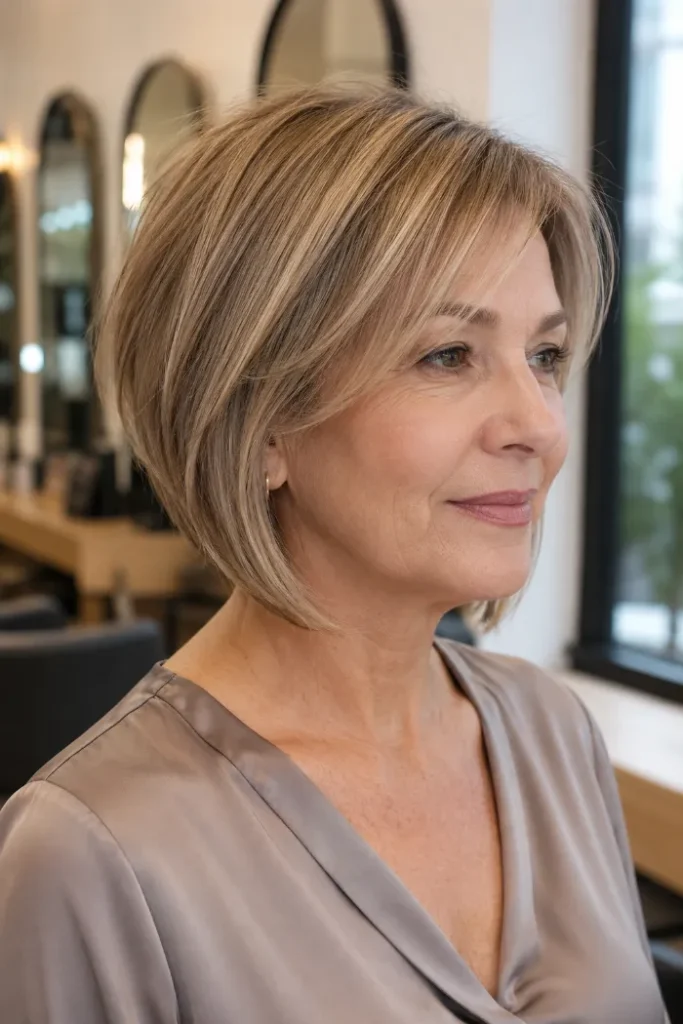
This blonde cut has a neat, graduated back that creates a softly stacked silhouette without looking like a short bob. The nape sits closer to the head, then the length builds toward the sides and front. Long sweeping pieces through the front keep the shape feminine and fluid, while the highlighted surface makes the graduation and rounded crown easier to see.
Ask your stylist for clean, low graduation through the nape with the front left noticeably longer. The graduation should support the shape rather than create a dramatic stacked shelf. If your hair is very fine, keeping that structure low can help the back feel fuller while allowing the longer front pieces to remain sleek and easy to tuck.
20. Straight Midi Cut with See-Through Bangs
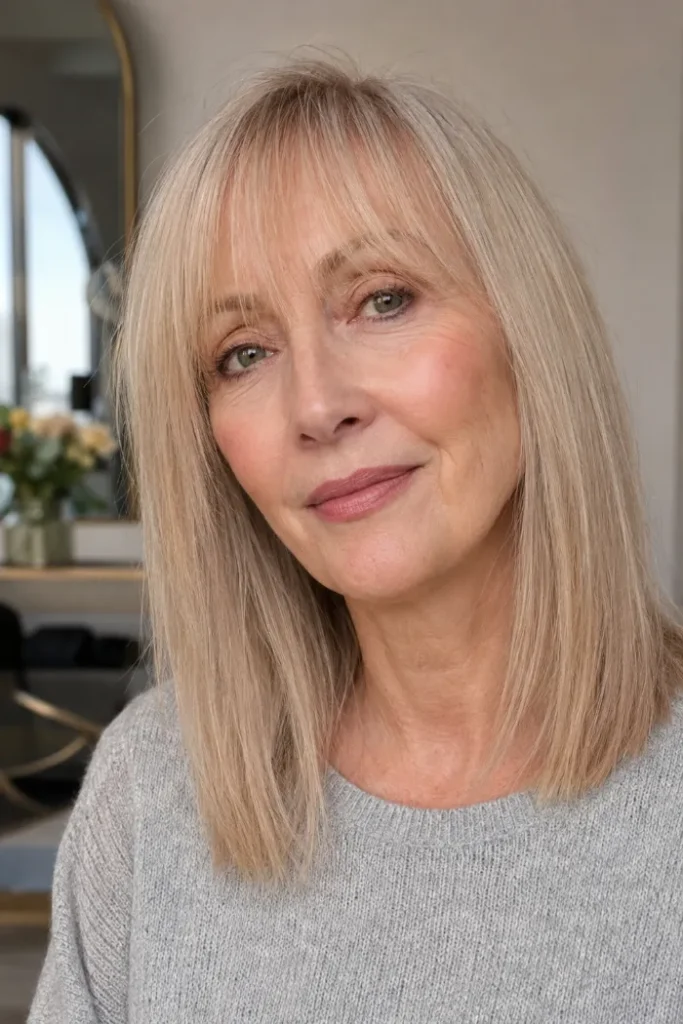
This cool blonde midi cut reaches a little below the shoulders with a very smooth, straight finish and minimal visible layering. The feature that changes everything is the delicate see-through fringe, which falls softly over the brows while leaving plenty of forehead visible. The ends are clean and fairly full, giving the airy bangs a nice contrast against the stronger base.
Ask your stylist for a solid midi-length perimeter and a narrow, lightweight bang section rather than a deep fringe taken far back into the crown. The bangs should be softly point-cut so they separate naturally. If you want to keep them airy, skip heavy creams near the forehead and use only a tiny amount of lightweight styling product.
FAQs About Medium Haircuts for Straight Fine Hair
Should fine straight hair be blunt or layered?
Usually, I’d keep some strength in the perimeter and use layering selectively. A blunt or softly beveled base can make the ends look more substantial, while a few long layers around the face add movement. If your ends already feel sparse, heavy all-over layering may remove more weight than you want.
What medium length works best if my ends look thin?
Try a length somewhere between the shoulders and collarbone and ask your stylist to cut back to the point where the ends look strongest. Holding onto extra length isn’t always helpful if the final few inches are see-through. A slightly shorter, cleaner perimeter can make the whole haircut look more intentional.
Are bangs a good idea with fine hair over 50?
They absolutely can be, but the amount of hair used matters. Wispy, curtain, bottleneck, and long side bangs all give you softness without necessarily requiring a very deep bang section. If you’re concerned about losing fullness elsewhere, ask your stylist to keep the fringe section shallow.
How can I style straight fine hair without flattening it?
Keep rich products away from the root area and concentrate smoothing products on the mid-lengths and ends. For lift, dry the roots in the opposite direction from where they naturally fall, then use a round brush only where you want bend. That usually gives you movement without turning a simple medium cut into a big blowout.
Choosing the Right Medium Cut for You
If your main goal is making fine hair look more substantial, I’d start with the blunt lobs, rounded bobs, or invisible-layer cuts and keep the bottom edge strong. If you want more movement, look at the cheekbone layers, curtain fringe, butterfly-lite shape, or softer shag styles. The detail you keep noticing in these photos is probably the best clue about what you actually want.
And be realistic about your routine. A sleek one-length lob can be wonderfully simple, while fringes, beveled ends, and lifted crowns usually need a little more attention. Pick the version that works with your natural straight texture, your density, and the amount of styling and trimming you’re genuinely happy to maintain.
