20 Short Haircuts for Older Women With Thinning Hair
Short haircuts for older women with thinning hair can be incredibly flattering when the cut creates shape without removing the density you still have. I’m especially drawn to styles that keep a little fullness through the crown, sides, or perimeter instead of relying on aggressive layering. The right short cut can make fine or thinning hair look more intentional, polished, and surprisingly substantial.

The big decision is where you want that fullness to live. A pixie with longer crown layers can give you lift and movement, while a softly graduated bob keeps more visual weight around the jaw. If your hair tends to separate at the front, a wispy fringe or side-swept bang can also make the hairline feel softer without requiring a heavy section of hair.
I’d also think realistically about styling. Some of these cuts need a quick blow-dry with a small round brush to look their best, while others work beautifully with a little root lift and finger styling. Color placement matters too. Fine highlights, dimensional lowlights, and softly blended gray can create visible depth, but the haircut itself should do most of the work.
Below, I’ve broken down each look so you can see what makes it work and, more importantly, what to actually ask for at the salon.
20 Short Haircuts That Work Beautifully With Thinning Hair
1. Airy Pixie-Bob With Longer Side Panels

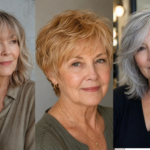
This airy pixie-bob keeps noticeably more length through the top and front, with soft side panels that skim in front of the ears. The crown is lightly lifted rather than tightly cropped, and the wispy side-swept fringe blends into longer face-framing pieces. Fine blonde highlights add separation between the layers without making the finish look stripy.
Ask your stylist for longer crown layers with very gentle internal weight removal, keeping enough hair through the sides to create that soft pixie-bob outline. Have the fringe cut long enough to sweep across rather than stand up, and style with a lightweight root spray instead of a heavy wax that could collapse finer hair.
2. Chin-Length Bob With Soft Graduation

This chin-length bob has a smooth, rounded silhouette with enough graduation underneath to keep the shape from looking flat. Most of the visible density stays in the lower half of the cut, which gives the perimeter a substantial appearance. The longer, parted fringe blends neatly into the sides, while the warm brunette color has subtle tonal dimension.
Ask your stylist to preserve a strong perimeter at chin level and use only soft graduation underneath rather than lots of short layers through the surface. If your ends are naturally fine, keeping that lower edge fairly solid can make them appear thicker. A small round brush can add the gentle inward bend without over-fluffing the cut.
3. Cropped Pixie With Brushed-Forward Texture

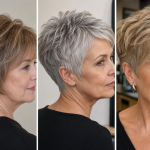
This silver pixie is closely tapered around the ears and nape, then gradually becomes longer toward the crown and fringe. The top is brushed forward in soft, separated pieces, which gives the cut movement without requiring a lot of hair. I like how the pale silver tone makes the directional texture especially visible.
Ask your stylist for a snug taper at the sides and nape while leaving enough length on top to comb forward and slightly across the forehead. Keep the texture soft rather than heavily razored, especially if your ends are delicate. A pea-size amount of light styling cream can separate the top without making it look sparse.
4. French-Inspired Short Bob With Micro Curtain Fringe

This short bob sits around the jaw with a softly curved perimeter and very restrained layering. The little curtain fringe is light and narrow, opening through the center while longer pieces connect it to the bob. Because the overall shape stays compact and full, the cut doesn’t sacrifice much density just to create movement.
Ask your stylist for a jaw-skimming bob with minimal surface layering and a narrow fringe section rather than taking bangs from too far back. Have the center of the fringe kept light and slightly shorter, with longer corners that blend toward the cheekbones. That keeps the front soft while protecting fullness through the sides.
5. Layered Ear-Length Crop With Side-Swept Bangs

This ear-length crop has a softly rounded crown, closely shaped sides, and longer layers sweeping diagonally across the forehead. The blonde highlights follow the direction of the cut, which makes the top look more textured and dimensional. There’s still a tidy outline around the ear and nape, so the style feels neat rather than overly feathered.
Ask your stylist to keep the longest layers through the top and front, then taper progressively toward the ears and neckline. The side-swept fringe should stay long enough to move rather than becoming a short, sparse bang. Blow-dry the crown against its natural direction first, then place it where you want for extra lift.
6. Modern Bowl Pixie With Softened Edges

This modern bowl-pixie uses a rounded upper shape to create the impression of fullness, then narrows neatly around the ears and nape. The fringe is short but soft, with no harsh horizontal line across the forehead. The smooth brown-and-gray blend also helps the layers read as one cohesive shape instead of lots of separate wisps.
Ask your stylist for a rounded shape through the parietal area and crown, with the underneath gently tapered close to the head. Avoid excessive thinning through the top if density is already limited. The fringe can be point-cut lightly at the ends so it sits softly while the bulk of the hair stays visually full.
7. Neat Pixie-Bob With Tucked Sides

This pixie-bob has a compact, rounded back with longer pieces across the crown and front. One side is tucked close around the ear, while the soft fringe sweeps naturally across the forehead. The warm brown color has fine lighter ribbons through the top, giving the surface a little extra movement without relying on choppy layering.
Ask your stylist for a softly graduated back with enough top length to lie over the shorter underneath layers. Keep the area in front of the ear slightly longer so you have the option of tucking it back. For styling, use a light volumizing mousse near the roots and leave the ends soft rather than overly separated.
8. Rounded Mini Bob With Wispy Bangs

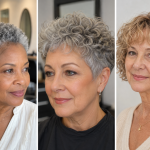
This pale blonde mini bob lands around the jaw and curves softly inward at the ends. The perimeter looks deliberately full, while the fringe is much lighter, with separated pieces that allow some forehead to show through. Longer sections at each side of the bangs blend into the bob and keep the front from feeling disconnected.
Ask your stylist for a clean, weighty bob perimeter with only enough graduation to encourage that rounded bend. Take a modest section for the wispy bangs so you don’t borrow too much density from the top. If your hair falls flat, dry the roots first and bend only the last inch of the ends.
9. Rounded Pixie With Soft Side Volume

This warm auburn pixie is short at the nape and around the ears but carries considerably more length through the upper sides and crown. That creates a rounded silhouette instead of a close, flat pixie shape. The light side fringe follows the same direction as the top layers, giving the style a soft, easy flow.
Ask your stylist to retain weight around the upper sides while tapering underneath, especially if you want your hair to look fuller from the front. Keep crown layers long enough to overlap rather than sticking straight up. A quick blow-dry with your fingers lifting the roots can create this shape without needing much product.
10. Short Bob With Bottleneck Bangs

This blonde bob has a rounded, chin-level shape paired with bottleneck bangs that are shorter near the center and gradually longer toward the sides. The fringe opens softly around the eyes, while the rest of the cut keeps plenty of visual weight through the ends. That combination gives you movement at the front without over-layering the entire bob.
Ask your stylist for a solid bob perimeter and bottleneck bangs that connect into longer cheek-level pieces. If your front density is limited, keep the bang section shallow and let the longer side pieces do more of the framing. A lightweight blow-dry cream can smooth the bob while keeping the fringe flexible.
11. Short Flippy Bob With Side Part

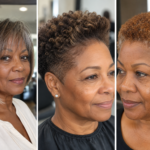
This short blonde bob has a deep side part, sweeping front section, and softly flipped ends around the sides. Instead of being heavily stacked, the shape stays fairly full from crown to perimeter, with subtle layering creating just enough movement for the ends to kick outward. The finish feels light without looking overly thinned.
Ask your stylist for a jaw-length bob with long, blended layers concentrated near the lower portion of the cut. Keep the top fairly intact so the side part has enough hair to sweep across. To style the flip, turn a small round brush outward only at the ends instead of curling the whole section.
12. Short Layered Bob With Airy Ends

This layered bob sits above the shoulders with airy, piecey ends and a softly broken-up outline around the face. The fringe is light and blends into shorter face-framing layers, while the crown remains smooth enough to keep the overall silhouette controlled. Fine beige-blonde highlights add dimension through the moving pieces.
Ask your stylist to create movement mainly through the ends and face frame rather than removing weight everywhere. Keep the crown layers long and softly connected so you still have coverage through the top. A light mist of texturizing spray through the mid-lengths can separate the ends without making the roots feel dry.
13. Short Stacked Bob With Gentle Crown Lift

This short stacked bob is visibly shorter at the nape and builds into a fuller rounded crown before extending into longer pieces beside the face. The side view really shows how the graduation supports the back of the style. Soft caramel and blonde highlights emphasize that curved shape and make the layered sections easier to see.
Ask your stylist for low, controlled graduation through the back rather than a very high stack, which can leave the crown looking too short if your hair is fine. Keep the front longer for balance. At home, direct warm air underneath the back sections with a small round brush to encourage gentle lift.
14. Soft Curved Crop With See-Through Fringe

This softly curved crop sits close around the ear and neckline while keeping a fuller, sweeping layer over the top. The strawberry-blonde fringe is deliberately light and see-through, with irregular pieces rather than a solid bang. Longer crown layers sweep diagonally, helping the cut look soft and rounded instead of severely cropped.
Ask your stylist for a softly tapered outline with longer overlapping layers across the crown and a very light fringe section. If you have sparse areas near the hairline, adjust the bang direction to work with your natural growth rather than fighting it. A light root foam can give the top gentle support.
15. Soft Feathered Pixie With Lifted Crown

This pale blonde pixie has short, neat sides with longer feathered layers sweeping over the crown. The top is styled upward and slightly across, creating height without a stiff or spiky finish. A soft fringe falls toward the forehead, while the close side area keeps the extra crown volume looking intentional and balanced.
Ask your stylist to leave the crown several inches longer than the sides and connect it with soft, shallow layers. Avoid aggressive razor thinning if your individual strands are already fine. Blow-dry the crown upward with your fingers or a vent brush, then use a small amount of flexible paste just at the tips.
16. Soft Inverted Bob With Light Face Frame

This inverted bob is shorter and rounder through the back, then lengthens toward the front with a soft piece sitting near the jaw. The surface remains smooth, so the silhouette looks dense rather than overly layered. Lighter blonde ribbons around the face contrast with the deeper brunette base and visually emphasize the front movement.
Ask your stylist for a subtle forward angle rather than an extreme stacked bob, preserving enough weight through the lower edge to keep it looking substantial. Have the face-framing section start around cheek or jaw level. If you color your hair, a few brighter front pieces can create dimension without highlighting every strand.
17. Soft Shaggy Pixie With Piecey Fringe

This shaggy pixie has intentionally tousled crown layers, wispy bangs, and little pieces extending around the ears and nape. The top is noticeably longer than the sides, which allows it to be styled in several directions for an airy, textured finish. The sandy blonde color has enough variation to make those separated layers stand out.
Ask your stylist for longer, irregular crown layers with softness around the perimeter, but be conservative with thinning shears so the texture doesn’t become too see-through. Keep a few longer pieces through the fringe and neckline. Style by pinching a lightweight texture cream onto selected strands rather than coating the entire head.
18. Tapered Bixie With Soft Crown Texture

This tapered bixie sits between a pixie and a very short bob, with close shaping around the ear and nape but extra length across the crown. The surface is softly textured rather than sharply spiked, and the fringe breaks into delicate pieces across the forehead. The taupe-gray color makes the subtle layer separation especially visible.
Ask your stylist to keep enough length through the crown for the layers to overlap, then taper only the lower sides and neckline. This is a good place to preserve weight if your scalp tends to show through shorter layers. Use root-lifting spray underneath the crown and lightly tousle it as it dries.
19. Textured Pixie With Longer Crown Layers

This blonde pixie keeps the sides neat and short while leaving considerably more hair through the top and crown. The longer pieces sweep forward and sideways in different directions, giving the cut visible texture and lift. The contrast between the close sides and airy top helps the crown look fuller without requiring an exaggerated amount of volume.
Ask your stylist for short, tidy sides with longer crown layers that can be directed forward or off to one side. Keep the top connection soft and avoid cutting every layer to the same short length. When styling, concentrate a lightweight volumizer at the roots and leave the ends loose and touchable.
20. Wispy Crop With Tapered Nape

This wispy crop has a softly tapered neckline and close side area with longer, feathery layers covering the crown. The front falls into a light side-swept fringe rather than a dense bang, and the top retains enough length to create gentle lift. The blended ash-blonde and brunette tones add depth throughout the layered surface.
Ask your stylist for a clean taper at the nape with longer layers gradually increasing toward the crown and forehead. Keep the crown ends soft but not overly thinned, especially where you want the most coverage. For everyday styling, lift the roots with your fingers while blow-drying and finish with a flexible hairspray.
FAQs About Short Haircuts for Thinning Hair
What short haircut makes thinning hair look fuller?
Cuts that preserve strategic weight usually give the fullest effect. Think blunt or softly graduated bobs, rounded pixies, and bixies with longer crown layers. If your hair is finer through the top, I’d avoid taking every section extremely short or adding lots of aggressive texture. Overlapping layers can give you movement while still providing coverage.
Should thinning hair be layered?
It can be, but the placement matters more than the fact that it’s layered. A few longer layers can create lift and keep a short cut from looking heavy. Too many short layers, especially through already sparse areas, can make the ends look thinner. Ask your stylist where your density is strongest before deciding how much weight to remove.
Are bangs a good idea with thinning hair?
Yes, especially softer versions such as wispy, side-swept, curtain, or bottleneck bangs. The trick is not taking an unnecessarily deep section from the crown to create them. A lighter fringe can soften the hairline and frame the eyes while leaving more of your density available for the rest of the haircut.
How often should a short haircut be trimmed?
Very cropped pixies usually need reshaping sooner than bobs because the outline changes quickly as the sides and nape grow. If you like a precise pixie, you may prefer trims around every four to six weeks. Softer bixies and short bobs can often stretch longer, depending on how neatly you want the shape maintained.
Choosing the Right Short Cut for You
If your hair is finest through the crown, I’d look first at the rounded pixies, bixies, and softly stacked shapes that leave extra length on top. If your main concern is thin-looking ends, a chin-length or mini bob with a stronger perimeter may be the better choice. Straight hair can show off these precise shapes beautifully, while natural bend can make airy crops and layered pixies even easier to style.
Most of all, choose the detail you actually want to maintain. Maybe that’s a wispy fringe, a fuller crown, a tucked side, or a crisp bob line. Bring the photo you like most to your appointment, then ask your stylist to adapt its length and weight placement to your own density and growth pattern rather than copying every inch exactly.