20 Medium Shag Haircuts for Women Over 50 With Thin Fine Hair
Medium shag haircuts for women over 50 with thin fine hair are one of my favorite ways to get more movement without sacrificing every bit of density at the ends. The trick is choosing a shag that feels airy and layered, but not so aggressively thinned out that fine strands start looking sparse. A little lift through the crown, a thoughtful fringe, and well-placed face framing can make a surprisingly big difference.

I’d pay especially close attention to where the shortest layers begin. Fine hair usually benefits from keeping some strength through the lower perimeter while creating movement higher up. If your hair already feels thin around the temples or ends, you don’t necessarily need dozens of short layers. Softer graduation, invisible layering, or longer feathered sections can give you that shaggy shape with much less risk of losing fullness.
Bangs are another choice worth thinking through. Wispy fringe can add softness without taking too much hair away from the sides, while curtain or bottleneck bangs give you more styling flexibility. And if you prefer an easy routine, look for shapes that work with your natural bend instead of requiring a full round-brush blowout every morning.
I’ve pulled together a mix of collarbone cuts, feathered shags, softly textured lobs, and more tousled versions below. As you look through them, notice not just the overall style but the amount of layering, the density left at the ends, and how much styling each finish seems to need.
20 Medium Shag Haircuts That Give Fine Hair More Shape
1. Collarbone Shag With Soft Tapered Ends

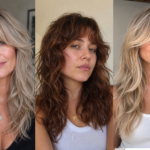
This collarbone-length brunette shag keeps the overall outline fairly substantial while letting the ends taper into soft, separated pieces. The layers begin around the cheekbones and continue through the lower lengths, and the light curtain-style fringe blends rather than sitting heavily across the forehead. I like how the slightly flipped ends create movement without making the perimeter look overly wispy.
Ask your stylist for longer face-framing layers with a softly tapered perimeter rather than heavy razor thinning through the bottom. Keep enough weight around the collarbone to make fine hair look substantial, and have the front pieces cut long enough to sweep away from the face with a small round brush or blow-dry brush.
2. Feathered ’70s-Inspired Shag

This light bronde shag leans into that classic feathered shape, with airy layers sweeping back from the cheekbones and flipping outward around the shoulders. The long center-parted fringe opens up the face, while shorter pieces through the sides create width and movement. The finish is polished but still soft, which keeps the haircut from feeling overly structured.
Ask your stylist to build the feathering mainly through the front and upper sides while preserving some density underneath. For styling, direct the face-framing sections backward with a medium round brush and let the lower ends kick outward. A lightweight mousse at the roots can help support the shape without making fine hair feel coated.
3. Fine-Hair Shag With Invisible Layers
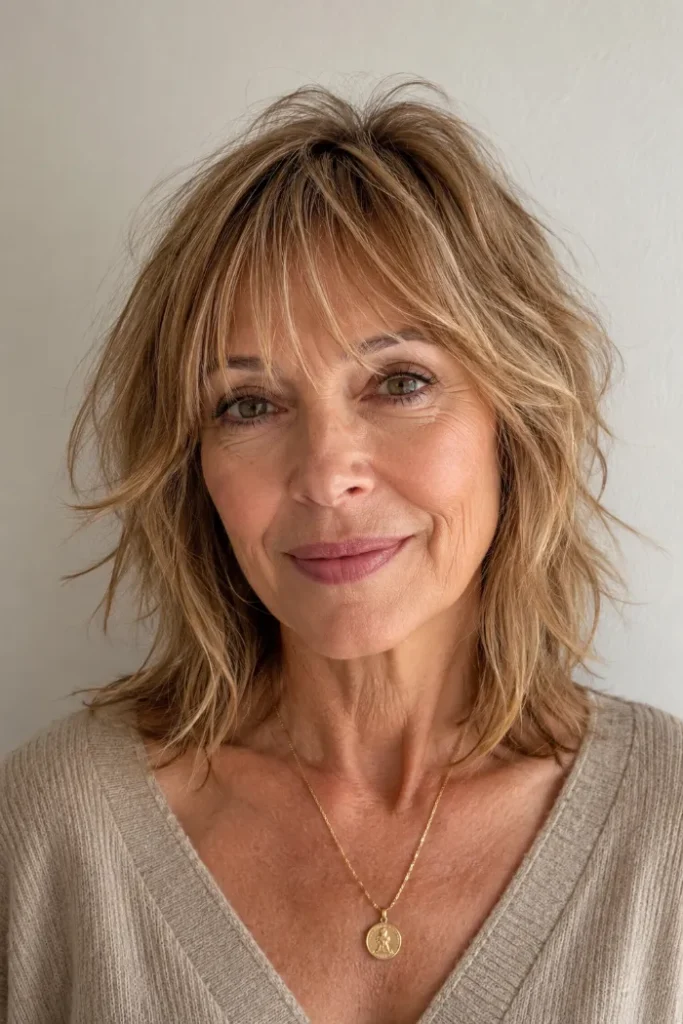
This shoulder-skimming blonde shag has a much softer layer pattern than a traditional choppy shag. The interior movement is subtle, with wispy pieces around the cheekbones and jaw rather than dramatic short layers everywhere. Fine, feathered bangs skim the forehead, and the slightly tousled ends give the haircut texture while the lower outline still reads as reasonably full.
Ask your stylist for subtle internal or invisible layering and only a small amount of weight removal through the ends. The goal is movement without obvious gaps between sections. Keep the fringe airy and narrow so too much hair isn’t taken from the front, then style with a light texturizing mist instead of a heavy cream.
4. Low-Maintenance Air-Dried Shag
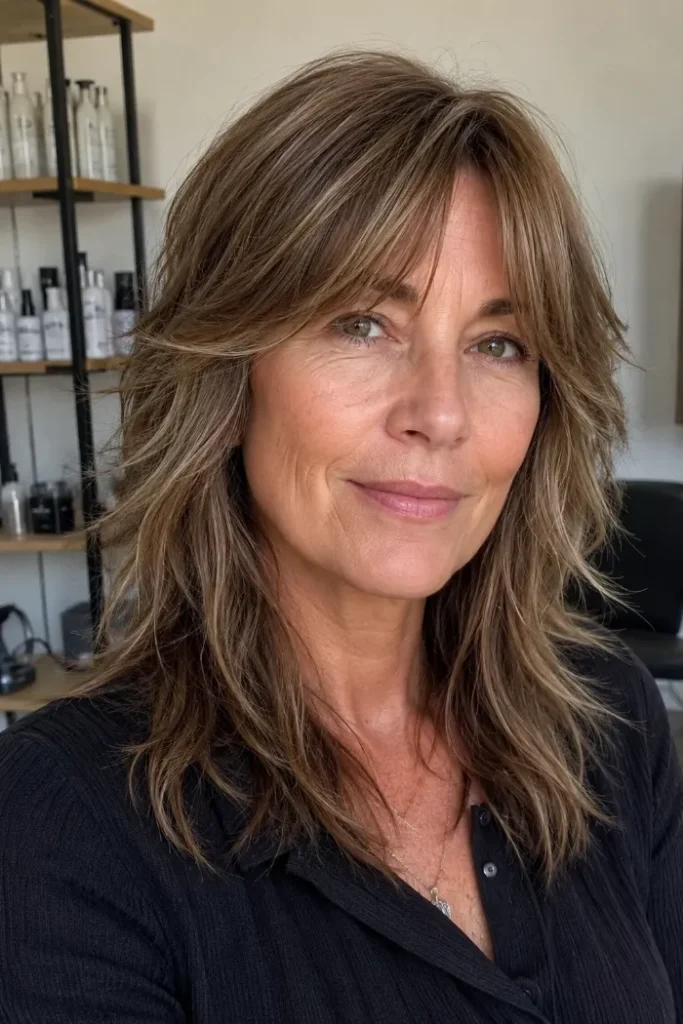
This longer medium shag has an intentionally relaxed finish, with natural-looking bends and irregular separation instead of crisp blow-dried feathering. The layers are concentrated around the face and through the lower half, while the crown stays relatively soft. Long curtain pieces skim the cheekbones, and the slightly uneven wave pattern is what gives this cut its easy, lived-in personality.
Ask your stylist to shape the haircut around your natural texture and keep the shortest layers long enough to air-dry without sticking out. If your ends are delicate, request minimal thinning at the perimeter. At home, scrunch in a small amount of lightweight mousse or foam and let the hair dry with as little handling as possible.
5. Medium Shag With Bottleneck Bangs
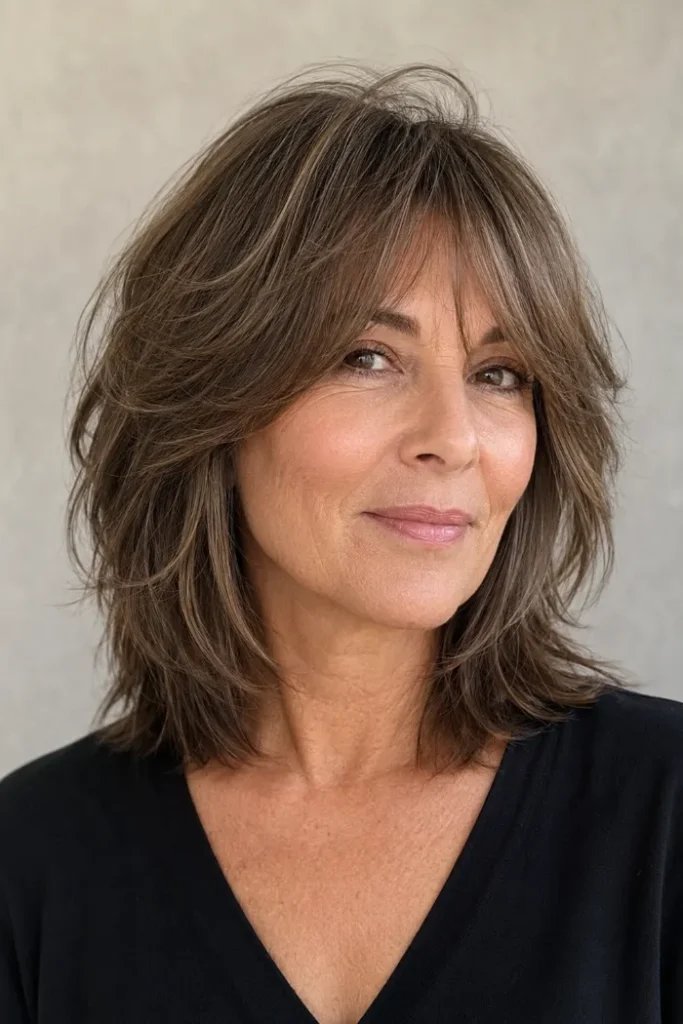
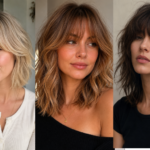
This brunette shag has a rounded, shoulder-grazing silhouette with bottleneck-style bangs that sit shorter near the center and lengthen toward the cheekbones. The side layers are soft and curved rather than sharply disconnected, which gives the cut plenty of movement without looking shredded. I especially like the fuller lower section because it balances the lighter, airy movement around the face.
Ask your stylist for a narrow bottleneck fringe that gradually connects into cheekbone-length layers. Keep the perimeter fairly strong, especially if your hair tends to look transparent at the ends. A small round brush can curve the fringe softly under, while a larger brush through the sides will create that loose, rounded sweep.
6. Medium Shag With Soft Crown Volume
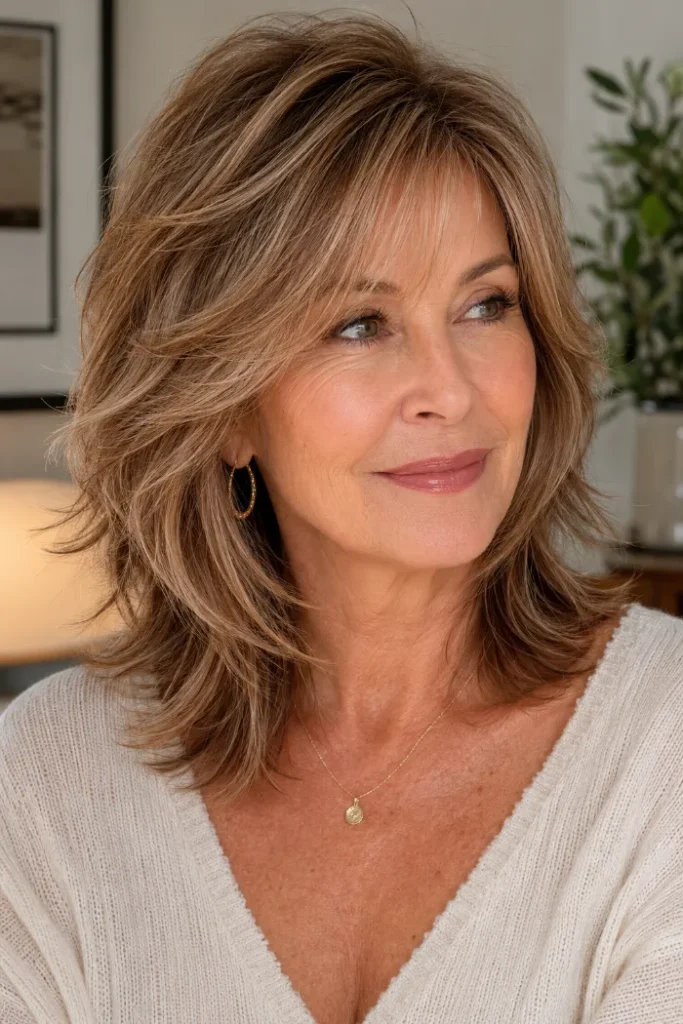
This warm bronde cut gets much of its impact from gentle lift through the crown and sweeping layers around the cheekbones. The fringe is long and airy, blending directly into the sides, while the shoulder-length ends are feathered outward. Because the volume sits higher on the head instead of relying on very bulky ends, the silhouette feels light but still nicely balanced.
Ask your stylist to create controlled crown layers that are short enough to lift but long enough to avoid a spiky finish. Keep the lower layers more elongated so the cut doesn’t lose too much density. When styling, concentrate root mousse near the crown and lift that area away from the scalp while blow-drying.
7. Modern Wolf Shag for Fine Hair

This blonde wolf-inspired shag has more noticeable separation than the softer styles in this roundup. Wispy bangs fall across the forehead, shorter layers build texture around the cheeks, and the lower sections flick outward around the neck and shoulders. The layering is still fairly blended, though, so you get that wolf-cut energy without an extreme difference between the top and bottom.
Ask your stylist for a softened wolf shape with modest crown layering rather than a dramatically short top section. Fine hair can lose density quickly if the contrast is too aggressive, so keep enough length through the back and perimeter. Use a tiny amount of dry texture spray to separate the ends after styling.
8. Piecey Shag With Blunt-Looking Ends

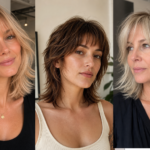
This brunette shag is a smart example of combining texture with a stronger-looking base. The upper layers are tousled and piecey, especially around the temples and cheekbones, while the shoulder-level perimeter has a noticeably denser appearance. A soft, fragmented fringe brings movement across the forehead without feeling heavy, and the irregular surface texture keeps the shape from looking too bob-like.
Ask your stylist to leave the bottom inch or two relatively solid and create most of the shaggy texture above it. If your hair is especially fine, avoid having the very ends heavily point-cut. A light wax mist or texture spray applied sparingly to the mid-lengths can define those separated pieces without thinning the visual outline.
9. Polished Shag With Beveled Layers

This medium brunette shag has a smoother, more refined finish, with curved layers that bevel inward and outward rather than looking deliberately messy. The side-swept fringe flows into cheekbone-length pieces, while longer sections frame the jaw and neck. The layering creates shape through the sides but leaves plenty of length underneath, which gives the haircut a soft, substantial finish.
Ask your stylist for blended, beveled layers with very little aggressive texturizing at the bottom. Mention that you want the front to sweep across the forehead and connect smoothly into the cheek area. At home, a round brush and lightweight heat protectant will help emphasize the curved layer pattern without needing lots of finishing product.
10. Rounded Medium Shag With Lifted Crown

This softly rounded bronde shag sits between a layered bob and a traditional medium shag. The crown has visible lift, the sides curve around the cheek and jaw, and the perimeter finishes around the upper shoulders. Long, airy fringe pieces break across the forehead, while the overall shape stays smooth and full rather than heavily separated or razor-thin.
Ask your stylist for gentle graduation through the back and crown to create that rounded lift while keeping the outer perimeter intact. The face-framing layers should blend into the sides rather than forming very short pieces. If your roots fall flat, dry the crown in the opposite direction first, then settle it into place.
11. Shaggy Lob With Soft Graduation

This cool blonde lob keeps a clean collarbone-length base while adding just enough shaggy movement through the sides. The front is opened by long curtain pieces that fall from around eye to cheek level, and the ends flip gently outward. I like this option if you want a shag influence without committing to a highly choppy or dramatically layered haircut.
Ask your stylist for a lob-length perimeter with soft graduation rather than lots of short disconnected layers. Keep the front pieces long enough to tuck or sweep away from your face on low-effort days. A quick blow-dry with a large round brush can add bend at the ends while keeping the base looking dense.
12. Shoulder-Length Shag With Soft Arched Bangs

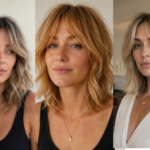
This honey-blonde shag has a gently feathered shoulder-length shape and a soft fringe that arcs across the forehead before blending toward the temples. The cheek and jaw layers sweep outward, while the lower sections keep enough length to sit against the shoulders. The overall effect feels light and flattering without the extremely wispy ends you sometimes see in shaggier cuts.
Ask your stylist for an arched fringe that stays slightly longer toward the outer corners, then connect it into cheekbone-level face framing. Preserve some weight beneath the jaw so the ends don’t disappear. When blow-drying the bangs, move them from side to side first before curving them lightly into their final shape.
13. Side-Swept Medium Shag

This bright blonde shag uses a sweeping front section and lots of airy side layering to create movement around the face. The top has visible lift, while longer pieces skim the jaw and shoulders. Several layers flip away from the face, which gives the cut a lively feathered finish. The light color also makes the separated layer pattern especially easy to see.
Ask your stylist to keep the front long enough for a true side sweep instead of cutting a short conventional bang. Have the layers travel gradually from cheekbone to shoulder so there aren’t big gaps in the silhouette. Style the front diagonally across the forehead, then turn the side layers outward with a round brush.
14. Soft Collarbone Shag With Curtain Fringe
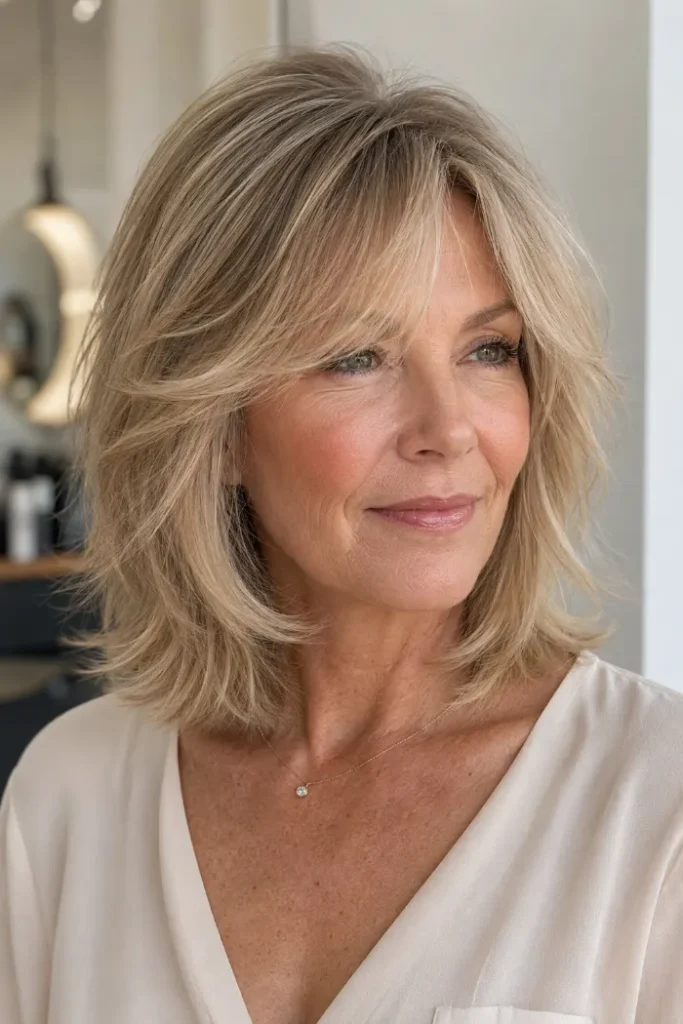
This sandy blonde collarbone shag is softly layered from the cheekbones downward, with a full curtain fringe that opens around the eyes. The lower sections have a gentle outward bend, but the cut still looks relatively smooth rather than heavily tousled. I like the balance here because the face frame creates movement while the shoulder-length base remains visually substantial.
Ask your stylist for curtain bangs that are short enough to open around the eyes but long enough at the corners to blend into the cheek layers. Keep the back layering restrained if your density is low. A large round brush through the front will give you the curved sweep without requiring much product.
15. Soft Razor Shag With Face-Framing Layers

This longer brunette shag has a more tapered, feathery finish through the face frame and lower lengths. Wispy fringe softens the forehead, while layers around the cheekbones, jaw, and collarbone create a narrow cascade of movement. The ends look light and separated, but the longest sections are still substantial enough to keep the haircut from appearing overly thin.
Ask your stylist for soft razor detailing only if your hair can tolerate it, and request that most of the density stay in the longest layer. The face frame can be lighter and more tapered than the back. If your ends are already fragile, ask for point-cutting instead of extensive razor work to achieve a similar softness.
16. Soft Shag With Long Curtain Bangs

This brunette medium shag keeps the fringe long and sweeping, which makes it a nice option if you don’t want bangs sitting directly on your forehead. Layers begin around the cheekbones and continue through the sides, creating soft outward bends near the jaw and shoulders. The crown stays smooth, so the haircut feels more relaxed and wearable than an aggressively layered shag.
Ask your stylist for long curtain bangs that can be parted in the middle or pushed to either side. Let the shortest side layers begin around the cheekbones, then lengthen them gradually toward the shoulders. This is also a good shape to request if you want your fringe to grow out gracefully between appointments.
17. Textured Shag With Flicked Ends
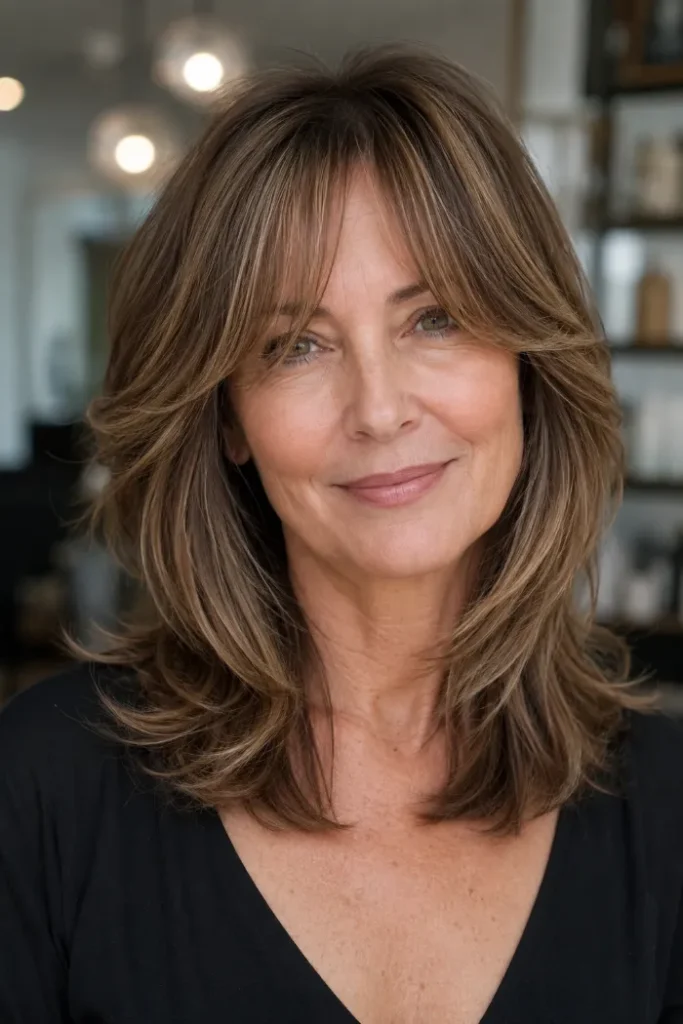
This shoulder-length brunette shag gets its personality from the little outward flicks around the jaw and neckline. The fringe is soft and lightly separated, and the side layers create a rounded shape before kicking outward at the ends. There’s enough texture to feel shaggy, but the longest pieces stay relatively uniform, which helps maintain a fuller-looking lower edge.
Ask your stylist to keep the perimeter around shoulder length and add layered movement mainly through the cheek and jaw area. The ends should be light enough to flip but not heavily thinned. To recreate the finish, turn selected sections outward with a round brush instead of curling every piece in exactly the same direction.
18. Tousled Medium Shag With Wispy Bangs

This softly tousled brunette shag has wispy center bangs and long layers that curve around the face before falling toward the collarbone. The side sections have plenty of movement, but they aren’t cut into extremely short or disconnected pieces. I like the slightly undone finish because it gives fine hair texture while still allowing the overall silhouette to look soft and touchable.
Ask your stylist for a light fringe with small gaps between the pieces and longer side layers that begin near the cheekbones. Avoid over-texturizing the lower third if you need to preserve density. For styling, use a small amount of volumizing foam, rough-dry the roots, then bend a few face-framing sections with a brush.
19. Wavy Shag With Delicate Face Frame

This light blonde shag has a naturally wavy, airy finish with softly bent layers sitting between the jaw and shoulders. The fringe is delicate and broken up rather than dense, and shorter face-framing pieces melt into the waves along the sides. The texture gives the silhouette width and movement, while the irregular bends keep everything from looking too styled or rigid.
Ask your stylist to cut the layers with your natural wave pattern in mind and keep the fringe light enough to move with the rest of the haircut. Avoid removing too much bulk from areas that already feel sparse. A lightweight curl foam scrunched into damp hair can encourage bend without weighing fine strands down.
20. Wispy French Fringe Shag

This blonde shag pairs a delicate French-style fringe with relaxed shoulder-length layering. The bangs fall softly across the forehead in fine, separated pieces, while the sides are lightly feathered around the cheekbones and jaw. The lower ends look intentionally airy and textured rather than sharply blunt, giving the haircut a casual finish that works nicely with a little natural movement.
Ask your stylist for a wispy fringe that stays narrow and light rather than pulling a large section of hair forward. Have the side pieces gradually lengthen into the shoulder-level layers so the fringe feels connected. If you want an easy finish, use dry shampoo or texture spray at the roots and finger-style the ends.
FAQs About Medium Shags for Thin Fine Hair
Can a shag haircut work if my hair is both fine and thin?
Yes, but I’d be careful about how much hair is removed. Fine strands can benefit visually from movement and crown lift, while genuinely low-density hair usually needs a stronger perimeter. Ask for longer or more selective layers instead of automatically choosing a very choppy shag with heavily thinned ends.
What type of bangs are easiest with a medium shag?
Long curtain bangs are usually the most flexible because you can part them, sweep them to the side, or let them grow into your face frame. Wispy bangs also work well when you want forehead coverage without using a thick section of hair. Choose based on how often you’re willing to style and trim them.
Should fine hair be razor cut for a shag?
Not necessarily. Razor cutting can create beautiful soft separation, but very fine or fragile ends may look thinner if too much density is removed. Tell your stylist you want movement while preserving the lower outline. Scissor layering, point-cutting, or subtle internal layers may be a better match if your ends already feel sparse.
How do I add volume to a medium shag without weighing fine hair down?
Start with lightweight products and place them strategically. A small amount of volumizing mousse or foam at the roots is often more useful than coating every strand with cream. Blow-dry the crown with lift, use a round brush only where you want bend, and finish with a light dry texture spray if you need separation.
Choosing the Right Medium Shag for You
If your hair is very fine or your ends already look sparse, I’d start with one of the softer collarbone shags, graduated lobs, or styles with a stronger perimeter. If you have a little more density or natural wave, you can usually get away with more visible separation, wispy layering, and that tousled shag finish.
Then choose the detail you actually want to style. Curtain fringe, flicked ends, crown lift, and natural waves all create a different mood and a different morning routine. The most flattering haircut is the one that gives you the movement you want without asking you to fight your natural texture every day.