
How to Heal Yourself When Life Feels Heavy (And You’re Tired of Pretending You’re Fine)
Have you ever reached that weird point where nothing is technically on fire, yet you feel like you are carrying an invisible backpack full of bricks? You are tired, touchy, overthinking everything, and one tiny inconvenience could absolutely become the final straw.

If you are searching for how to heal yourself, start here: healing is not a makeover montage. You do not need a brand-new morning routine, a personality transplant, or a perfectly curated life by Monday. You need small, honest ways to feel safe in your own life again.
That might mean recovering from heartbreak, grief, burnout, a rough relationship, chronic stress, or simply a season that took more out of you than you realized. The details are different for everyone, but the goal is similar. You want to stop surviving every day on autopilot and start feeling like yourself again.
And yes, you can support a lot of that healing yourself. You can change how you rest, eat, move, think, connect, and protect your energy. But self-healing is not a replacement for medical care or therapy when you need it. Think of this as the everyday work of coming back to yourself, not a demand to handle everything alone.
Start with your body, because your brain is not floating in space
When life hurts, we love trying to think our way out of it. We analyze the text messages, replay the conversation, make a new plan, make another new plan, then wonder why we still feel awful.
Your body usually needs care before your mind needs another lecture. Start ridiculously small. Stretch for ten minutes. Walk around the block. Put on headphones and do a gentle yoga flow in your living room. The point is not to punish yourself into becoming fitter. It is to remember that your body is still yours, and it deserves attention that is not based on criticism.

Then look at the basics you tend to skip when you are overwhelmed. Have you eaten an actual meal? Had some water? Slept enough? Gone outside? Taken your medication as prescribed? These things sound almost too ordinary, which is exactly why they get ignored when we are waiting for one dramatic breakthrough.
A bowl with greens, vegetables, avocado, and a satisfying protein is not magically going to fix your life. It can, however, be one quiet way of telling yourself, “I am worth feeding properly today.” That is the energy we want.

Healing gets much harder when your body is running on four hours of sleep, iced coffee, and pure emotional chaos. You do not have to become a wellness influencer. Just make the next caring choice easier than the next neglectful one.
Let yourself feel the ugly part before you try to make it pretty
There is a version of self-improvement that is basically emotional hide-and-seek. Stay busy. Stay positive. Book the facial. Clean the apartment. Make a vision board. Do anything except admit that you are hurt.
But sometimes healing looks like crying on the kitchen floor with your hair a mess and zero interest in turning the moment into a lesson. That does not mean you are going backward. It means something in you finally has enough room to be felt.

Try naming what is actually happening instead of judging yourself for it. “I feel rejected.” “I am furious.” “I am lonely.” “I am scared this will happen again.” Specific feelings are much easier to work with than one giant cloud labeled “I am a mess.”
If your thoughts are looping, write them down. Not for pretty handwriting. Not for an aesthetic journal spread. Write the sentence you keep avoiding. Ask yourself what you need today, not what your five-year plan should look like. A rainy car, a quiet notebook, and ten honest minutes can sometimes tell you more than another hour of overthinking.
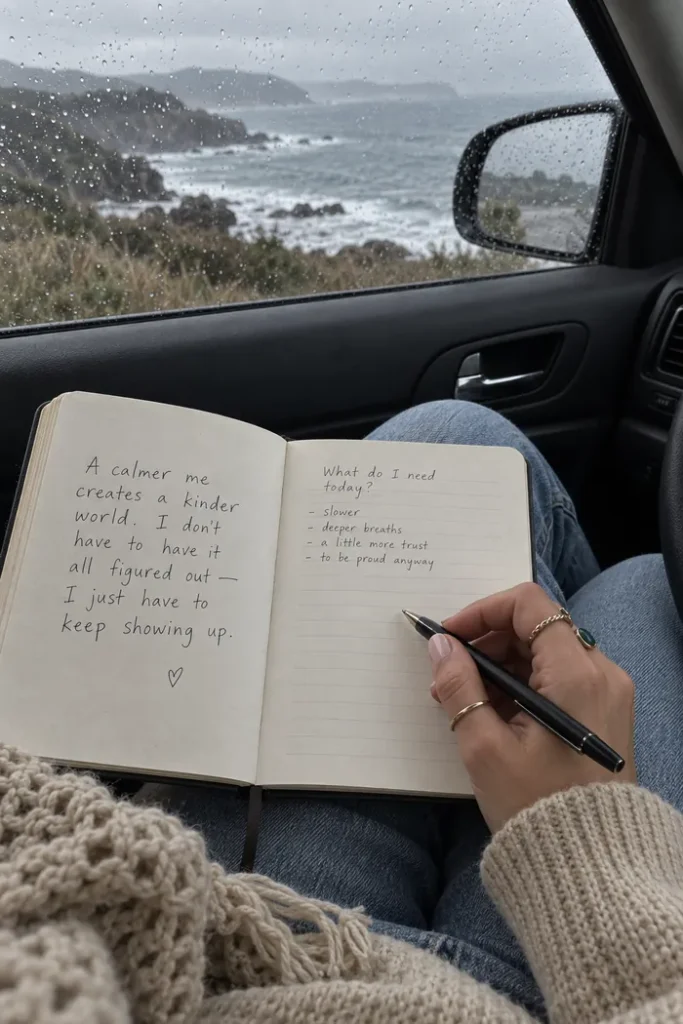
One useful prompt is: “What am I trying not to feel right now?” Another is: “What would make today five percent gentler?” Tiny questions tend to get more honest answers than “How do I fix my entire life?”
Make comfort honest, not numbing
Comfort is part of healing. Numbing is different. The tricky bit is that they can look very similar from the outside.
A sheet mask, your favorite playlist, clean sheets, and an early night can be genuine care. A drink can be part of a relaxed evening for some adults, but if you notice you are reaching for alcohol mainly to shut off painful feelings, that is worth paying attention to. Healing asks, “Does this help me feel supported afterward?” Numbing usually says, “Please make me not feel anything until tomorrow.”

Choose comfort that leaves you feeling more cared for, not more disconnected. Shower. Moisturize. Put on fresh pajamas. Make tea. Watch the silly comfort show. Go to bed at 9:30 if that is what your nervous system is begging for. You are allowed to be boring while you recover. Frankly, boring can be luxurious.
Change the way you talk to yourself when nobody else is listening
You cannot insult yourself into becoming secure. If your inner voice sounds like the meanest person you have ever met, healing needs to include changing that conversation.
Affirmations can help, but they work better when they do not feel like lies printed in bubble letters. If “I am wildly confident and unstoppable” makes your brain roll its eyes, start with something believable: “I can handle this moment.” “I am learning to trust myself.” “I do not have to earn rest.” “I am allowed to make a different choice.”

Put the words somewhere you will actually see them. Your mirror works. So does your phone wallpaper, the inside of your wardrobe, or a note on your desk. The goal is not to hypnotize yourself into fake positivity. It is to interrupt the old script often enough that a kinder one starts feeling normal.
Create a calm-down ritual your body recognizes
When your system has been on high alert for a while, you need repetition more than drama. Pick a few cues that tell your body the day is slowing down. Dim the lights. Put your phone in another room. Sit on the floor. Breathe slowly. Listen to something soothing. Do it often enough that the ritual starts to feel familiar.
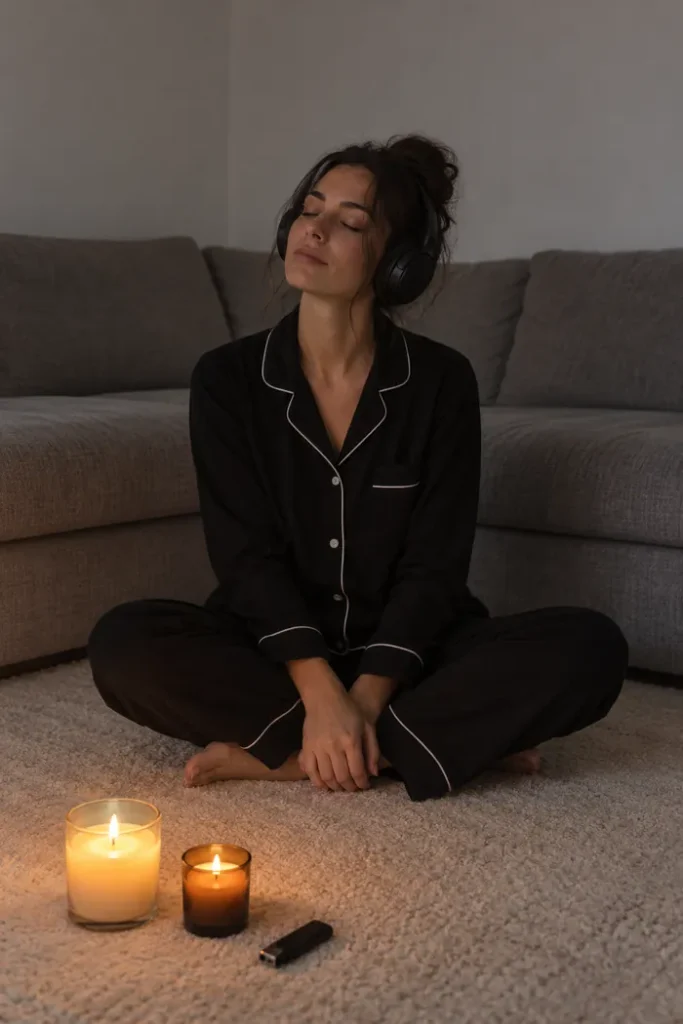
You do not need to be “good” at meditation. You are not being graded on how empty your mind is. If you sit cross-legged in your pajamas for five minutes and notice that your thoughts are sprinting laps, congratulations, you noticed. That is already more awareness than scrolling until midnight because silence felt uncomfortable.
You can also use sensory rituals to mark a reset. Open a window, tidy one small surface, light a candle, play soft music, or use a scent you associate with calm. If you burn sage or any other herb, think of it as a personal ritual, not a medical cure, and use proper ventilation and fire safety. The magic is really in the pause and intention.

Rest before you diagnose your entire life
Exhaustion is dramatic. It can make your job feel impossible, your relationship feel doomed, your body feel wrong, and your future look suspiciously bleak. Sometimes the smartest thing you can do is stop making major conclusions while you are running on empty.

Rest is not something you earn after becoming productive enough. It is maintenance. Take the nap. Cancel the nonessential plan. Sit on the sofa in fuzzy slippers and stare at the ceiling for a minute. Let your brain be unstimulated. You are a person, not a browser with forty-seven tabs that somehow never crashes.
And make room for tiny pockets of nothing. A warm drink by the bed. Ten quiet minutes before anyone needs you. Sitting on the floor because the floor is weirdly comforting. Healing often happens in these unimpressive little pauses, not only in the moments that look transformative on camera.

Stop trying to heal in total isolation
Being independent is cute until it becomes “I will carry every hard thing alone and then wonder why I am exhausted.” You need people. Not a crowd, not constant plans, just a few safe humans who make you feel less like you have to perform.
Invite a friend over for breakfast. Call the person who lets you be quiet without making it weird. Sit in someone’s kitchen and drink juice while you talk about absolutely nothing important. Connection does not always have to look like a deep healing conversation. Sometimes laughter is the conversation.

Also, please stop turning every comforting moment into a wellness project. Order the pizza. Sit on the rumpled bed. Laugh until the heavy thing loosens its grip for five minutes. A balanced life has room for vegetables and pizza, journaling and memes, deep conversations and complete nonsense.

The people you heal around matter too. Pay attention to who leaves you feeling steadier and who regularly leaves you confused, small, guilty, or drained. Healing sometimes means repairing a relationship. Other times it means creating distance, setting a boundary, or accepting that access to you is not automatic.
Go somewhere your brain can unclench
There is something deeply helpful about getting out of the room where you have been thinking the same twelve thoughts. Go sit under a tree. Read by water. Walk through a park without trying to hit a step goal. Take your coffee outside. Let your eyes look farther than a phone screen for a while.

Nature will not erase grief, fix a breakup, or solve your finances. It can give your mind a different pace. That matters. Healing needs moments where you are not actively solving yourself.
Build a life you do not constantly need to recover from
This is the part nobody can do for you. Once you feel a little steadier, look at what keeps hurting you on repeat.
Maybe you say yes when you mean no. Maybe you keep checking the profile that ruins your mood. Maybe you stay available to people who only call when they need something. Maybe every week is overscheduled, every night ends with your phone in your face, and every morning begins in a panic.
You do not have to redesign everything at once. Pick one pattern. Make one boundary. Delete one shortcut to the thing that sends you spiraling. Ask for one form of help. Create one routine that makes tomorrow easier. Healing becomes real when your daily life starts matching the peace you keep saying you want.
Remember that healing is not the same as never hurting again
A healed version of you can still have a bad day. You can miss someone you know is wrong for you. You can get triggered by something you thought you were “over.” You can need reassurance. You can cry. None of that automatically means you are back at the beginning.
Progress often looks less cinematic than we expect. You recover faster after a hard moment. You stop chasing closure from the person who hurt you. You notice a trigger before it controls the whole day. You feed yourself, call a friend, take a shower, go to sleep, and try again tomorrow.
That is how to heal yourself in real life. Not perfectly. Not all at once. Just with enough small acts of honesty, care, rest, connection, and self-respect that one day you realize you are no longer living in the exact same emotional place.
And when self-healing is not enough, get support
If you are dealing with persistent depression, severe anxiety, trauma symptoms, substance dependence, an eating disorder, thoughts of self-harm, or a relationship where you do not feel safe, please do not make “handling it yourself” the goal. A qualified mental health professional, doctor, support service, or trusted person can help you carry what is too heavy to carry alone.
There is no prize for struggling in private. The goal is not to prove how strong you are. The goal is to build a life that feels like yours again, one caring choice at a time.