How to Dress When You Have No Waist: Easy Styling Tricks That Make Outfits Look More Defined
If your waist does not naturally dip in very much, you have probably had this exact dressing-room moment: the outfit is cute, the fit is technically fine, and somehow the whole thing still looks a little straight up and down. Annoying? Yes. A reason to give up on half your wardrobe? Absolutely not.

Learning how to dress when you have no waist is really about proportion. You want to give the eye a clear place to pause around your middle, then create a little contrast above and below it. That can come from a wrap, a tuck, a higher waistband, a flare, a peplum, strategic ruching, or even the way you layer a cardigan.
And no, you do not need to cinch yourself into discomfort to make any of this work. The chicest version is subtle. Think definition, not compression. Here is how to make your clothes do the shaping for you while still looking relaxed, modern, and very much like you.
Start by giving the eye a clear focal point at your middle
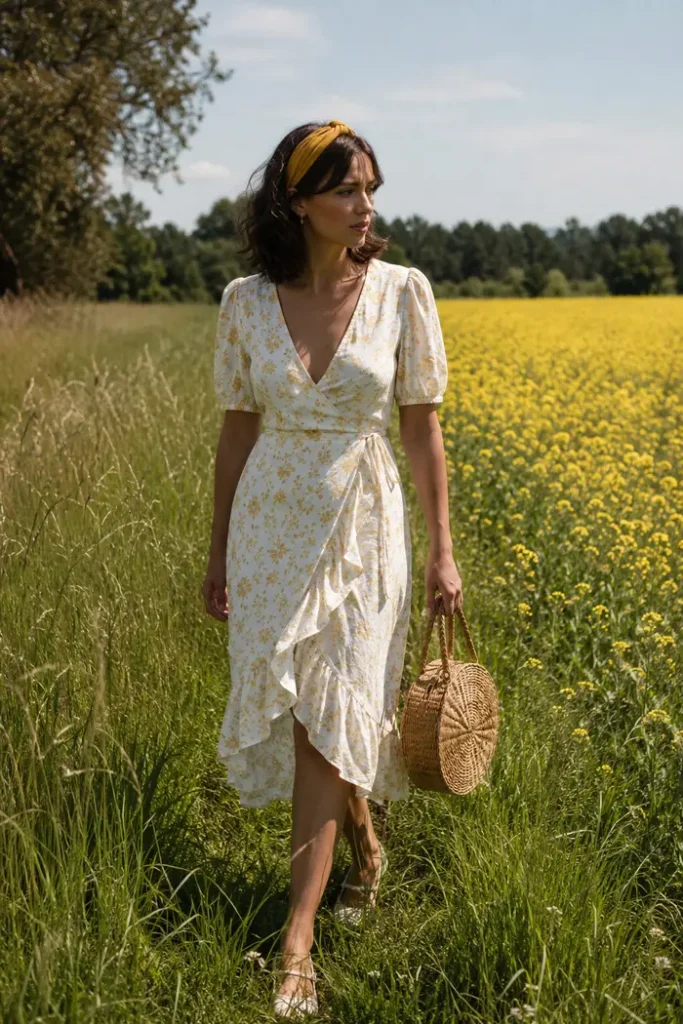
A wrap dress is such an easy win because the garment literally draws the fabric inward. In this floral version, the V-neckline brings the eye toward the center, the side tie marks the waist, and the soft ruffled skirt moves away from the body below it. Even the puff sleeves help by adding a little volume up top, which makes the middle look more defined by comparison.
This is the part people miss: your waist does not have to be dramatically smaller than your bust and hips for an outfit to create that impression. You just need a visible change in direction. Crossover fronts, waist ties, princess seams, shaped bodices, and skirts that open out from the body all create that little visual “in and out” moment.
Use tucks, waistbands and belts to break up a straight silhouette
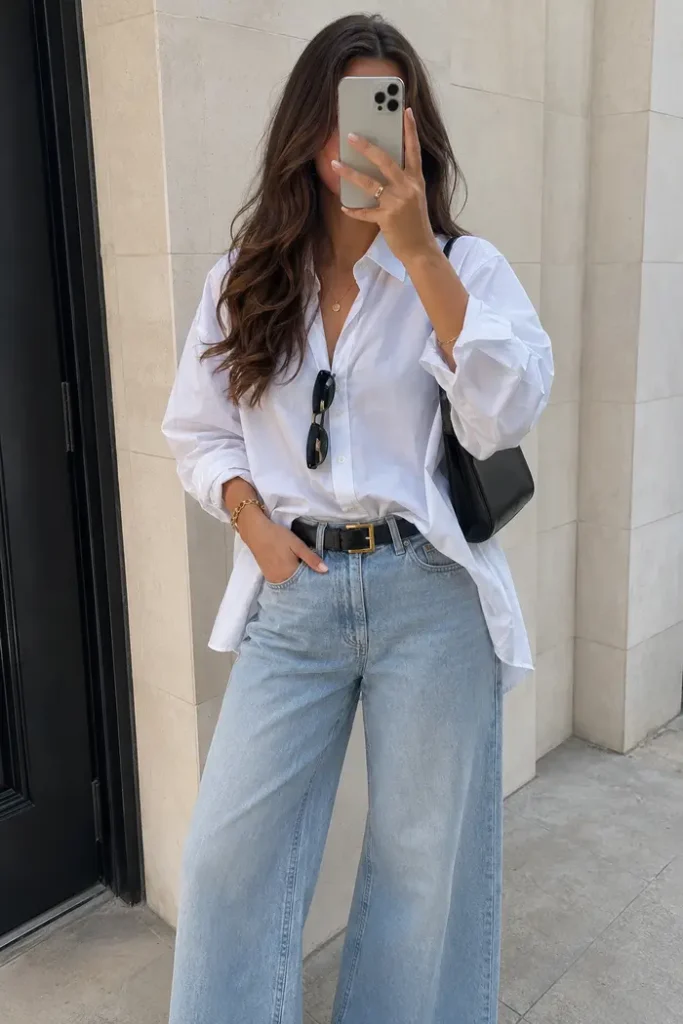
The front tuck is tiny, free, and honestly a little bit magical. A loose white shirt worn fully untucked can fall in one long line from shoulder to hip. Tuck only the front into high-rise jeans, though, and suddenly the waistband becomes visible, the legs look longer, and your outfit has a center point. The relaxed fabric at the sides keeps it from feeling too neat or corporate.
If you love oversized button-downs, this is usually the easiest way to keep them without letting them swallow your shape. Leave some looseness through the torso, show a little waistband in front, then let the back fall naturally. You get definition without losing that effortless borrowed-shirt vibe.

For a sharper version, go for a fuller tuck with a high-rise jean. This look keeps the blouse soft and slightly blousy while the waistband sits clearly at the middle. The slim black belt makes that dividing line even more intentional, and the pointed shoes plus structured bag stop the outfit from feeling basic.
High-rise bottoms are especially useful when your natural waist is not very pronounced because they decide where the waistline of the outfit will be. Just pay attention to fit. The waistband should sit smoothly rather than pinch, gape, or fold, because a clean line creates far more definition than a painfully tight one.
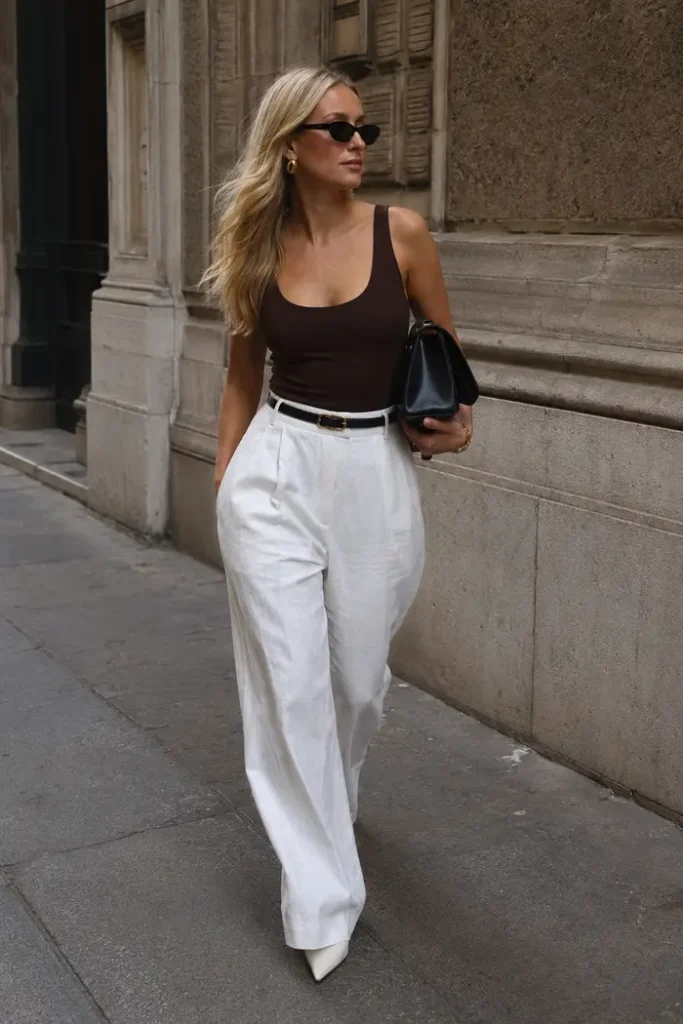
Belts work best when the rest of the outfit gives them something to work with. Here, the fitted chocolate tank keeps the upper half clean, while the pleated white trousers add volume below the waistband. That contrast creates shape around the middle before the belt even enters the chat. The narrow black belt simply underlines it.
If a wide statement belt makes you feel cut in half, skip it. A slim belt that coordinates with your shoes, bag, or top usually looks more polished and less like you are trying to manufacture a waist with accessories alone.
Let the silhouette create curves for you
Fit-and-flare shapes are basically built-in proportion

A fitted bodice plus a skirt that opens out below the waist does the visual work for you. This pale yellow ribbed midi hugs the upper body, narrows at the middle, then floats away into an A-line shape. The square neckline also adds structure across the shoulders, so the waist looks smaller through contrast rather than through squeezing.
If you are shopping for one-and-done dresses, look for fit-and-flare cuts, skater shapes, softly structured A-lines, or anything with a clear seam around the natural waist. They are wonderfully low effort because the shape is already built into the garment.
Soft drape can be more flattering than stiff structure
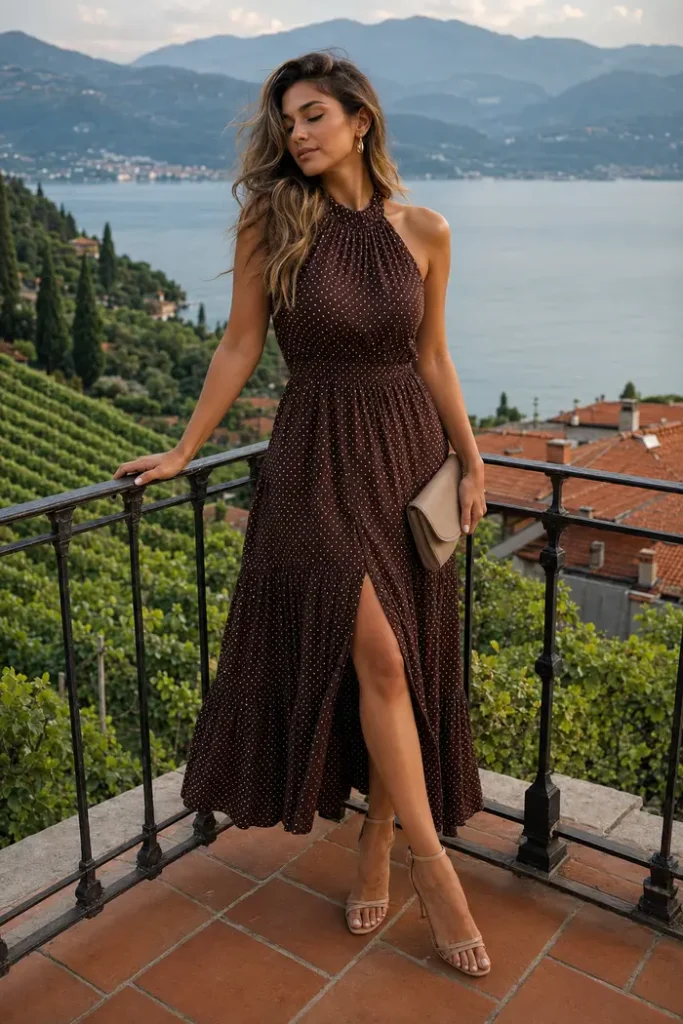
There is also a softer route to waist definition. This brown polka-dot halter dress gathers neatly through the middle, then falls into a fluid skirt with a slit. Nothing looks rigid, yet the body still has shape because the fabric changes direction at the waist and keeps moving below it.
That is why fabrics matter so much. Super-stiff pieces can stand away from the body and make a straighter torso look even boxier, while paper-thin cling can feel unforgiving. Fabrics with a little weight and movement tend to skim, gather, and drape in a way that creates softer curves.
Peplum gives the hips a little extra oomph
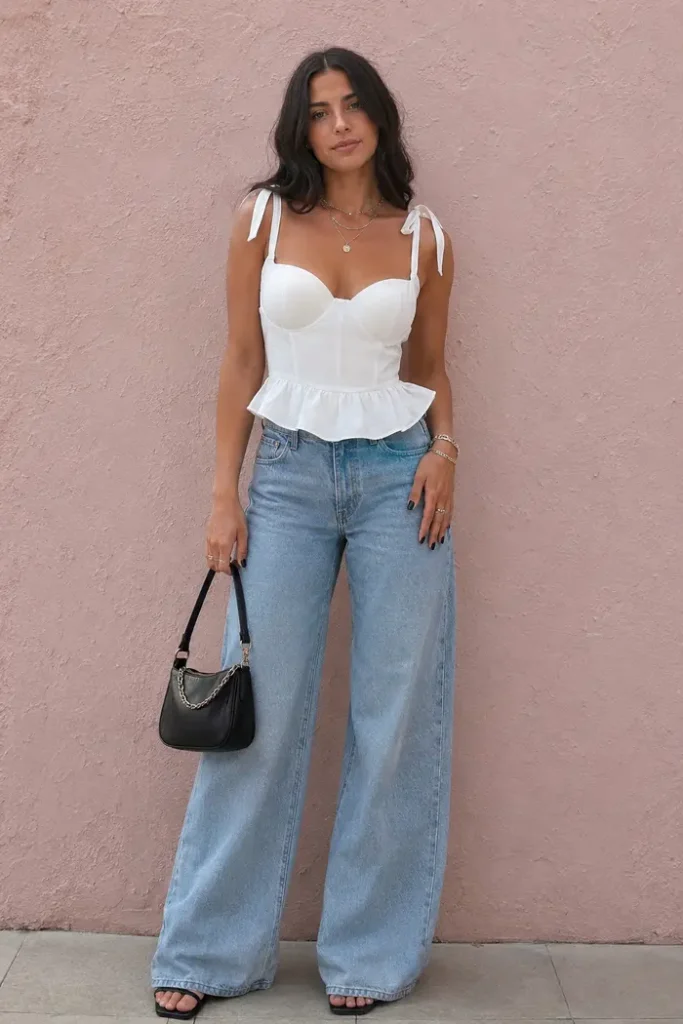
Peplum is one of those details that makes sense the second you see it on. The fitted white top pulls in through the torso, then the little ruffled hem kicks out over the jeans. That extra width just below the waist creates a curvier outline without requiring a dramatic natural waist underneath.
The bow straps and sweetheart-style bodice also add feminine interest up top, while the wide-leg jeans keep the lower half balanced. If traditional peplum feels too dressy for you, look for tops with a subtle flared hem, side pleats, a shaped corset seam, or a cropped jacket that ends right where the hips begin to widen.
Vertical seams keep your torso long while the waist stays defined

Do not underestimate seam placement. This denim sundress has a fitted bodice with long vertical lines that guide the eye up and down, then a defined waist and an A-line skirt. The result feels clean and elongated, not chopped into obvious sections.
Button plackets, vertical darts, center seams, long V-necks, and panels can all do something similar. They are especially handy if you want waist definition but do not love a belt sitting across your middle. The garment creates shape quietly, which is very chic and very low maintenance.
Use color and texture as quiet optical tricks

An open dark cardigan over a lighter fitted top is such a smart example of using color placement instead of a tight fit. The navy knit creates two darker vertical columns at the sides, while the white crop top stays visible through the center. Add pale jeans and a visible waistband, and the whole outfit has length, contrast, and a defined middle without a single cinch.
You can copy this with a blazer, long vest, lightweight coat, or open shirt. Keep the outer layer darker than the center if you want a stronger narrowing effect, or stay tonal if you prefer something softer. Either way, leaving the layer open creates long lines that frame the torso instead of turning it into one solid block.
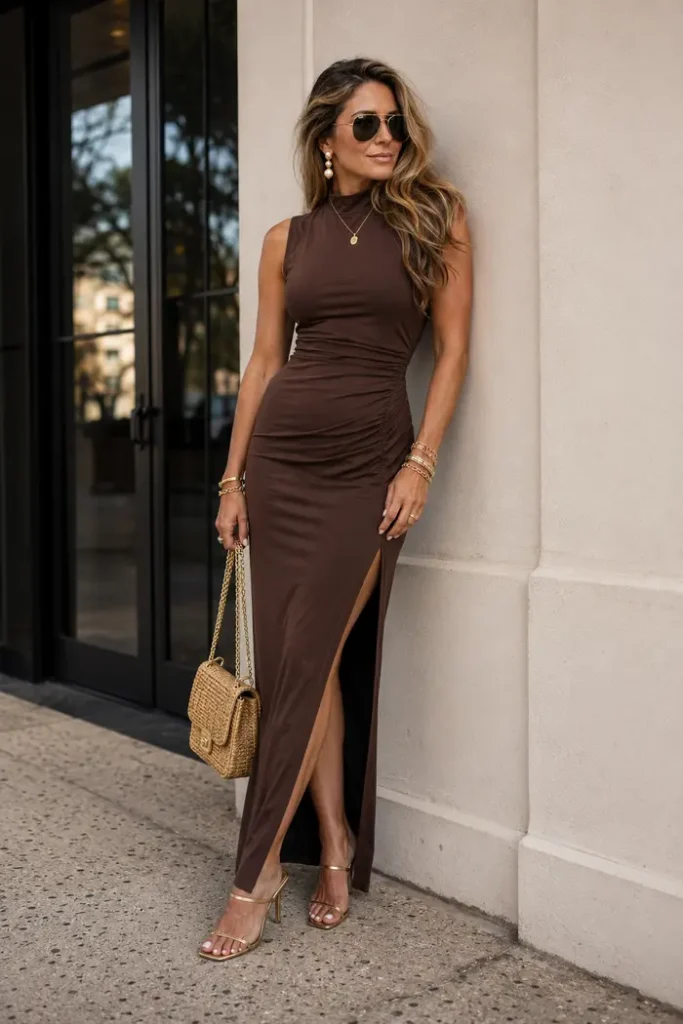
Ruching is another sneaky little styling genius. On this chocolate maxi, the gathering pulls toward the side of the waist and creates diagonal movement across the body. Your eye notices the folds and the side shaping instead of reading the torso as one straight line. The high neckline keeps the top sleek, while the slit adds movement lower down.
When trying ruched pieces, look for gathers that actually converge around the waist or side seam. Random bunching can add bulk, but intentional ruching acts almost like soft tailoring. It shapes through fabric rather than through stiffness.
Yes, you can still wear oversized clothes
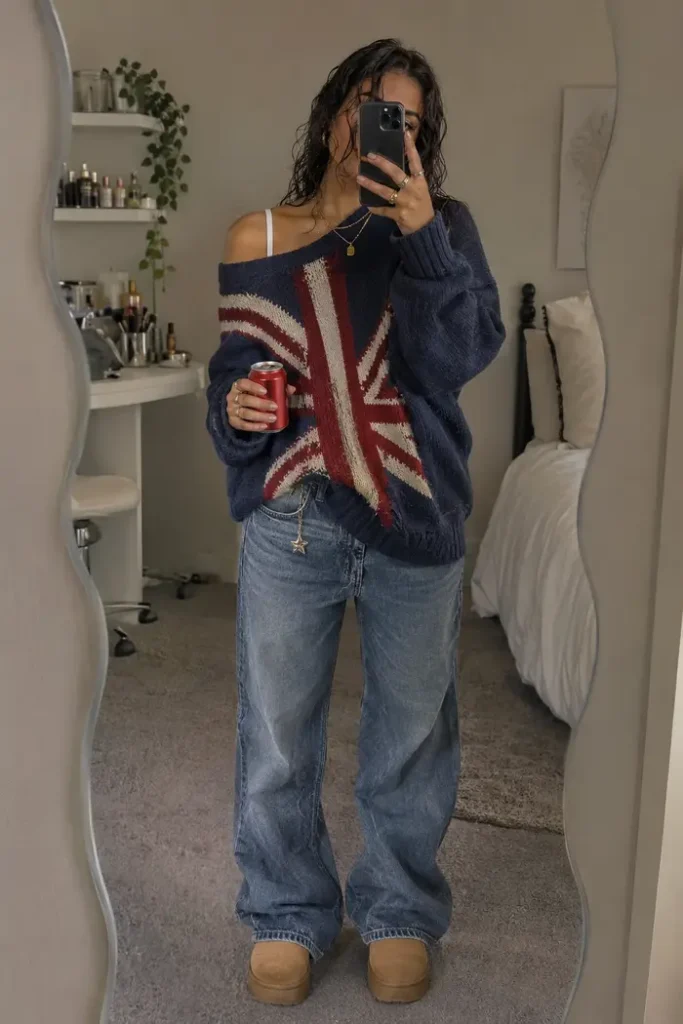
Please do not read all of this and exile every roomy sweater you own. Oversized clothes are fun, cozy, and sometimes exactly the mood. The only thing to know is that volume on top plus volume on the bottom naturally creates a straighter outline, so if your goal that day is more waist definition, give the outfit one small anchor.
In this relaxed sweater-and-jeans look, the off-shoulder neckline already breaks up the block of fabric and adds asymmetry. To create even more shape, you could tuck a tiny piece of the sweater into the waistband, push the sleeves up to show the wrists, swap the jeans for a slightly straighter cut, or add a fitted layer underneath that peeks out at the middle. One adjustment is enough. You do not need five tricks fighting for attention.
The fitting-room test that makes this so much easier
When an outfit feels boxy, stop staring at the mirror and wondering whether your body is the problem. Look at the lines of the clothes instead. Where does the top end? Is the waistband visible? Does anything pull inward at the middle? Is there a little more volume at the shoulder or hip to create contrast? Does the fabric skim, or does it stand straight away from you?
Usually, you only need to change one of those things. Tuck the shirt. Raise the waistband. Add a slim belt. Choose a skirt with more movement. Open the cardigan. Swap the shapeless top for one with seams or a peplum. Tiny proportion shifts can completely change how an outfit reads.
So, what should you actually reach for?
If you are rebuilding your closet with waist definition in mind, the most useful pieces are the ones that already contain shape: a wrap dress, a fitted-and-flared midi, high-rise jeans or trousers, a slim belt, a shaped button-down, a peplum or gently flared top, and an open cardigan or blazer that creates vertical framing. You do not need all of them. Pick the silhouettes that fit your actual life, then repeat the formula in different colors and fabrics.
And remember, learning how to dress when you have no waist is not about chasing an hourglass every single day. Some days you will want a defined middle. Other days you will want the giant sweater and baggy jeans because they are cute and comfortable. Both are style. The win is knowing how to change the proportion on purpose when you feel like it.
The bottom line
A less-defined waist does not need complicated fashion rules. Give your outfit a clear middle, build a little contrast above and below it, and let clever cuts do most of the work. Wraps, tucks, high-rise waistbands, flare, peplum, vertical seams, open layers, and ruching are all just different ways of creating the same visual idea.
Once you see that, getting dressed gets so much easier. You are not hunting for the “perfect” body shape. You are simply choosing the lines and proportions that make your outfit look intentional, balanced, and ridiculously good on you.
Related posts:
 How to Live a Soft Life: 9 Tiny Shifts That Make Everyday Life Feel So Much Better
 Slow Living Activities That Make Ordinary Days Feel So Much Better
 The That Girl Morning Routine That Actually Feels Doable (Even If You’re Not a Morning Person)
 How to Grow Thick Hair Without Turning Your Bathroom Into a Lab
