
How to Motivate Yourself When Your Brain Keeps Saying “Maybe Tomorrow”
Some days, you are ready to conquer the world before breakfast. Other days, replying to one email feels wildly disrespectful to your peace.

And that is exactly why waiting to “feel motivated” can keep you stuck for way longer than the actual task deserves. Motivation is lovely when it shows up, but she is not exactly famous for being punctual.
Figuring out how to motivate yourself is less about creating one huge burst of inspiration and more about making the next move feel doable. Clearer. Smaller. Slightly less annoying. The goal is not to become a productivity robot with a 5 a.m. alarm and seventeen color-coded habits. It is to make starting easier on the version of you who exists today.

Stop waiting for the mood to show up
One of the easiest ways to stay unmotivated is to make motivation the entry requirement. You tell yourself you will study when you feel focused, work out when you feel energetic, clean when you feel productive, or start the project when you finally get that magical “I have my life together” feeling.
But you do not need to feel wildly inspired to begin. You only need a first action that is small enough to do without a full internal board meeting.
Instead of asking, “How do I make myself want to do this?” try asking, “What is the easiest useful thing I can do next?” That question is so much less dramatic, and honestly, your brain may stop throwing a tantrum long enough for you to move.
Give yourself a starter move, not a giant assignment

Big tasks are very good at sounding exhausting before you have even touched them. “Work out for an hour” feels like a whole event. “Put on my sneakers and move for one song” feels almost too easy to argue with.
Do the same thing with whatever you are avoiding. Do not “study all afternoon.” Open the notes and review one page. Do not “clean the apartment.” Clear the coffee table. Do not “write the whole presentation.” Type the ugly first slide.
Your starter move is not supposed to be impressive. It is supposed to get you across the weird little gap between thinking about the thing and actually doing the thing. Once you are in motion, you can decide whether you want to keep going. And if you stop after the starter move? You still did more than zero, which counts.
Make your next action painfully obvious
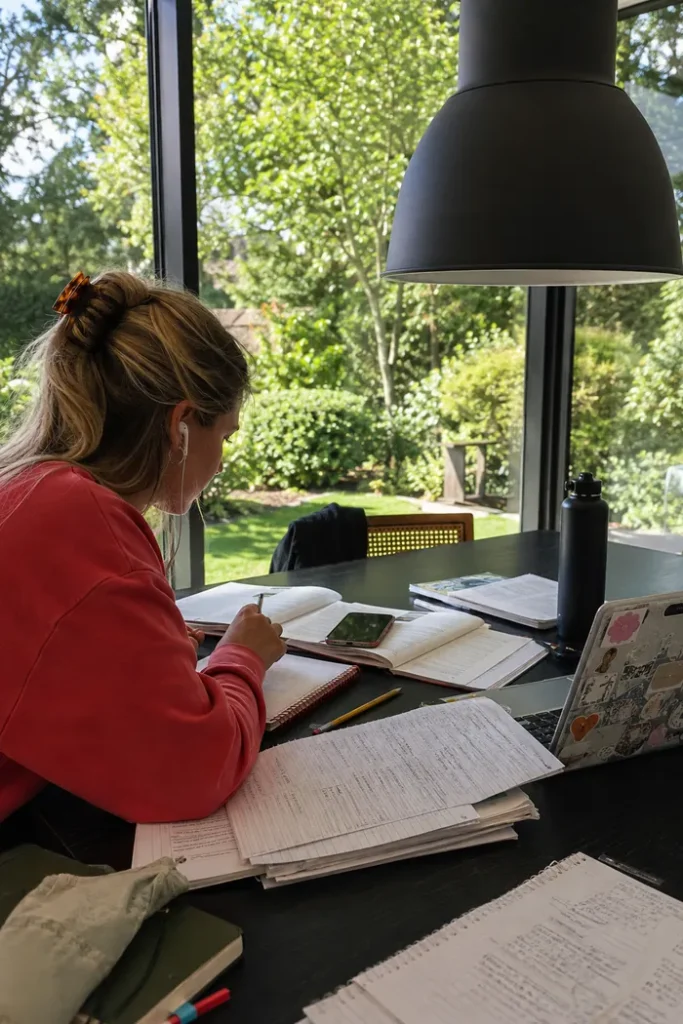
Sometimes the issue is not that you are lazy. The task is just too vague.
“Be productive” tells you absolutely nothing. “Finish the first two questions on the worksheet” gives your brain somewhere to land. “Work on my business” is foggy. “Draft the caption for tomorrow’s post” is clear. “Get healthier” is enormous. “Make lunch with something filling and add a ten-minute walk” is something you can actually picture yourself doing.
It also helps to make the setup stupidly easy. Leave the notebook open to the page you need. Put the water bottle on your desk. Lay out the workout clothes. Close the tabs that have nothing to do with the task. Put your phone somewhere that requires more than one lazy arm stretch to reach.
Basically, stop making Future You solve the same problem all over again. Give her the runway.
Check whether you need motivation or an actual reset

This part matters because not every slow day needs to be bullied into productivity.
Before you decide you have a discipline problem, do a quick check-in. Are you tired? Hungry? Overbooked? Mentally noisy? Bored with the goal? Scared you will do it badly? Annoyed because the task is bigger than you expected?
Those are different problems, which means they need different answers. If you are overwhelmed, shrink the task. If you are bored, change the setting or give yourself a tiny challenge. If you are nervous about doing it badly, make the first attempt deliberately rough. If you are simply worn out, a real pause may be more useful than forcing another hour of half-hearted work.
Taking ten quiet minutes, stepping outside, eating something, stretching, or listening to music is not automatically “giving up.” Sometimes it is just clearing enough space to hear yourself think again.
Lower the standard without dropping the goal
Here is a sneaky reason motivation disappears: the version of the task in your head is way too polished.
You do not just want to exercise. You want the perfect workout, cute set, enough time, good energy, and maybe flattering lighting because apparently we are producing a campaign now. You do not just want to write. You want the first draft to sound clever. You do not just want to study. You want three uninterrupted hours and a Pinterest-level desk.
That is a lot of conditions for one ordinary Tuesday.
Try choosing a minimum version of the goal that still feels meaningful. Twenty minutes of focused work. One load of laundry. One page. A short walk. A basic dinner. The smaller standard keeps your routine alive without pretending you have maximum energy every single day.
You can always do more when you have more to give. The trick is refusing to make “perfect” the only version that counts.
Make rest part of the plan, not a secret rebellion

You know the cycle. You tell yourself you are not allowed to relax until everything is done. Everything is never done. So you procrastinate, feel guilty while procrastinating, and somehow end up neither rested nor productive. Gorgeous system. Ten out of ten for stress.
Planned rest feels completely different. Decide what would actually make you feel restored, give it a beginning and an end, and enjoy it without turning it into a courtroom drama.
Maybe that is dinner in bed with one episode of something comforting. Maybe it is a shower, a face mask, and your phone on silent. Maybe it is twenty minutes lying down with your eyes closed. The point is to rest on purpose, then come back on purpose.
You do not need to earn every soft moment. And you definitely do not need to run yourself into the ground just to prove you are serious about your goals.
Borrow structure from other people when yours is missing

Some goals are easier when somebody else is in the room, even if they are working on something totally different.
Set up a study date. Meet a friend for a walk. Sit on a video call while you both clear your inboxes. Text someone what you plan to finish before lunch, then check back in. If you keep skipping workouts, make them social. If you keep abandoning a creative project, give yourself a weekly co-working date.
This is not about needing someone to babysit you. It is about using the kind of structure that makes following through feel easier. You are allowed to build support around the life you are trying to create.
Make progress feel nicer to come back to
Will a cute water bottle, fresh notebook, good playlist, sunny desk, or matching workout set magically transform your life? Obviously not. But if a tiny bit of atmosphere makes the task feel less miserable, I am absolutely using it.
Pair boring things with something you genuinely enjoy. Save a favorite podcast for your walk. Make a ridiculously good iced drink before a study session. Light a candle while you clean. Work somewhere with natural light. Put on an outfit that makes you feel a little more awake.
The goal is not to make every responsibility aesthetically perfect. It is simply to stop acting like getting things done has to feel miserable to be legitimate.
When you still cannot start, make the decision smaller
On the truly blah days, do not negotiate with your entire life plan. Pick one thing that would make today feel slightly better by tonight.
Maybe it is sending the email you keep avoiding. Maybe it is washing your hair. Maybe it is studying for fifteen focused minutes. Maybe it is clearing the pile on your chair so you can stop pretending it is decorative.
Choose the smallest version, remove whatever friction you can, and begin before your brain has time to write a ten-page closing argument against it. Then reassess. Continue if you have the energy. Stop if that was genuinely enough for today.
That is the part people skip when they talk about motivation. You do not always need more hype. Sometimes you need fewer decisions.
The point is to make starting less dramatic
Learning how to motivate yourself is not about becoming a person who wakes up excited to do hard things every day. That woman sounds lovely, but I have questions.
It is about knowing how to move when the spark is missing. Make the task smaller. Make the next step clearer. Check your energy. Rest without turning it into guilt. Use people, routines, and little pleasures to give yourself more support than resistance.
And when your brain says, “Maybe tomorrow,” you do not have to launch a motivational speech. Just give yourself one tiny move you can make today. That is enough to get the story going again
Related posts:
 How to Dress When You Have No Waist: Easy Styling Tricks That Make Outfits Look More Defined
 Slow Living Activities That Make Ordinary Days Feel So Much Better
 The That Girl Morning Routine That Actually Feels Doable (Even If You’re Not a Morning Person)
 How to Grow Thick Hair Without Turning Your Bathroom Into a Lab
